The Blue Dahlia Redux

Written by Joe D on March 9th, 2010

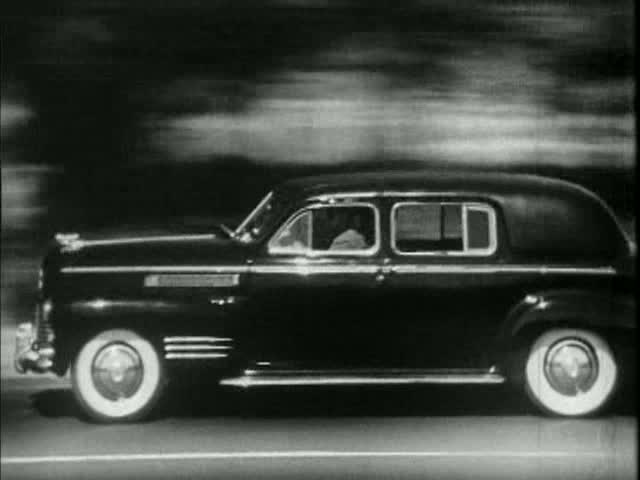
the-blue-dahlia.jpg

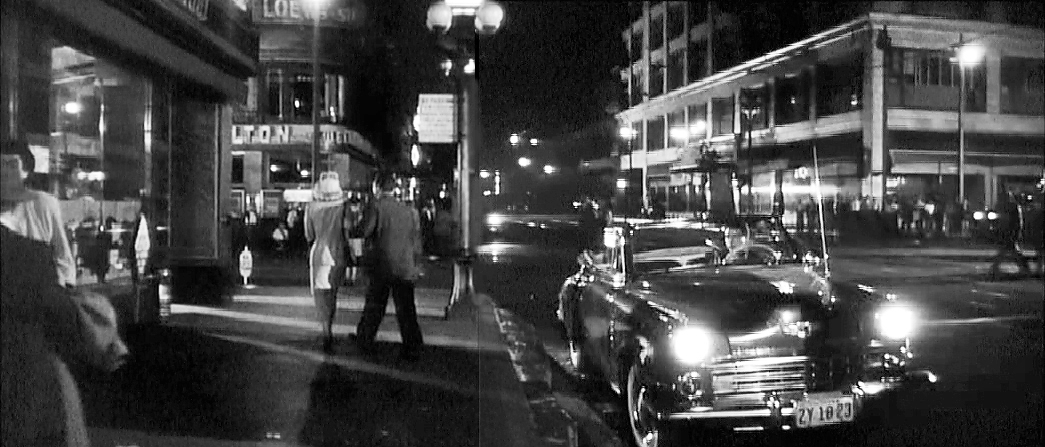
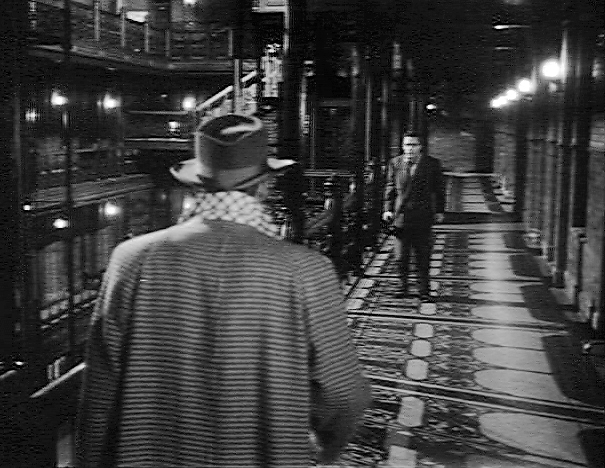
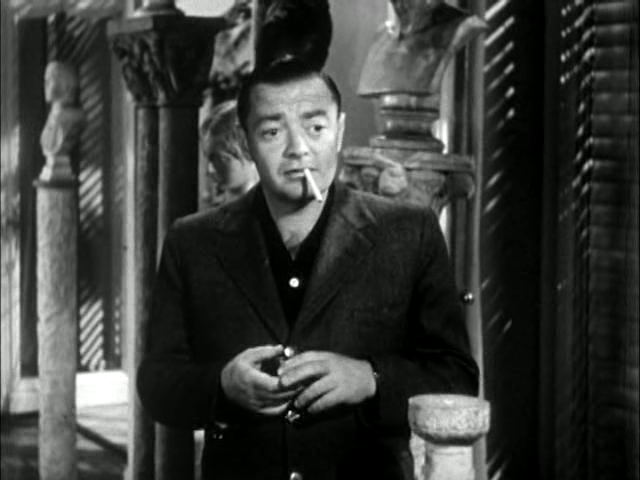
The idiotic “Shoot the match and prove you didn’t kill my wife” Scene, although it looks like a cigarette, which is what’s written in the script but was changed to a match during filming, probably re-infuriating Raymond Chandler!
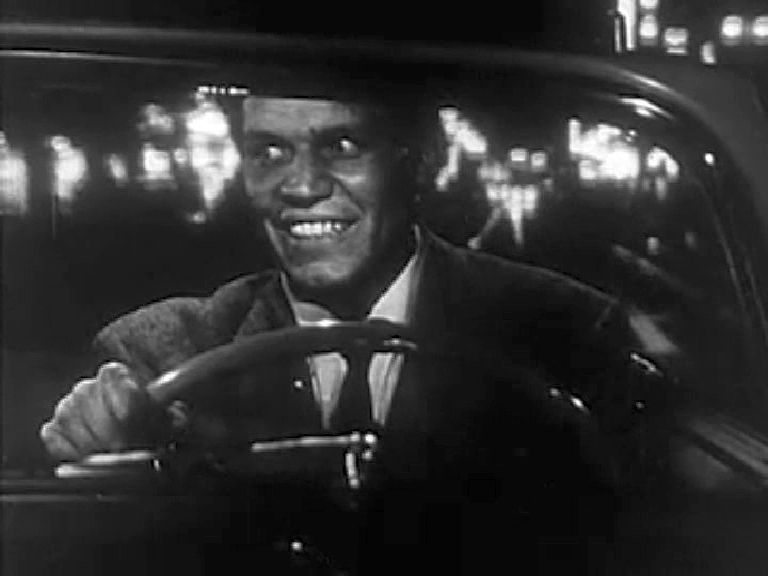
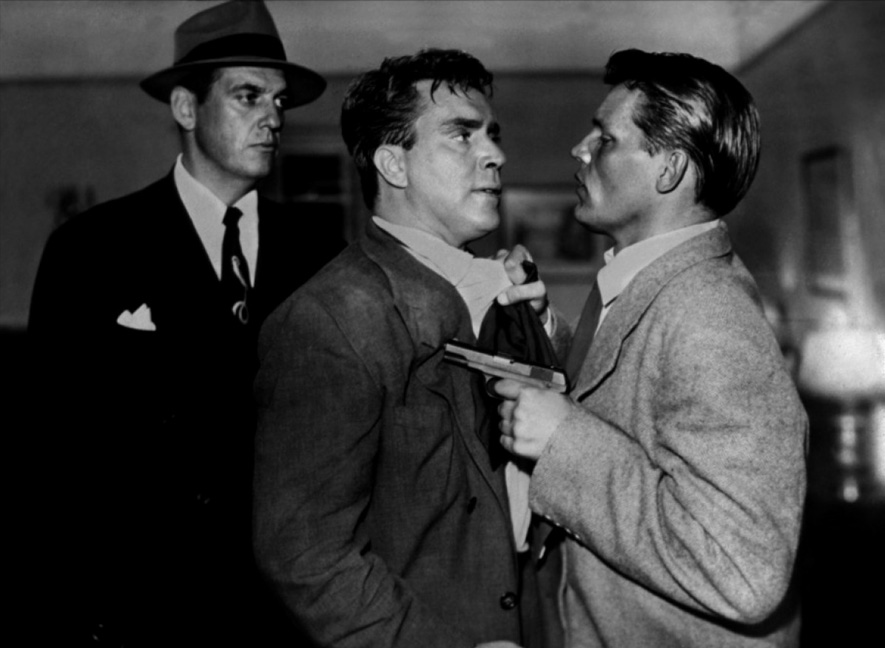
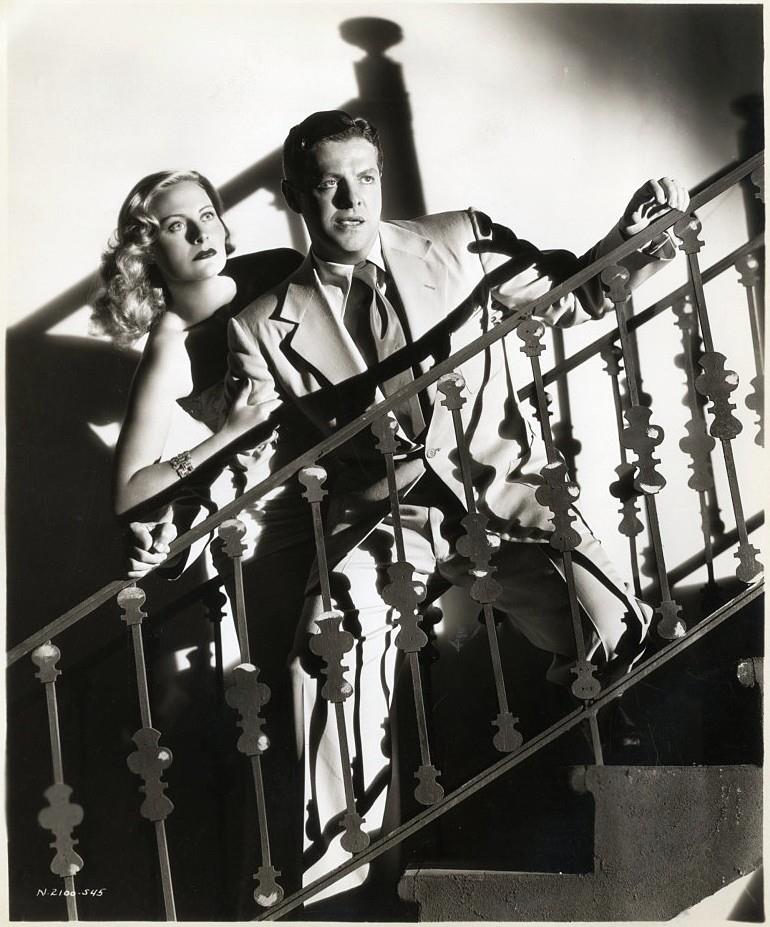
I got the published screenplay to Raymond Chandler’s The Blue Dahlia. It has an introduction by the producer John Houseman. Houseman tells the story of Chandler needing to get drunk to finish the film after a secret meeting with the head of production who offered R.C. a $5000 bonus to get the script done. Houseman claims that Chandler was blocked, that George Marshall had shot almost all the pages written, 93 or so, and that the attempted bribe by the studio head had so insulted and enraged Chandler that he wanted to quit. But rather than let a fellow veteran of the English public school system down, Chandler heroically opted to sacrafice his health by consuming vast quantities of alcohol which he assured Houseman would enable him to finish. Now there are a few points worth mentioning, the script was almost complete, Chandler had begun work on The Blue Dahlia as a novel, and we know from his correspondence that he had an ending in mind all along, that Buzz (William Bendix) the steel plate in the head veteran was the killer. The Navy objected to this most strenuously and Paramount agreed to change the ending. Houseman does not mention this fact in his introduction. So this is what I think happened, Chandler finished the script as he planned, with Buzz as the killer, the Navy objected, Chandler was called in to a meeting with the studio head, Mr. Head told Raymond to change his ending and offered him $5000 to make it go down easier. Chandler flipped out, he hated the movie business and couldn’t stand anyone telling him what to write. Chandler went to Houseman and threatened to quit. Then R.C. went home and thought it over, “I’ll write their crap ending but on my terms. ” He made his list of demands, he got to work at home, drunk, with round-the clock secretaries he could chase around, and limos waiting at his beck and call and a doctor on call to take care of him. He had to anesthetize himself to write that idiotic scene where Buzz shoots a match in Johnny’s hand to show he wasn’t the killer and then the captain tricks Dad the house detective into giving himself away. Oh Brother! I think Chandler hated that character,( the house dick) he has all the abuse in the movie heaped on him. Houseman acts as if this was the great ending Chandler came up with at the last minute, that Chandler didn’t have an ending in mind at all which we now know is untrue. So that’s my take on why old R.C. needed to get loaded to finish the script. Another point was revealed in Houseman’s intro. During a fight scene a heavy oak table fell on Don Costello’s toe and broke it. Director George Marshall staged the rest of the scene so Costello didn’t have to walk around, he fights Alan Ladd but on the floor. It was brilliant! A great example of taking an accident that could have shut down production and making something better out of it. Marshall really rose to the challenge and elevated the scene creatively. Bravo! More Myth and Magic in the Land Of Make Believe!

Mack Sennett’s A Movie Star

Written by Joe D on January 18th, 2010

hisstu1.jpg

main-title-copy.jpg
I finally started watching the Slapstick Encyclopedia I borrowed a few years back. I will return it to it’s rightful owner soon! Anyway one of the films jumped out at me in Volume 1. It was A Movie Star by Mack Sennett. It was produced under the Triangle Films banner, Sennett had left Keystone and gone into business with his old boss D.W. Griffith, the man who taught Sennett how to make a film. A Movie Star was one of the first Sennett pictures to have a script, the earlier ones were just ideas on paper and then cast and crew improvised the rest. It shows, The Movie Star is consistently funny from beginning to end. It also is a very early self referential film being about the movie business. The action takes place in a nickelodeon theater, a star (Mack Swain) aka Handsome Jack shows up where his latest picture is playing, so he can wallow in the adoration of his fans, especially the female ones.

hero-copy.jpg

Handsome Jack Poses Next To His Poster

A real actor shows up and is not impressed and shows it during Handsome Jack’s bow taking. Handsome Jack also starts clapping surreptitiously to cue the audience throughout the movie.

clap-copy.jpg

Handsome Jack Starts The Spontaneous Applause, A Technique Still Used At Previews Today!

actor2-copy.jpg

The Shakespearean Actor Shows Contempt For Jack’s Antics

There are shots of the film on the screen in the theater and this is years before Keaton took this idea to a new level in Sherlock Junior.

screen-copy.jpg

Film Within A Film

Handsome Jack is scoring with the chicks after the show when his battle-ax wife and two kids show up to put an end to his fun.

wife-copy.jpg

The Wife And Kids Put A Crimp In Jack’s Game

A Movie Star is directed by Fred Hibbard, I guess Sennett was the producer, and the acting is so much better than in the Sennett directed movies where everyone is way too far over the top. I also read that nobody liked Sennett, especially the people that worked for him, they’d get skilled under his tutelage then head out for a job at another studio, even his stars, Arbuckle, Chaplin, and Normand did this. But still in all those were the days! Just cranking out films one after the other, how cool is that! There are some other great touches in this film, we get to check out the theater musician/sound effects man, he shoots pistols, whoops like a wild Indian, beats a drum, and plays the piano to accompany the film.

music-copy.jpg

The Super Cool Sound Effects/Music Man!

And we get a glimpse into the projection booth and see the projectionist hand cranking the projector! If you want to check out a good Early Silent Comedy check this one out. It delivers.

indian-kiss-copy.jpg

The Wild Indian Smooches On Handsome Jack’s Girl, They Shot This In Front Of A Circular Rotating Background Panel!

Max Reinhardt

Written by Joe D on November 3rd, 2009

nicola_perscheid_portrait_of_max_reinhardt.jpg
Max Reinhardt, king of German theater had to flee Nazi oppression at the height of his creative success. He came to America, staged A Midsummer Night’s Dream at the Hollywood Bowl and was signed to a contract by Warner Bros. to direct a film version. I guess it didn’t make money because Reinhardt didn’t get to make any other films. But the film he did make with William Dieterle co-directing is incredibly beautiful. Fantastic images in luminous Black and White, they must have upped the silver content in that batch of nitrate film because the images positively glow!

tumblr_kpm9enmj1k1qzdvhio1_500.jpg
A number of Reinhardt’s collaborators from Germany re-located to Hollywood and created some of the most creative films ever made there. Dieterle made the incredible Portrait Of Jennie, a magical film beloved by none other than the great Surrealist Luis Bunuel.

portraitofjennie1948-l.jpg
Although Dieterle was driven to drink and a nervous breakdown by the incessant barrage of telegrams from amphetamine fueled producer David O. Selznick. The cameraman Joseph August of that film died soon after of a heart attack, Selznick strikes again? John Brahm, director of The Lodger, The Locket, and Hangover Square was a Reinhardt alumnus.

brahmjohn2.jpg

John Brahm

So was Otto Preminger, not a filmmaker of Fantasy, but definetly a ground-breaker when it came to sex, race, drugs, Black-Listing. Plus he directed the archtypal Laura.

otto-freeze.jpg

Mr. Freeze says “Where’s Dorothy Dandridge?”

And Edgar G. Ulmer labored in the Art Department for Reinhardt. He directed the Bauhaus influenced Horror fim The Black Cat. A curious coincidence, Reinhardt opened an Acting School in Hollywood to pay his bills, Anne Savage attended and hit it off with Max, she later starred in Ulmer’s Detour.

ulmer.jpg

Edgar G. Ulmer, a Black Cat crossed his path at Universal

Here’s a promotional film about the making of A Midsummer Night’s Dream

Arnold Laven, R.I.P.

Written by Joe D on September 21st, 2009

arnoldlaven.jpg
Producer- Director Arnold Laven has passed on. He’s responsible for a large amount of influential film and television. I just read a great interview with him the other day. It was done for the Noir City Sentinel, the newsletter of the Film Noir Foundation and you can read it here. I was so impressed with this interview I ordered the DVD of Laven’s directorial debut, 1952’s Without Warning, one of the first serial killer pictures and full of great Los Angeles location photography. I will post about it once I get it.

without_warning_title.jpg
Besides his great film noir work Laven was in a large way responsible for two giant Western television sagas, The Rifleman and The Big Valley. Both big sources of inspiration for a generation of filmmakers including Quentin Tarantino who has expressed as much to me.

rifle.jpg
He also directed Tim Holt’s last picture The Monster That Challenged The World, Laven and Holt met many years earlier on the set of The Arizona Ranger and became good friends. He talked Holt out of retirement to make this SciFi /Horror movie. It has a gripping scene of a woman and a young girl trapped in a closet as the monster breaks through the door to get them. Check it out.

1525601705_44f2a71973_o1.jpg

Val Lewton, Cat People, Martin Scorsesce

Written by Joe D on January 15th, 2008

1lewtonlaughs.jpg

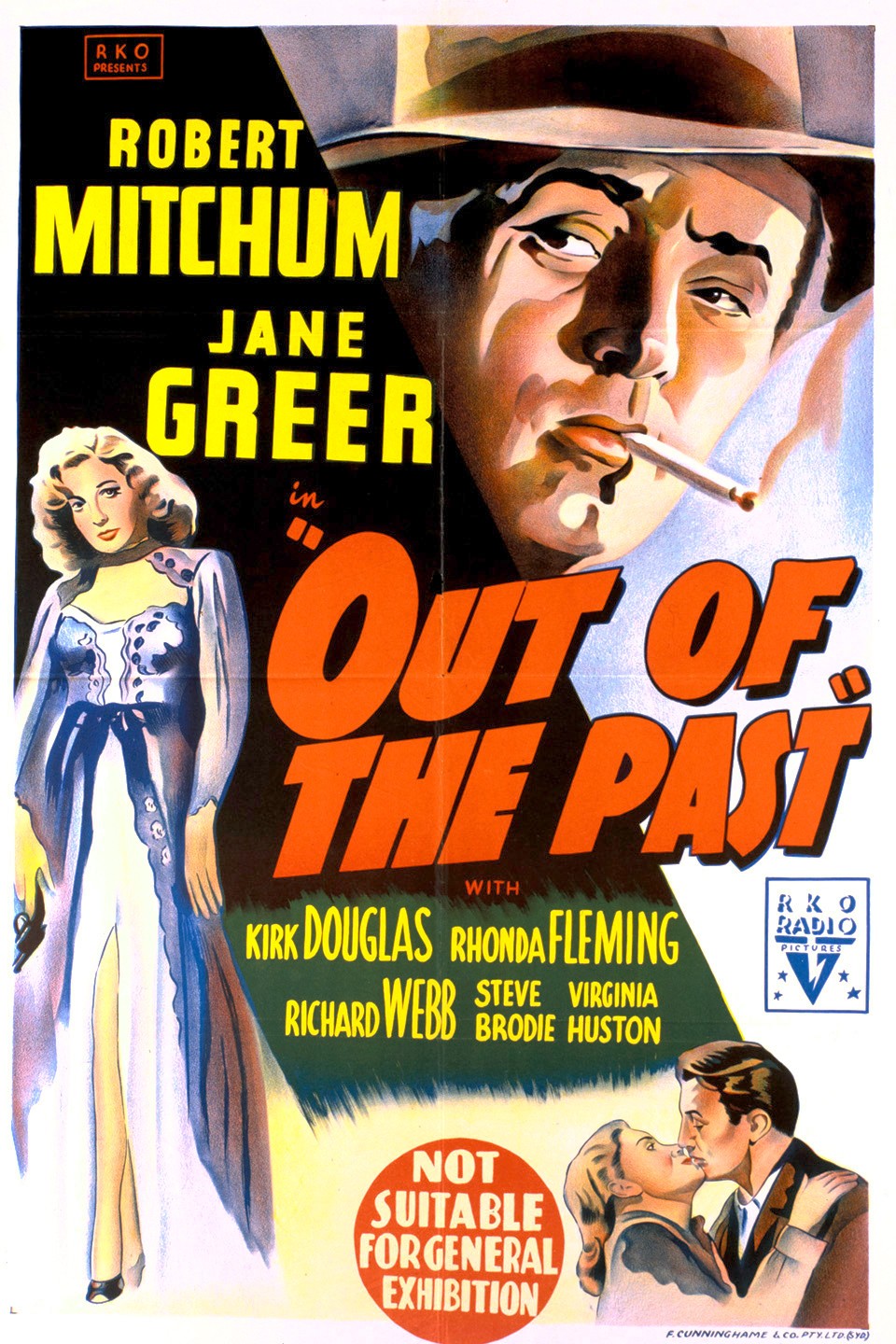
Martin Scorsesce produced and narrated a film about producer Val Lewton, Val Lewton: The Man In the Shadows. It’s very good and it’s great to see an under appreciated filmmaker get his due. TCM showed a lot of Lewton’s work, especially the RKO stuff, to complement the premier of this documentary, directed by Kent Jones by the way. So much has been written about Lewton’s films, I don’t want to repeat what’s already been said but let me throw my 2 cents in. His work especially with Touneur, wise and Robson was so subtle and atmospheric, so artfully made (Nicholas Musuraca is one of the all time masters of B&W cinematography, check out Out Of The Past and Albert S. D’Agostino , one of the greatest Production Designers ever to put a fountain on a set) There’s nothing today that compares with this quality filmmaking! Nothing!
catt.jpg

And here’s something I noticed in Cat People. There is a transitional device almost like a fade to black and back but it’s not, it’s an optical that mimics a shadow passing in front of the camera, like a black panther wiping the lens. I’ve never seen this technique used elsewhere and I’ve never heard mention of it made by anyone. It is very subtle and because it’s used to transition from one scene to another it’s accepted as a typical fade in/out yet it creates a sense of unease that sneaks up on you, just like the rest of the film. It slowly wraps you up in a fog of suspense so suddenly you realize you’re lost, in a dark place at night and something may be following you. The documentary also tells you how hard Lewton worked. He killed himself making these films for unappreciative assholes. It’s just not right. And then Mark Robson, the editor he promoted to director, at great personal cost, screws him out of a partnership with Robert Wise and himself! They don’t give the details in the documentary but it certainly makes Mr. Robson look like a scumbag. By the way this review is part of the Val Lewton Blogathon, hosted by The Evening Class.
1lewtoncatirinaspot.jpg

How could you do it, Mark Robson?