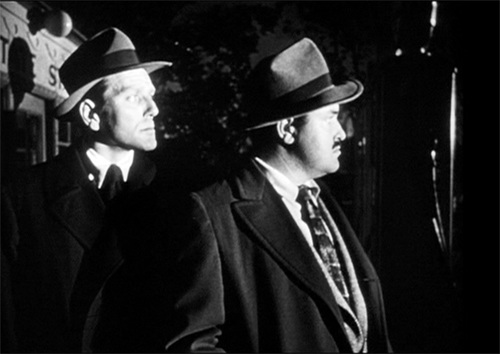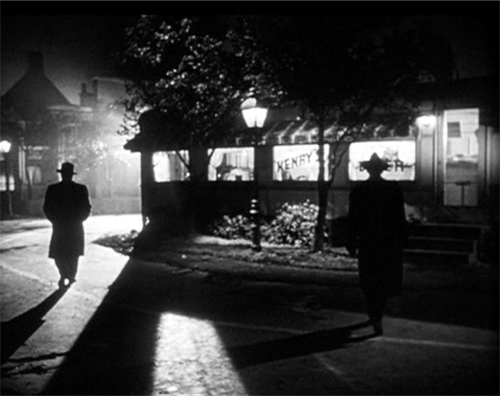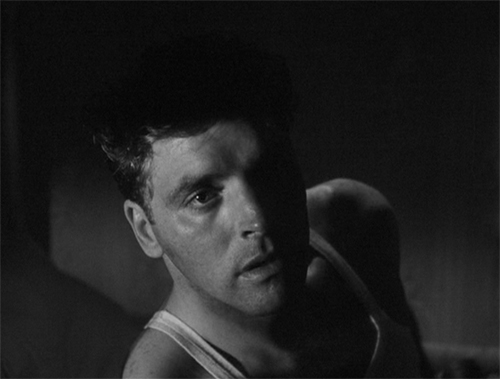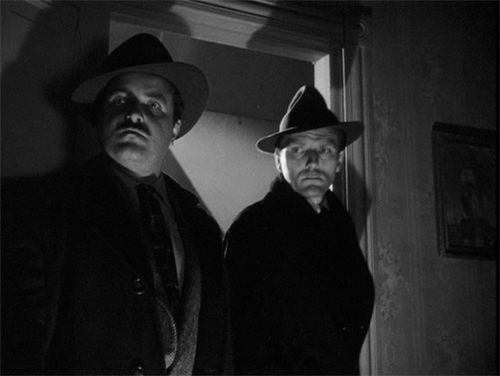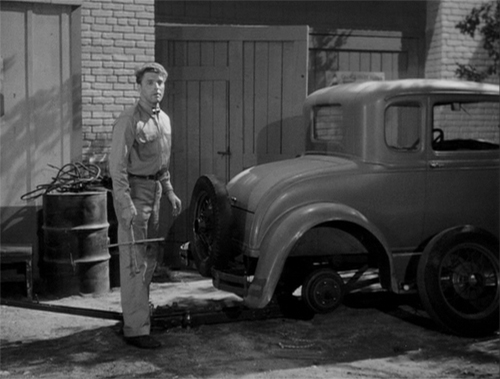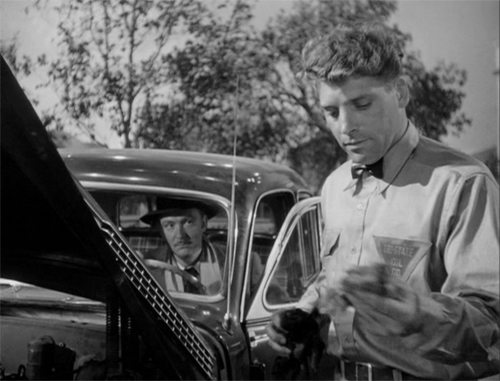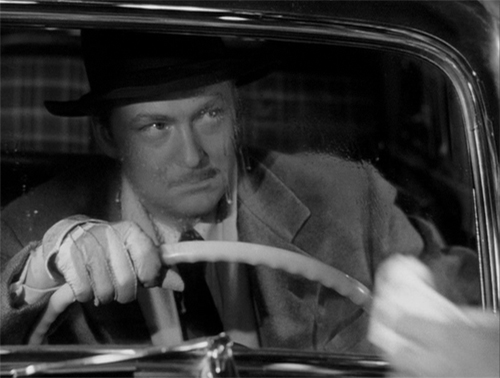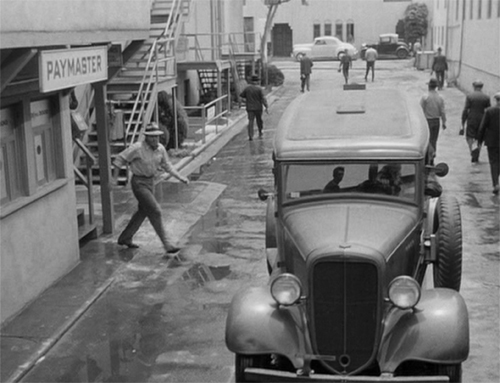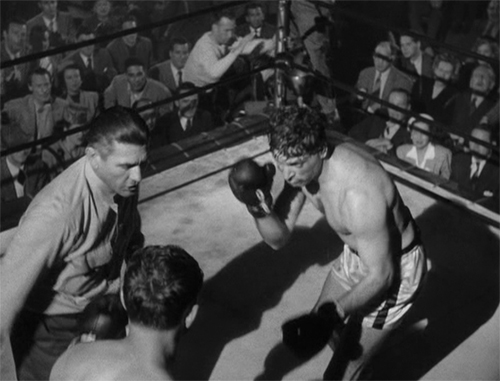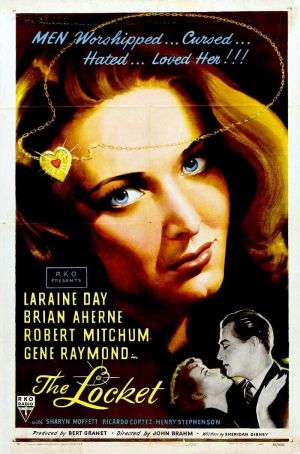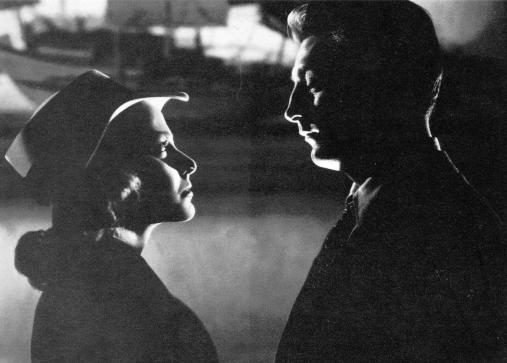
Here’s a chance to see a rare gem, John Brahm’s great psychological noir The Locket will be projected in all it’s sparkling 35mm luscious B&W glory on Friday April 9th at 7:30 pm at the Egyptian Theater in Hollywood, U.S.A. Hats off to Eddie Mueller and Alan K. Rode the Mavens OF Mayhem, Nabobs of Noir, Czars of Crime and High Priests of the Heist . I saw an interview with Robert Mitchum where he talked about this film. Mitchum said he was shooting two films simultaneously, he’d fly to a location in the morning, act all day in Pursued then fly back to the studio and work on The Locket all night long. He said he didn’t get any sleep for a month.
This is a great film similar in subject to Hitchcock’s Marnie but to me The Locket is the better of the two. Go check it out for yourself and make your own comparison.
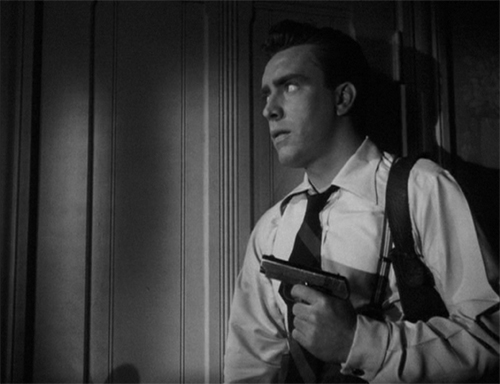
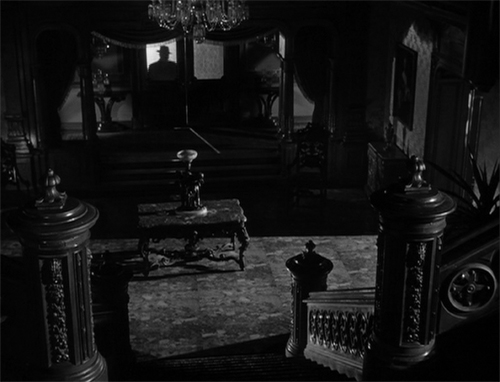
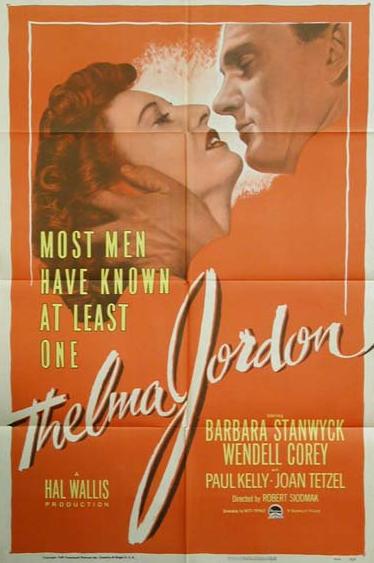
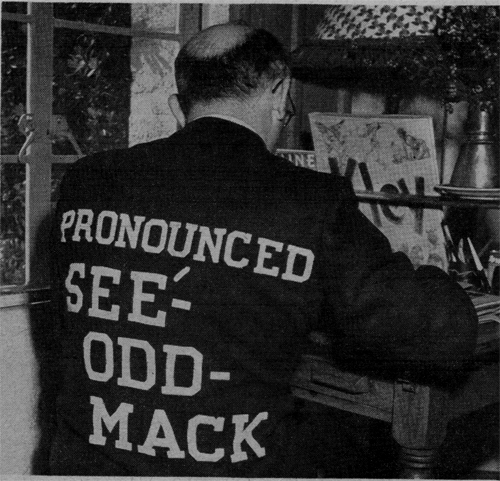
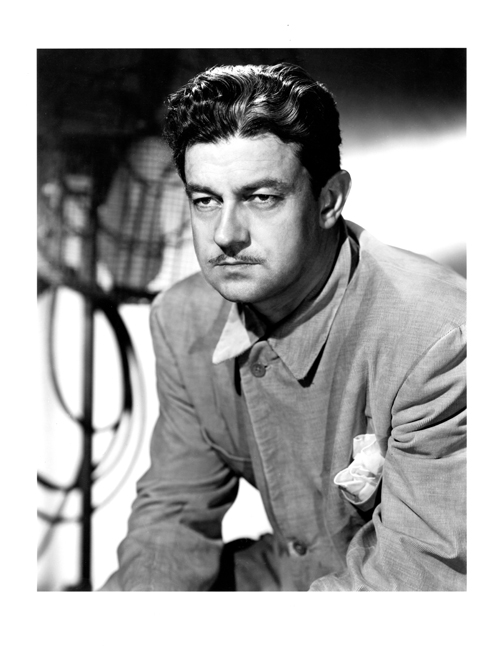
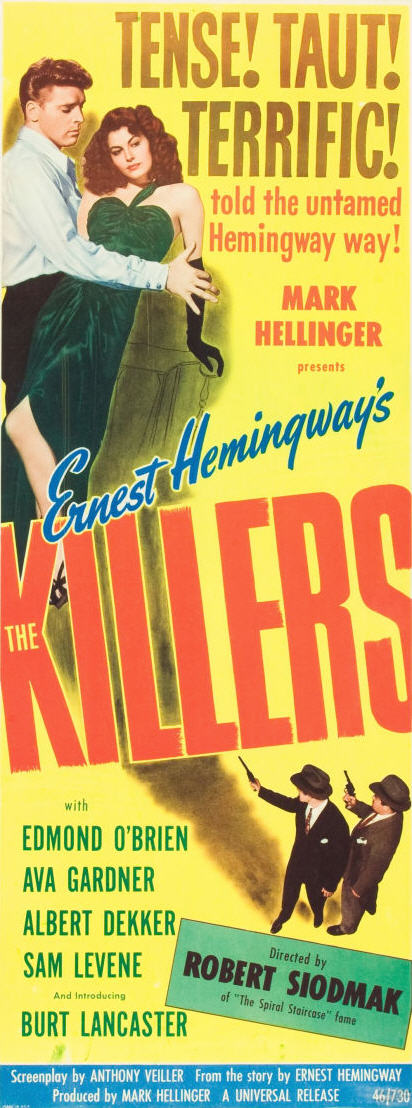
Here is a link to an article on our director of the month, Robert Siodmak. Click Me! I guess Universal was trying to make a celebrity director out of him like Alfred Hitchcock but maybe it was too soon after WWII for Americans to get behind a filmmaker with a German accent.
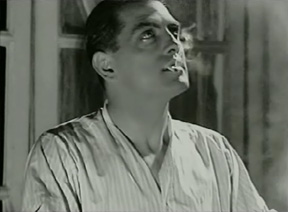
The idiotic “Shoot the match and prove you didn’t kill my wife” Scene, although it looks like a cigarette, which is what’s written in the script but was changed to a match during filming, probably re-infuriating Raymond Chandler!
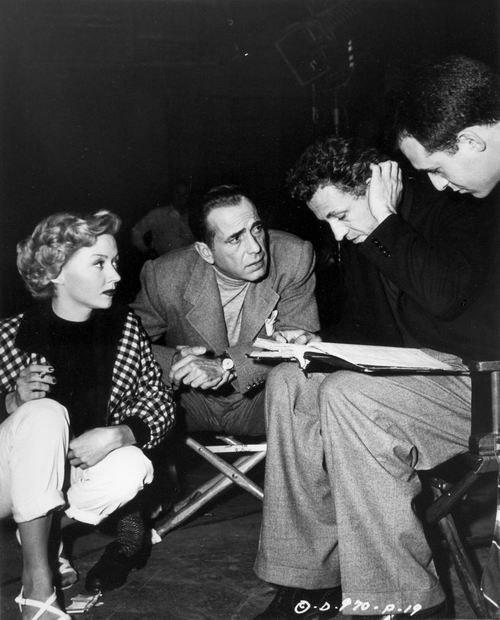
I got the published screenplay to Raymond Chandler’s The Blue Dahlia. It has an introduction by the producer John Houseman. Houseman tells the story of Chandler needing to get drunk to finish the film after a secret meeting with the head of production who offered R.C. a $5000 bonus to get the script done. Houseman claims that Chandler was blocked, that George Marshall had shot almost all the pages written, 93 or so, and that the attempted bribe by the studio head had so insulted and enraged Chandler that he wanted to quit. But rather than let a fellow veteran of the English public school system down, Chandler heroically opted to sacrafice his health by consuming vast quantities of alcohol which he assured Houseman would enable him to finish. Now there are a few points worth mentioning, the script was almost complete, Chandler had begun work on The Blue Dahlia as a novel, and we know from his correspondence that he had an ending in mind all along, that Buzz (William Bendix) the steel plate in the head veteran was the killer. The Navy objected to this most strenuously and Paramount agreed to change the ending. Houseman does not mention this fact in his introduction. So this is what I think happened, Chandler finished the script as he planned, with Buzz as the killer, the Navy objected, Chandler was called in to a meeting with the studio head, Mr. Head told Raymond to change his ending and offered him $5000 to make it go down easier. Chandler flipped out, he hated the movie business and couldn’t stand anyone telling him what to write. Chandler went to Houseman and threatened to quit. Then R.C. went home and thought it over, “I’ll write their crap ending but on my terms. ” He made his list of demands, he got to work at home, drunk, with round-the clock secretaries he could chase around, and limos waiting at his beck and call and a doctor on call to take care of him. He had to anesthetize himself to write that idiotic scene where Buzz shoots a match in Johnny’s hand to show he wasn’t the killer and then the captain tricks Dad the house detective into giving himself away. Oh Brother! I think Chandler hated that character,( the house dick) he has all the abuse in the movie heaped on him. Houseman acts as if this was the great ending Chandler came up with at the last minute, that Chandler didn’t have an ending in mind at all which we now know is untrue. So that’s my take on why old R.C. needed to get loaded to finish the script. Another point was revealed in Houseman’s intro. During a fight scene a heavy oak table fell on Don Costello’s toe and broke it. Director George Marshall staged the rest of the scene so Costello didn’t have to walk around, he fights Alan Ladd but on the floor. It was brilliant! A great example of taking an accident that could have shut down production and making something better out of it. Marshall really rose to the challenge and elevated the scene creatively. Bravo! More Myth and Magic in the Land Of Make Believe!
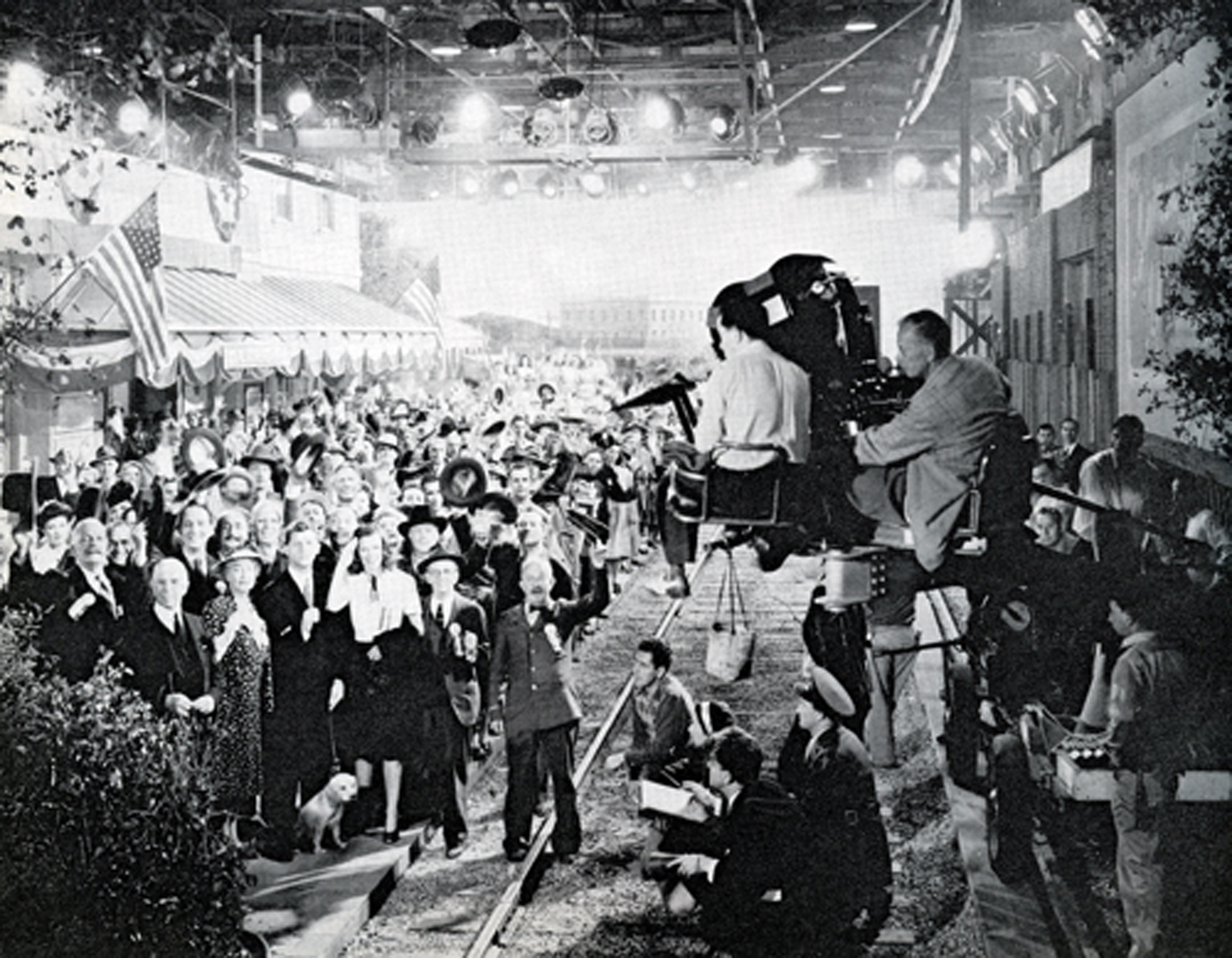
This post is still part of our Tribute to Robert Siodmak, Director of the Month here at Film Forno. But I wanted to shine the light of gratitude on Siodmak’s Hollywood benefactor, the late, great Preston Sturges. When Mr. Siodmak arrived in Hollwood, U.S.A. he had very little cash, forced to flee the Nazis he and his wife sailed here with barely anything. Now he had been a very successful director in Europe but unless you were brought over here by a Studio you were treated like any schmuck pounding the pavement in Tinsel Town. Nobody gave you the time of day for what you had already accomplished. This is just part of the immigration song from time immemorial. People who were big deals in their home countries have to start all over when they get to America. Your experience overseas counts for nothing. Often they find themselves working for people they would barely have spoken to back in the old country. Anyway Siodmak was here with his wife starving, he couldn’t get a job, nobody would cut him a break. Then one fortuitous day he wangled his way onto the Paramount lot and somehow bumped into Preston Sturges. Sturges (crouched under camera) directs a scene from Hail The Conquering Hero
Sturges was at the peak of his fame, power, and clout at that time. He took the time to listen to Siodmak’s plea. Siodmak had been a great comic actor in Germany, often bringing down the house with his antics, I’m sure he put his all into his performance for Sturges. He described films he’d made in Europe and piqued Sturges’s interest so much that Mr. Sturges immediately got on the phone and spoke to the head of production saying he had a terrific European director that all the other studios were fighting over and they should sign him right away, which they did. Siodmak directed 3 films there that he later referred to as “Paramount Shit”. But I have seen Fly By Night in a theater and let me tell you it is as entertaining as all get out! The audience loved it! So did I, it’s great! There is a fantastic stunt involving a car driving off a car carrier in motion that has to be seen to be believed, and it is paced to perfection. If you get a chance to see it, go! It was the second half of a double bill and it fit into that slot perfectly, I’m sure Siodmak designed it that way expressly. But back to Preston, Good deeds in Hollywood are as rare as hen’s teeth and one that allowed a great artist to create great works to be cherished by generations of film lovers even rarer. So I salute you Mr. Preston Sturges, not only for your incredible writing, directing, inventing but for your true generosity of Spirit in recognizing a fellow artist in need ( when no one else did) and giving him a helping hand. You sir are a mensch!
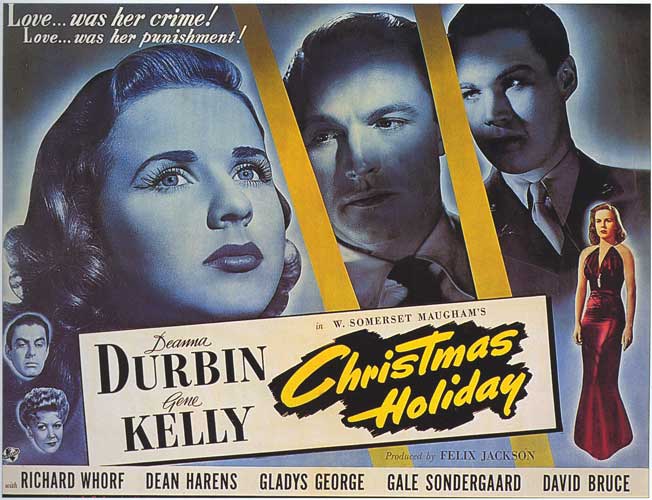
Subversive Cinema at it’s best! Robert Siodmak’s Christmas Holiday delivers a potent punch right in the breadbasket of Normal American Life. Wow, I wish I could go back in time to see this movie with an audience in 1943. It’s a zinger, why do I say subversive cinema you might ask? Well this movie puts all that’s sacred on it’s ear in brilliant ways. A soldier, a man in uniform is dumped by his fiancee, sent a Dear John telegram on Christmas Eve, he wants to go kill her and her new husband! This sets the ball rolling but the movie is really Deanna Durbin’s story. She was Universal’s big child star, singing her way into our hearts as an adolescent, about as squeaky clean and wholesome as they come and here she plays a prostitute! Her incestuous gambling murderer of a husband (played by Gene Kelly!) offed a homosexual bookie and was sent to prison for life.
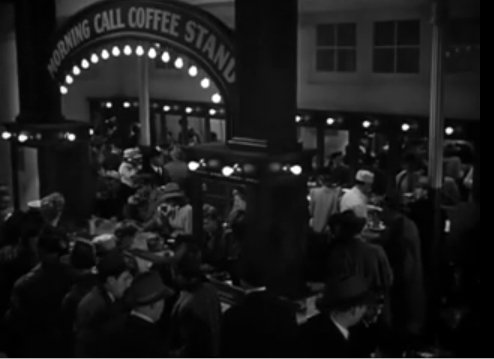
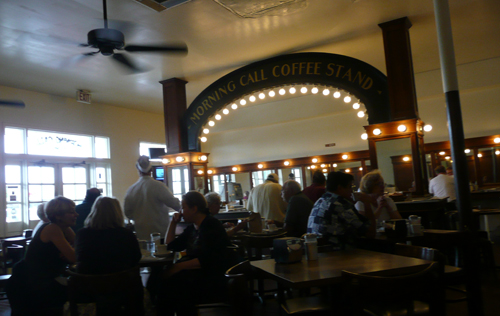
This Film is Set in New Orleans, and features a scene at the Morning Call Stand, home of the World’s Best Beignets!
And guess what? You can still go there today!
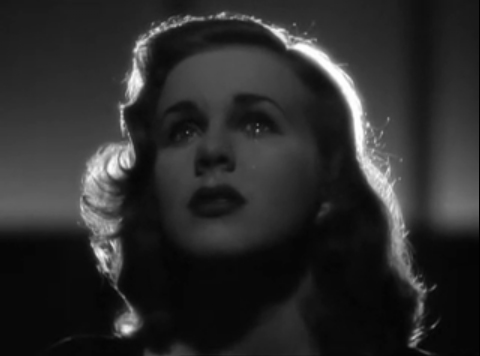
The movie was based on a book by Somerset Maughm and the script was written by Herman Mankiewicz! Talk about a literary pedigree. Midnight Mass in a Catholic cathedral is beautifully shot but it’s just a background for our prostitute’s breakdown. The sequence in the church is rendered more powerful by an expressive sound track. The real sounds of the Mass, recorded in a church make this scene come alive, someone coughing in a silent part of the ritual. echoing in that vast stone room, the little bells the altar boys ring during the sacraments, the brilliant cutting to an anguished Close Up of Durbin as the priest intones in Latin “Mea Culpa, mea culpa, mia maxima culpa” A powerful sequence.
Gene Kelly as Robert Manette, withered branch of a once noble family tree
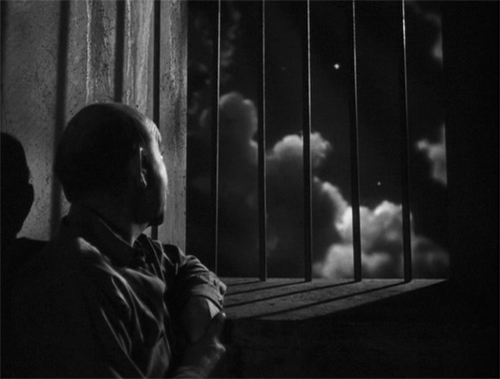
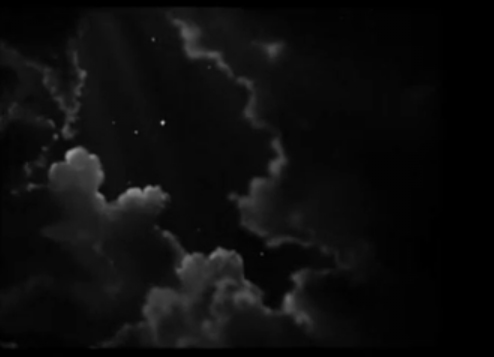
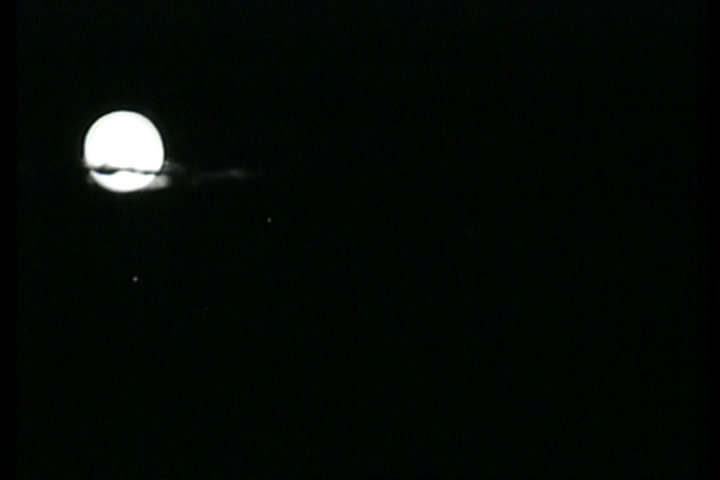
Music is subverted, the popular song Always, used in Pride Of The Yankees, a song about Love that lasts is used several times each time commenting on the story in a masterful way. A Sequence at a classical music concert that cuts with a muscular rhythm to a Beethoven symphony, a lot like Quentin Tarantino’s style of editing images to music. Then an amazing transition from the classical concert to a New Orleans jazz band playing at a cafe. A great cut! Wagner’s love theme from Tristan and Isolde is used beautifully. Especially at the end of the film when Durbin goes to the window and looks out, she sees some glass painted clouds parting in the night sky revealing a shining star on high, she stares at it transfixed and it reminds me powerfully of the scene in Un Chien Andalou where Luis Bunuel looks at the cloud passing in front of the moon from a balcony also acompanied by Wagner’s music.
Siodmak showing the influence of Max Rhinehart
Surrealist Star Gazer Bunuel
Bunuel’s artificial Celestial Bodies
But here’s the thing about this ending, several things in fact which raise it to one of the highest echelons of Cinematic Endings, first Bunuel understood better than anyone this dramatic technique of an ending, that you can do anything , any surreal, crazy thing and get away with it because it’s the end, the film or play is over, you don’t have to explain what just happened. Check out Bunuel’s ending for his Diary Of A Chambermaid and you’ll see what I mean. I guess it comes from the Greek Deus Ex Machina, where the Gods could come down and do whatever they felt like to end a play, no need to explain it, the Gods did it. Siodmak understood this as well so here he is referencing a film (Un Chien Andalou) that was a call to revolution, a “gun fired randomly into a crowd”, a film that caused riots on it’s premier in Paris, at the end of a Deanna Durbin film! Incredible! Secondly, the end is fraught with psychological truth, Kelly lays dying, shot down by a handy policeman, he was just about to kill Durbin, yet she still loves him. The guy ruined her life, he murdered someone but because she loves him she stands by him, his mother blames Durbin for her son’s guilt, for killing him! And Durbin accepts the blame, she feels guilty she couldn’t change him and proceeds to punish herself by becoming a prostitute. This stuff happens every day! People are always taking on guilt for something and messing up the rest of their lives in reaction to it. Durbin still loves Kelly as he lays there dying and he says to her ” Let go Abigail” before dying. Then the soldier repeats it “He said let go”. In other words Kelly is dead, move on with your life. I knew a girl many years ago whose boyfriend committed suicide. She was always talking about him, I guess she was still in love with him. Then she met a guy and started going out with him. One day he couldn’t take it anymore and told her to get rid of her dead boyfriend’s stuff! I thought it was brutal at the time but maybe she needed that help to move on with her life. That’s the parting gift Kelly gives to Durban and the soldier hammers home. He’s dead, you have to keep on living. The other people seem to disappear from the room, she goes to the window almost in a trance, she parts the curtains just as beautiful artificial clouds part before an artificial sky, revealing an artificial Star twinkling on high, all accompanied by some of the most beautiful music a human being ever composed.
But here thanks to Youtube you can see this masterpiece for yourself.
Here thanks to Youtube is a classic hard to see film noir, Robert Siodmak’s Cry Of The City starring Victor Mature and Richard Conte. Look for future Film Fornos about great under appreciated director Siodmak, he’s our Director Of The Month at Film Forno!
A film of overwhelming moods, everything in this film seems filtered through a veil of sadness. Visually stunning, the art direction and cinematography are wonderfully rich. The colors jump off the screen in beautiful compositions. Director of Photography Nic Roeg really outdoes himself here. And Bernard Hermann’s music sinks you deeper and deeper into a state of lugubrious drugged oblivion, like a person slipping deeper and deeper into a bottomless vat of viscous oil. The powerful rhythms and images of dream logic make this film even more effective. For example the woman who burns herself with her books and Montag’s nightmare.
Also I love films made in the 60’s yet set in the future for their take on design, it’s the 60’s taken to a super cool extreme, like they had reached the apogee of design and then found a way to show that somehow in the future it would be improved upon in interesting ways.
The firetruck, the monorail, the doors that slide open on their own. Big flat panel TV’s hanging on your living room wall.Truffaut didn’t like this film that much although Ray Bradbury did. I think Truffaut is not always a fair judge of his own films since he didn’t like The Bride Wore Black either and to me that’s one of his best films. A fascinating depressing work of Art, check it out on a rainy Saturday afternoon. The opening credits are spoken over images of TV antennas, no writing allowed in the future! Montag forces a group of his wives friends to listen as he reads from a book by Charles Dickens, an emotional passage about the death of the writer’s wife. One woman breaks down in tears, the rest say he’s disgusting, “people aren’t supposed to upset other people, that’s why they did away with books in the first place!” This sounds to me like our politically correct society of today where you can’t say anything slightly off center without being pilloried. Also everyone takes massive amounts of prescription drugs, the whole population is medicated! The mindless totalitarian society hypnotized by Television and since there is no writing allowed, there can be no scripts for the actors on TV, sounds to me a lot like Reality Shows. Now The that the Supreme Court has allowed Corporations to spend as much as they want on political campaigns Fahrenheit 451 doesn’t seem so far away. I just heard that it will be re-made with Tom Hanks as Montag, Ray Bradbury is in frail shape this could finish him off. So check it out and see what you think, it is a very unique, disturbing film.
I finally started watching the Slapstick Encyclopedia I borrowed a few years back. I will return it to it’s rightful owner soon! Anyway one of the films jumped out at me in Volume 1. It was A Movie Star by Mack Sennett. It was produced under the Triangle Films banner, Sennett had left Keystone and gone into business with his old boss D.W. Griffith, the man who taught Sennett how to make a film. A Movie Star was one of the first Sennett pictures to have a script, the earlier ones were just ideas on paper and then cast and crew improvised the rest. It shows, The Movie Star is consistently funny from beginning to end. It also is a very early self referential film being about the movie business. The action takes place in a nickelodeon theater, a star (Mack Swain) aka Handsome Jack shows up where his latest picture is playing, so he can wallow in the adoration of his fans, especially the female ones.
Handsome Jack Poses Next To His Poster
A real actor shows up and is not impressed and shows it during Handsome Jack’s bow taking. Handsome Jack also starts clapping surreptitiously to cue the audience throughout the movie.
Handsome Jack Starts The Spontaneous Applause, A Technique Still Used At Previews Today!
The Shakespearean Actor Shows Contempt For Jack’s Antics
There are shots of the film on the screen in the theater and this is years before Keaton took this idea to a new level in Sherlock Junior.
Film Within A Film
Handsome Jack is scoring with the chicks after the show when his battle-ax wife and two kids show up to put an end to his fun.
The Wife And Kids Put A Crimp In Jack’s Game
A Movie Star is directed by Fred Hibbard, I guess Sennett was the producer, and the acting is so much better than in the Sennett directed movies where everyone is way too far over the top. I also read that nobody liked Sennett, especially the people that worked for him, they’d get skilled under his tutelage then head out for a job at another studio, even his stars, Arbuckle, Chaplin, and Normand did this. But still in all those were the days! Just cranking out films one after the other, how cool is that! There are some other great touches in this film, we get to check out the theater musician/sound effects man, he shoots pistols, whoops like a wild Indian, beats a drum, and plays the piano to accompany the film.
The Super Cool Sound Effects/Music Man!
And we get a glimpse into the projection booth and see the projectionist hand cranking the projector! If you want to check out a good Early Silent Comedy check this one out. It delivers.
The Wild Indian Smooches On Handsome Jack’s Girl, They Shot This In Front Of A Circular Rotating Background Panel!
Here’s a very cool film by a dedicated smart filmmaker. I’ve only seen the trailer but it’s excellent, I hope to see the film soon, maybe at a local cinema. The film is Modus Operandi and the filmmaker is Frankie Latina. The things that impress me about this project are many, first of all Frankie shot it on film! Super 8 but it looks great, the look only real film can give so Bravo for that, secondly he shot MOS and post synched the dialog, in his own words “the way the Italians did it”. This is a great way to work, economically and creatively, all Fellini’s films were made this way as well as Sergio Leone’s! Post synching is a disappearing Art, there’s something eerily atmospheric about images -total silence- dialog recorded in a studio- backgrounds- music all put together , it can be very effective. Also Latina’s lighting techniques are right out of the 70’s exploitation filmmaking and they look great, it really re-creates that Truck Turner, Coffy, Slaughter vibe. And the subject matter, the sexploitation Spy Gangster genre, a lot of my favorite Art was created in the guise of pulp material, The Maltese Falcon, Fast One, Out Of The Past, Touch Of Evil, etc., this is a great way to create something cool and popular.
Latina in a PorkPie
Then also the techniques of no budget filmmaking, I listened to a radio interview with one of the stars of the film, Mark Borchardt, where he asks people to show up at a theater as extras! They were filming that day! How cool is that! I remember hearing how Bootsy Collins went on the radio and asked all “Funkateers” to show up at a Detroit recording studio and sing a chorus for an album he was doing! This reminded me of that. Another creative solution to a production problem. All together a lot of admirable thought, passion, creativity and dedication went into this film and I’m looking forward to seeing it!
I bought the dvd of Performance and this cool documentary was on there. Jack Nitzsche. Jr. is interviewed and a lot of other interesting people. Frank Mazzola’s interview is informative and deep. Jack Jr. says his father got one of the 1st Moog synthesizers for this score ( the 9th one made), how cool is that.
Jack Nitzsche, a genius at creating music that made films come alive
Mazzola talks about intercutting the opening sequences and how “everything they tried worked” or “was right”. I know from experience that sometimes in the editing room you can reach a state of consciousness, some times from exhaustion or ingesting mind altering substances, where the energy flows right through you into the film, the film becomes alive on the editing machine, it seems to breathe on the picture head, the characters get off the screen and walk around on your flatbed editing machine.
Besides being a great editor Frank M. was also an actor, that’s him on the right in Rebel Without A Cause. Dig That Crazy Pompadour!
If you want to experience that kind of editing watch the opening of Performance, actually the entire film but the opening is particularly strong. Mazzola said they worked from 7 at night to 5 in the morning, I think they cut it at Warner Hollywood in Sam Goldwyn’s old office.
Get Out Of My Office!
Funny to think of Goldwyn’s ghost watching these two visionaries making this psychedelic poem of violence, sex, drugs, music, polymorphous perversity that was like a bomb going off in Hollywood and Midnight Movie house across the world. Like a virus of decadence infecting the minds of the stoned out audiences in movie theaters in middle class suburbs. What a trip!
Here for your viewing pleasure is a documentary about Donald Cammell, director of Performance , a hugely influential film that captures the drug infused psychedelic culture of 60’s London like no other. I knew the composer Jack Nitzsche for a long time, this was one of his greatest scores. He told me Mick Jagger had gotten him the composing gig on this film. When the Rolling Stones first came to America, they sought out Nitzsche because they loved his arrangements of the Phil Spector produced hits and wanted to work with him. I guess this was payback. It’s a unique score calling on a rostrum of enormous talents, Ry Cooder, Merry Clayton ,The Last Poets, Randy Newman, Lowell George, Mick Jagger to name just a few and Jack was the connective tissue that brought them all together. I must comment on Frank Mazzola’s editing as well. it’s groundbreaking, hallucinatory, fracturing reality like a broken mirror then putting the pieces back together in a beautiful, psychedelic way. Once again hugely influential although there is no one today following through on the potential revealed. Like a real Fairy Tale where Magic is beautiful, fascinating but dangerous, potentially deadly or perhaps capable of driving one mad.