Jean Cocteau’s Orpheus
Written by Joe D on November 23rd, 2009
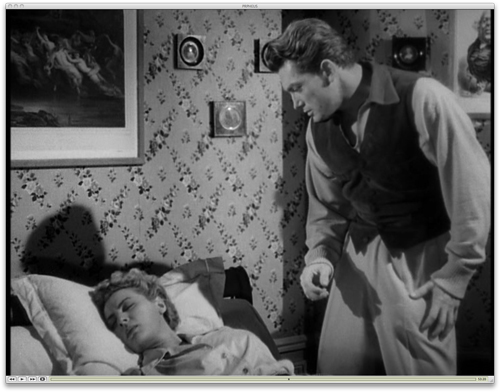
Seeing a great film for the first time is an intoxicating, inspiring event. Especially if it’s one that you’ve known about for years, seen stills of incredible images reproduced in books, read about, etc. This is the case with me and Jean Cocteau’s masterpiece Orpheus. I happened to catch the second half of it on TCM the other night and was mesmerized from the first frame. I caught it right when Orpheus climbs back into his bedroom and is told by Death’s chaufer that his wife, Eurydice, is dead.
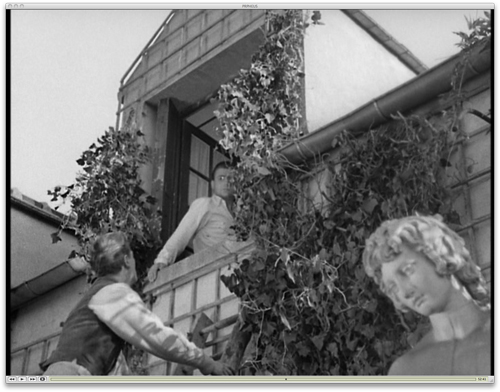
I’m only telling you this to make a point. Coming in on the film like this I was immediately struck by the distinctly American feeling of this scene. The bedroom had a floral wallpaper, it was small, with small beds, Orpheus climbing in through the window, it really reminded me of Leave it to Beaver!
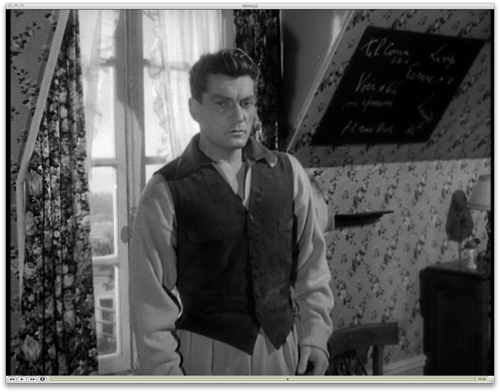
Gee Orpheus, Wally, I mean Eurydice’s dead!
The way it looked, the Black and White photography. Except they were talking about Death and the path they must take to the next world to rescue, or resuscitate Eurydice. This to me is the great power of this film. Cocteau takes the mundane, the everyday objects and places that make up our lives and shows them to be miraculous, full of mystery, portals to other dimensions. Can a poet strive for a higher goal?
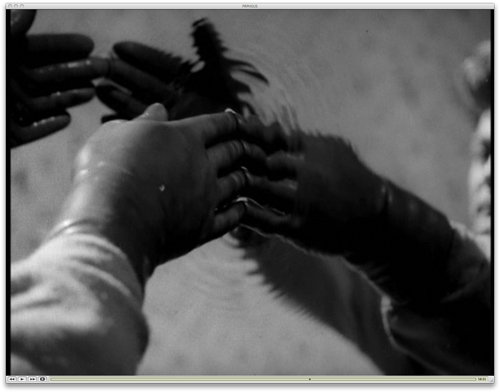
Jean Marais puts his hands into a pool of Mercurey, that’s why Cocteau made rubber gloves the magical key to pierce the Mirror, Mercurey is deadly poison!
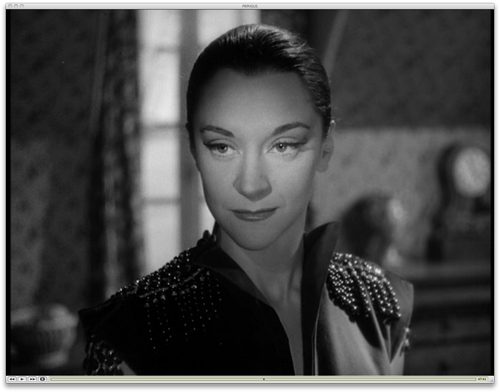
Mirrors that lead to the Underworld. Death as a beautiful women in a black Rolls Royce, escorted by two leather clad motorcyclists. What an image!
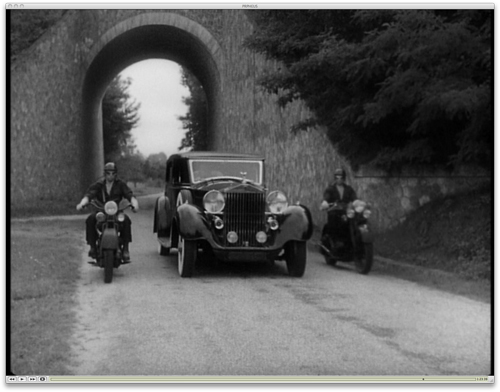
Death, What A Way To Go!
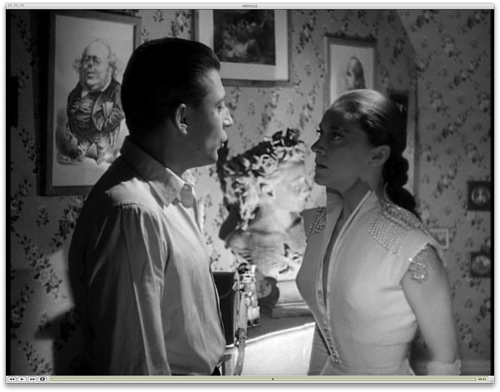
Death’s dress subtly changes from Black to White in the same scene. The costumes are exceptionally cool!
The elevation of the mundane to the marvelous is also a big part of Silent Film. This is why the masters like Keaton etc, were revered by the Surrealists. They created poetry from salt shakers,boats built in basements, houses moved by car, run through by locomotives. It became a basic tenet of Surrealism, an ordinary object placed in an unexpected context. Consider the urinal signed R. Mutt submitted by Marcel Duchamp to the Armory show, (okay Dadaist but a direct precursor to Surrealist). In a memorable section Cocteau illustrates the Creative Process in a beautiful unique way. Orpheus is obsessed by the strange broadcasts that he can only receive on the car radio in Death’s limousine, he copies them down and publishes them as poetry.
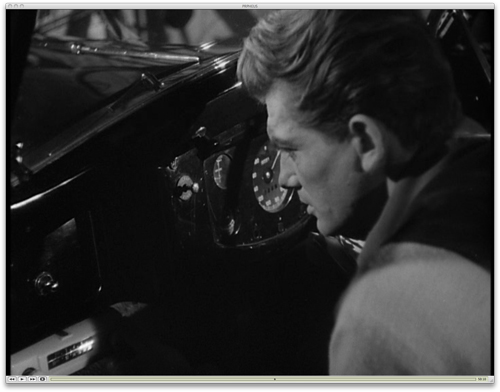
Later we find out that Death has Cegeste, a young poet she had killed by her cyclists , writing the poetry and transmitting it to the car radio expressly for Orpheus to hear.
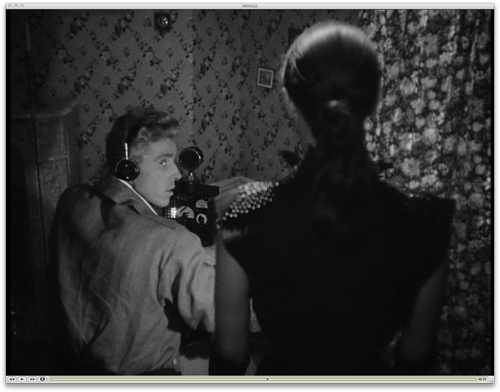
Dead Poet Society- Cegeste (Cocteau’s current lover) transmits to Orpheus(Cocteau’s former lover)
Okay to me the Creative Process works like this: all artists are standing on the shoulders of those who came before and have passed on to the next dimension. Where do ideas come from? I often have the distinct feeling that they are transmissions from deceased artists to receptive beings here on Earth. I think Cocteau felt the same way hence this amazing illustration of the principle. Also a car radio, another run of the mill object we all deal with everyday! Although Radio is inherently mysterious, these invisible waves that beam around the globe carrying thoughts, voice, music, stories. The effects Cocteau uses are all basic film effects, reverse motion, rear projection, but once again transformed through the prism of his intellect into pure poetry, something direly missing from films made today. The world Orpheus lives in is a special place, where a poet is as famous as a rock star or a movie star.
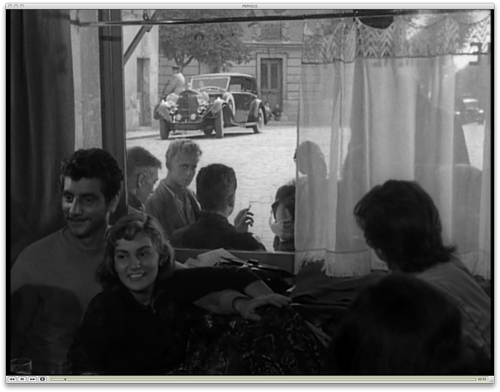
Cocteau didn’t like the artsy type extras he got from Central Casting so he invited real Bohemians to populate his Cafe Des Poets!
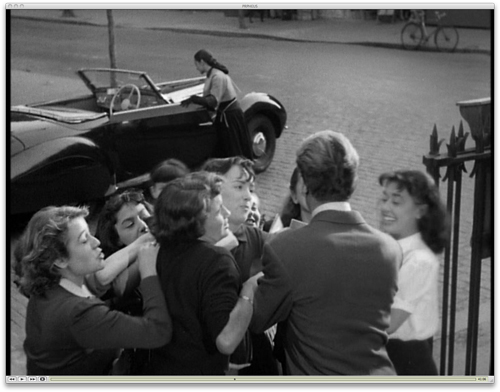
Teenaged girls mob Orpheus as Death gets into her other Cool Car
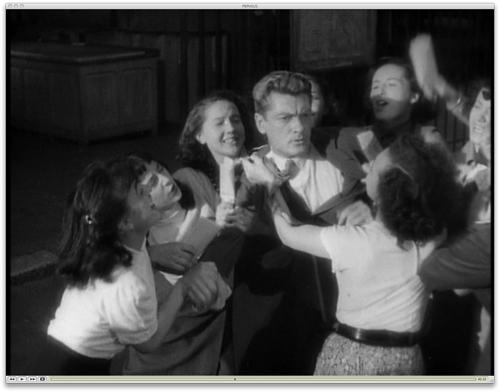
This predates Elvis and the Beatles. Luis Bunuel said he had dreamed of the Beatles many years before they existed, four young men with strange haircuts who caused riots whereever they went!
Since this film was made in 1949 Orpheus looks kind of like Elvis Presley. Pretty Cool to take a Greek Myth and update it with teenagers, motorcycles, radios, coffee houses, etc. probably another reason why the film doesn’t seem dated. Also I noticed a cameo by director Jean Pierre Melville playing the manager of a hotel. Melville directed the adaptation of Cocteau’s novel Les enfants terribles.
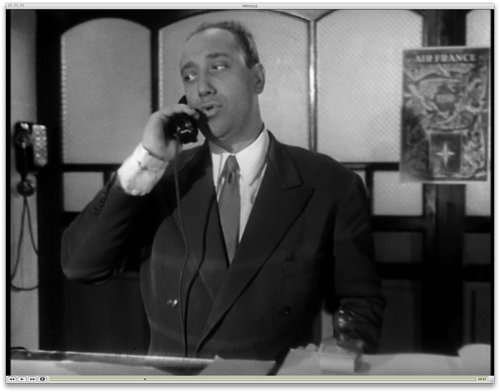
Jean Pierre Melville’s Cameo
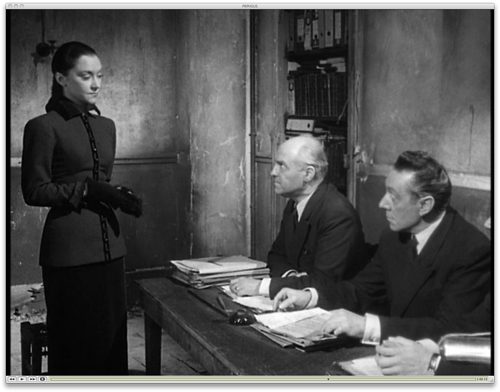
Finally Death is called to the carpet by a tribunal of Old White Men! The Old White Guys even get to pass Judgement on Death!
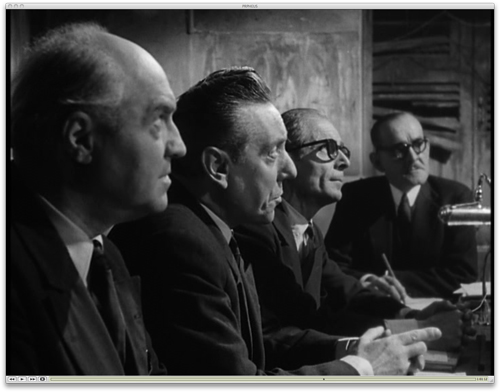
Even Death gets Judged!
To say I love this film is an understatement, I bought the dvd and it’s sadly lacking in extras, hey Criterion I’ll gladly do a commentary on this Masterpiece!
To sum it up, Watch this film! I dare you not to be Inspired or Astonished!
Max Reinhardt
Written by Joe D on November 3rd, 2009
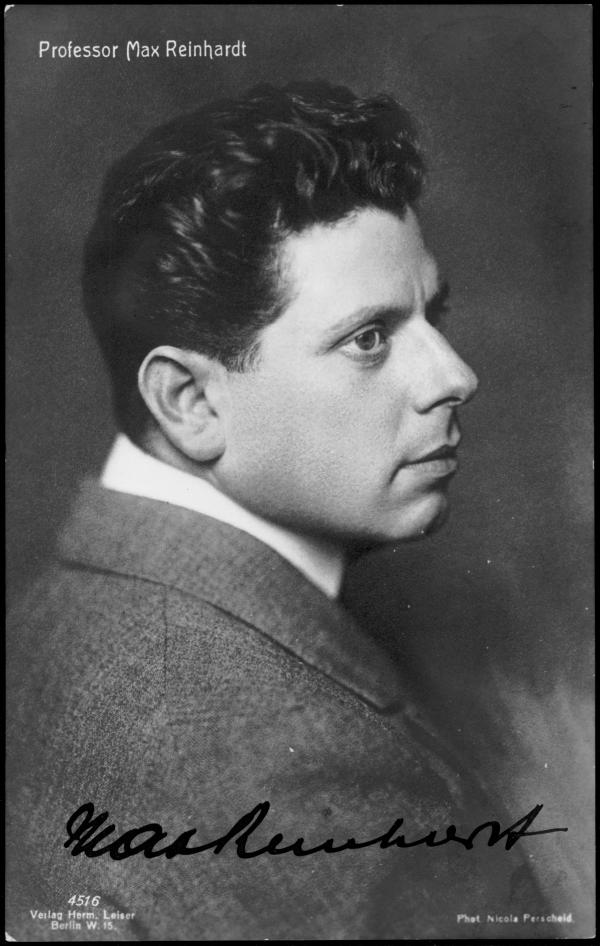
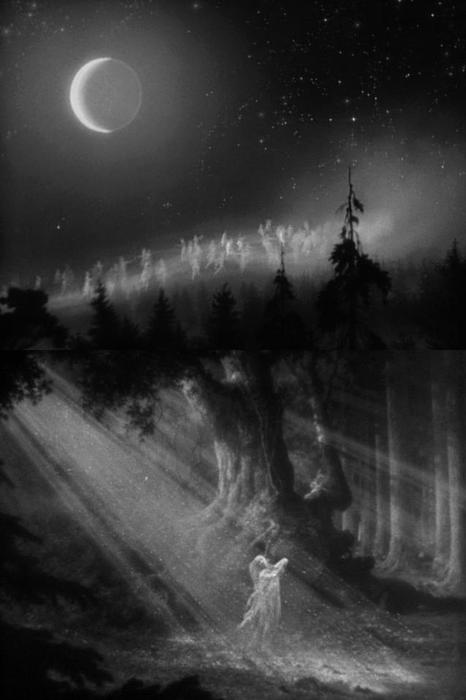
Max Reinhardt, king of German theater had to flee Nazi oppression at the height of his creative success. He came to America, staged A Midsummer Night’s Dream at the Hollywood Bowl and was signed to a contract by Warner Bros. to direct a film version. I guess it didn’t make money because Reinhardt didn’t get to make any other films. But the film he did make with William Dieterle co-directing is incredibly beautiful. Fantastic images in luminous Black and White, they must have upped the silver content in that batch of nitrate film because the images positively glow!

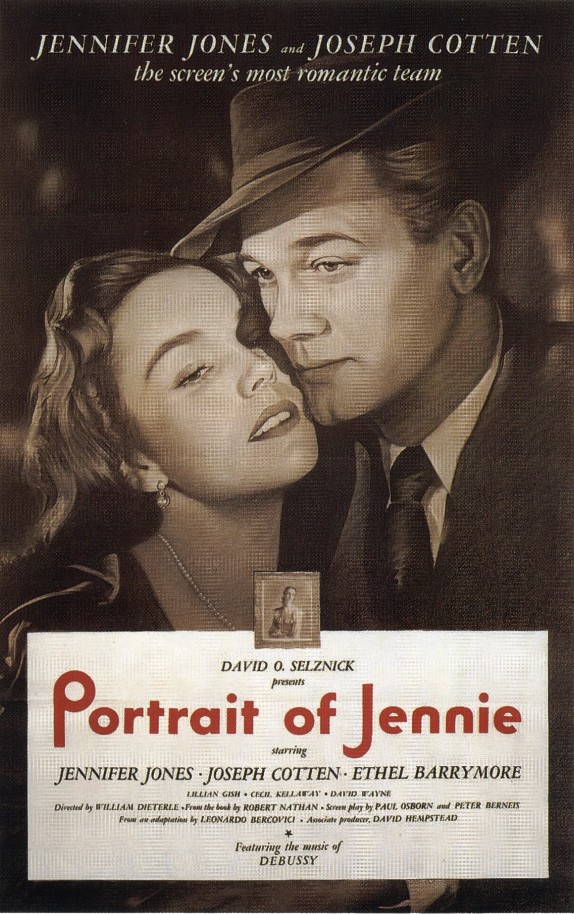
A number of Reinhardt’s collaborators from Germany re-located to Hollywood and created some of the most creative films ever made there. Dieterle made the incredible Portrait Of Jennie, a magical film beloved by none other than the great Surrealist Luis Bunuel.

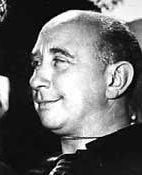
Although Dieterle was driven to drink and a nervous breakdown by the incessant barrage of telegrams from amphetamine fueled producer David O. Selznick. The cameraman Joseph August of that film died soon after of a heart attack, Selznick strikes again? John Brahm, director of The Lodger, The Locket, and Hangover Square was a Reinhardt alumnus.
John Brahm
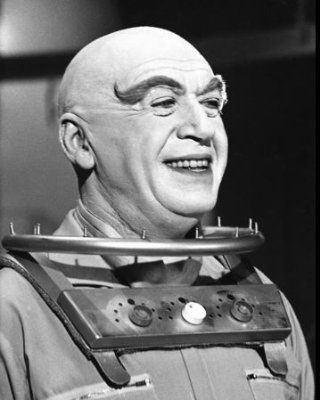
So was Otto Preminger, not a filmmaker of Fantasy, but definetly a ground-breaker when it came to sex, race, drugs, Black-Listing. Plus he directed the archtypal Laura.
Mr. Freeze says “Where’s Dorothy Dandridge?”
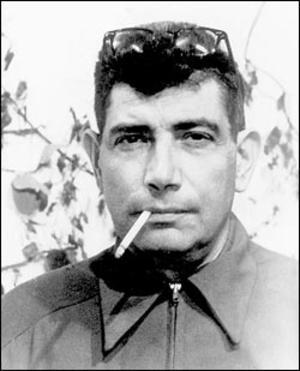
And Edgar G. Ulmer labored in the Art Department for Reinhardt. He directed the Bauhaus influenced Horror fim The Black Cat. A curious coincidence, Reinhardt opened an Acting School in Hollywood to pay his bills, Anne Savage attended and hit it off with Max, she later starred in Ulmer’s Detour.
Edgar G. Ulmer, a Black Cat crossed his path at Universal
Here’s a promotional film about the making of A Midsummer Night’s Dream
Determinism
Written by Joe D on October 14th, 2009We here at Film Forno believe in supporting independent film. In that spirit we present the trailer for Determinism, a feature by the Brothers Majumdar, identical twin filmmakers from back East. The film looks great, a lot of cool images in the trailer as you can see for yourself, excellent sound design, Check it out. I haven’t seen the film yet so I can’t comment on it but they did a great job with the trailer
And here is a link to the website about the film: CLICK ME!
Arnold Laven, R.I.P.
Written by Joe D on September 21st, 2009
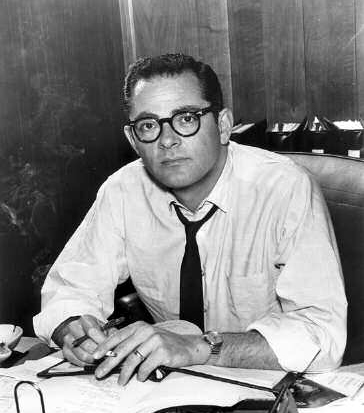
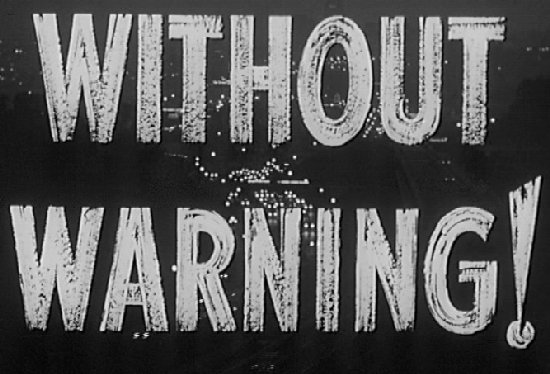
Producer- Director Arnold Laven has passed on. He’s responsible for a large amount of influential film and television. I just read a great interview with him the other day. It was done for the Noir City Sentinel, the newsletter of the Film Noir Foundation and you can read it here. I was so impressed with this interview I ordered the DVD of Laven’s directorial debut, 1952’s Without Warning, one of the first serial killer pictures and full of great Los Angeles location photography. I will post about it once I get it.

Besides his great film noir work Laven was in a large way responsible for two giant Western television sagas, The Rifleman and The Big Valley. Both big sources of inspiration for a generation of filmmakers including Quentin Tarantino who has expressed as much to me.

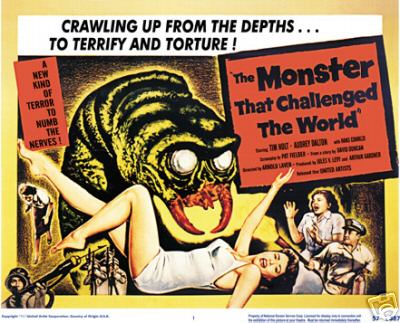
He also directed Tim Holt’s last picture The Monster That Challenged The World, Laven and Holt met many years earlier on the set of The Arizona Ranger and became good friends. He talked Holt out of retirement to make this SciFi /Horror movie. It has a gripping scene of a woman and a young girl trapped in a closet as the monster breaks through the door to get them. Check it out.
Fellini!
Written by Joe D on September 5th, 2009
Here’s part 1 of an 8 part documentary on the late, great Cine Maestro Federico Fellini. The best part of the film are the interviews with Fellini, when he speaks of the filmmaking process it’s like a philosopher, so sensitive and insightful, worth watching by every would be filmmaker. He speaks of editing on a Moviola and screening the film with only the dubbed voices of the actors for a sound track, no music, no sound effects and how different the film is when played that way. Check it out.
The Locket
Written by Joe D on August 26th, 2009
The Locket is a wonderful psychological noir featuring Robert Mitchum playing a Greenwich Village artist. It’s directed by John Brahm, a German ex-pat who learned his stuff at UFA then came over here to avoid the Nazis and made some great films. I got turned onto him through the 20th Century Fox Horror Classics dvd collection, featuring three films directed by Brahm- The Undying Monster, The Lodger, and Hangover Square. These are all great and definitely worth watching.
German Genius- John Brahm
A little research led me to The Locket, an RKO gem lensed by one of my favorite cameramen, Nicholas Musuraca (the original Prince Of Darkness). Brahm also directed a Raymond Chandler based film, The Brasher Doubloon, aka The High Window, a Vincent Price vehicle The Mad Magician, and the super groovy Hot Rods To Hell! He then directed a lot of cool TV, Outer Limits, Man from U.N.C.L.E. etc. An interesting note, Brahm directed some episodes of Alfred Hitchcock Presents, he directed a version of The Lodger years after Hitchcock did and Hitchcock’s Marnie is very similar to The Locket, but in my opinion inferior to the earlier B&W noir. The Locket is not on dvd but you can watch it as I did on YouTube.
The Locket- Part1
Black Dynamite!
Written by Joe D on August 21st, 2009
Check out this Blacksploitation flick Black Dynamite! Director Scott Sanders got it right! It looks just like a 70’s Blacksploitation flick, the lighting, the art direction. I can’t wait to see it.
And here’s another trailer from a real 1975 Blacksploitation film, Black Gestapo! The narrator is the great Adolph Ceasar with whom I had the pleasure of working back in my NYC trailer cutting days.
Leon Morin, Prêtre screens at LACMA
Written by Joe D on August 15th, 2009
I went to a screening of Jean Pierre Melvilles Leon Morin, Prêtre ( Leon Morin, Priest) last night at LACMA-the Los Angeles County Museum of Art . Rialto, the distributer that released Melville’s Army Of Shadows a few years ago is also releasing this film and Bravo to them for so doing. Made in 1961 and starring Jean Paul Belmondo and Emmanuelle Riva it is a very strange film. This was Belmondo’s next film after Breathless in which Melville also appeared ( in a cameo as a philosopher interviewed at the airport by Jean Seberg) and Belmondo is excellent in this film so is Emmanuel Riva, an incredible performance. Leon Morin takes place during the occupation of France by the Nazis and is narrated by Barny (Emmanuel Riva), there are no young men around due to the war and Barny fids herself attracted to a beautiful Amazon, her boss. She’s obsessed by her staring into her eyes and constantly talking about her, finally her friend blurts out ” You want to sleep with her?” and she reacts with horror. Emmanuel’s husband is dead ( he was Jewish) so she and a few friends conspire to get their children baptized to protect them from the Nazis. Emmanuel is revolted by the opulence of the catholic church and one day she goes into a confessional to tell the priest off. Here she meets her match in Jean Paul Belmondo.

She picks his confessional because she likes his name, Leon Morin, “a peasant” she thinks. They begin a fascinating verbal sparring match that continues for the rest of the film. She goes to see him certain nights at the rectory where he gives her books about dogma, the life of Christ and other religious subjects. She also sees other women going to see the priest, including at one point a infamous floozy, who boasts of 5 lovers and is being divorced. This wanton woman vows to seduce the priest but is unsuccessful. This has the effect on Barny of making her aware how handsome Leon Morin is and she thanks God in her prayers for making him so. At one point her daughter returns to her, she was living in the country, and she can no longer go to the priest’s room so he begins to come see her at home. She tries to seduce him and he runs out. She goes to confession embarrassed and ashamed. He acts like it was no big deal and tells her he wants to go on seeing her. The scenes of Belmondo in her home, playing with her daughter, putting her to bed, talking to Barny at the kitchen table, are very much like a husband and wife, the only element missing is sex. Later Barny asks the priest flat out, if he were not a priest would he marry her? And once again he storms off. He is willing to discuss anything else, even when Barny tries to insult or provoke him, “There is no God” etc. but he can’t discuss this. Melville said he saw Leon as a Don Juan, wanting to make all the women fall in love with him but never sleeping with them. He got pleasure from this. When Barny wants to convert to Catholicism, ostensibly the point behind their conversations Morin tries to talk her out of it! And we as audience members want a physical relationship to occur between our two protagonists, Melville is playing with film convention, where the two lovers that can’t see they love each other finally fall into each others arms at the end. This is what we have been conditioned to expect in movies, they kiss at the end, fade out. It doesn’t happen here. This film has a mysterious ambiguity that stays with you long after you’ve seen it. It is very thought provoking and discussion inducing. I wonder why Melville made it! Because of his obsession with the Occupation? An examination of a Don Juan character? He loved the novel and wanted to make it into a film right away. The philosopher Melville before becoming the Master of Noir.It doesn’t try to explain anything, just presents portraits of these characters under this specific set of historical conditions. It makes you think! Incroyable! Another thing that struck me is Barny’s daughter played by a young girl, Patricia Gozzi. She is an amazing actress. There is a scene where German soldiers practice maneuvers next to the country house she’s staying in. She goes out and meets a German soldier after they’re done practicing, he hugs and kisses her, gives her candy, she sings a song to him, all innocent, later she tells her mother she loves Gunther. The girl is about 9 or 10. One year later this same brilliant actress starred in the wonderful Les dimanches de Ville d’Avray (Sundays and Cybele) where a traumatized Vietnam veteran falls in love with this beautiful 12 year old. An incredible film! Winner of the Academy Award for best Foreign film of 1962. And here is a miniature version of that film, one year earlier in Leon Morin! Patricia Gozzi only did a few more films and then stopped acting, what a pity. She was incredible.

The Wonderful Patricia Gozzi
They’re showing Leon Morin again tonight ( Saturday August 15, 2009) at LACMA, check it out. By the way as you all know they announced the end of the film series at LACMA causing an uproar among Cineasts, Martin Scorsese wrote an editorial about it in the LA times, I hope it can be saved, last night the screening was packed!
EUROCRIME!
Written by Joe D on June 8th, 2009Mike Malloy and Mike Martinez have been working on a mind boggling documentary about the kick ass Italian Crime genre of the 70’s. They’ve got great interviews with some of the stars and filmmakers of that Golden Age. Here’s a prieview to whet your appetite.
Pickles at Midnite, Seymour Cassel, Minnie And Moskowitz
Written by Joe D on May 20th, 2009
I finally got to see John Cassavette’s wonderful Minnie And Moskowitz. They showed it at the New Beverly Cinema and it was great! A former girlfriend of mine had sung it’s praises back in the 70’s and I’d been wanting to see it ever since then. Finally I got my chance! It was worth the wait! This movie is funny, a John Cassavettes romantic comedy, if you can stretch your brain around that concept. It’s so offbeat and different, so crazy and brilliant, it was like a breath of fresh air to a coal miner that’s been trapped in a mine for 40 days and nights!

And what great performances, everybody in the film is so cool and natural and alive. Especially Seymour Cassel! This is a tour de force performance! His car parker, Seymour Moskowitz is a true Romantic, psycho! The interesting thing is that this film reflects the real behavior of these characters at that point in time, you’ll have to see it to get what I’m saying. But you do not see people acting this way today, in movies or real life. The late 60’s earl 70’s morays are incredible to watch, amazing. The film cruises along like a beautiful meandering river, never boring yet it finds the time for so many interesting characters to really express themselves, reveal a thought provoking part of their humanity. It’s beautiful and funny! After the screening Seymour got up and spoke to the crowd about his experiences working with John Cassavettes, it was a great tribute to an old friend and collaborator. Then I wound up going with Seymour and some friends to Cantor’s Deli for some late night corned beef. Rodney Biggenheimer was ensconced at his corner table looking like a mummified Beatle. Seymour told some more great stories about the making of the film and a good time was had by all! Here’s a scene from the film.
Sam Fuller- The Typewriter, The Rifle, and The Movie Camera
Written by Joe D on May 4th, 2009
Here’s a link to a supercool documentary on the late, great Samuel Fuller. I don’t know if this film is available to buy, so in the meantime check it out here. I just got a copy of Park Row, Fuller’s favorite film on early New York journalism and I’ll be writing about that soon.