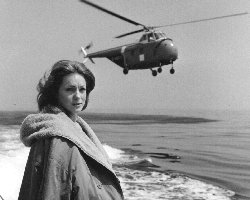
Goodbye Bunuel, His Hollywood Home

Written by Joe D on September 30th, 2007

To celebrate the end of the Bunuel Blogathon I did something I’ve been meaning to do for a long time. I looked up his old address in Hollywood, went there and took a picture. I got the address from some correspondence published in a book of his collected writings. This is where he lived with his family directly after he lost his job with the Museum of Modern Art in New York and right before he went to Mexico to make films. Around 1945/46. The 101 freeway was blasted through his old neighborhood about 100 yards from his house but this was several years after he moved to Mexico. Across the street is a new building I think it’s a school so we’re lucky his place is still there. bunuel-house.jpg

Bunuel’s Hollywood Hacienda-5642 Fountain Avenue

I watched a French documentary on Bunuel that one of the Blogathoners linked to on Google video. It was very good and at the end when the filmmakers went to Calanda they found the house Bunuel was born in being torn down. They filmed it’s demolition and put the end credits over it. Somehow fitting for a Surrealist admirer of the Marquis deSade

Sukiyaki Western Django

Written by Joe D on September 28th, 2007

Here’s a trailer for a new Samurai/Spaghetti Western Opus:Sukiayki Western Django. It looks pretty crazy, I’ll have to check it out. Also it features a guest appearance by the Crown Prince of Genre Art House Kick Ass Cinema: Quentin Tarantino!

Tristana, Luis Bunuel Blog-A-Thon

Written by Joe D on September 24th, 2007

sd11.jpg

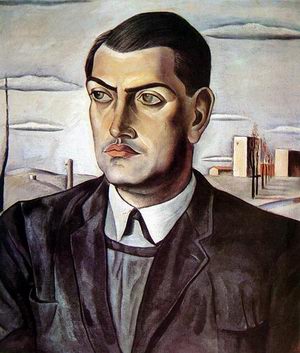
Portrait Of Bunuel by Dali

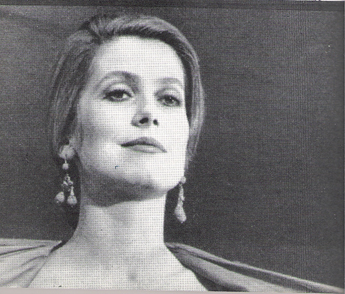
I’m writing about Tristana, a wonderful film starring Fernando Rey and Catherine Deneuve.
title-tristana-bunuel-dvd-review.jpg

Main Title floating over Toledo- note cool lack of drop shadow

This was Bunuel’s 2nd film made in Spain after the war. A lot of the intellectuals, artists, musicians, left Spain when the Fascists took over, including Bunuel. But in the early 60’s Bunuel was persuaded or allowed to make Viridiana. The film was viewed as subversive and banned by the Spanish government. Luckily a print had been smuggled out of the country and it won the Palme D’Or at Cannes.
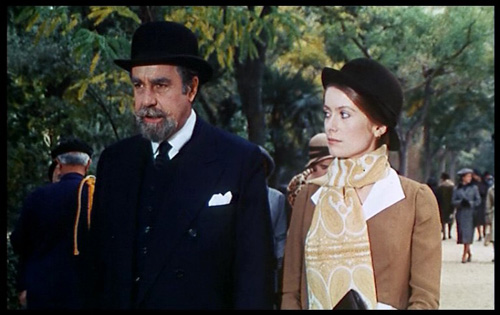
tristana-bunuel-dvd-review-bfi-pdvd_010.jpg

Predator and Prey Role Reversal on the way

So it took many years for Tristana to reach the silver screen. Bunuel wrote the screenplay in 1964 but because the Spanish government kept denying permission to film it, it didn’t go into production until 1969. But Bunuel wasn’t sitting around idly, he rewrote the script four times and I think that’s why the finished film is so polished and chock full of great images and ideas.
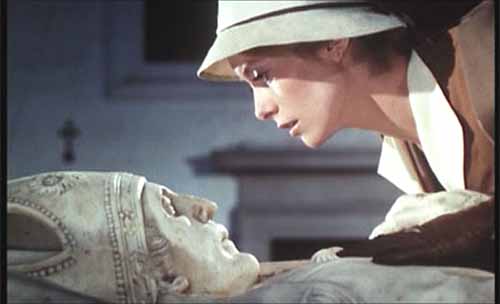
55bunuel2shot.jpg

The Bishop of Toledo and Deneuve

Tristana is based on a short novel by Galdos, Bunuel had made Nazarin from a Galdos novel a few years before and he considered Galdos one of the greatest writers Spain has produced. Tristana was filmed in Toledo, a city Bunuel loved as a young man. While attending the Resedencia in Madrid he and a group of fellow students( Lorca, Alberti, Dali, etc.) formed an honorary society, the Order of Toledo. The rules were that you visited Toledo as often as possible and stayed up all night drinking and wandering it’s medieval streets.
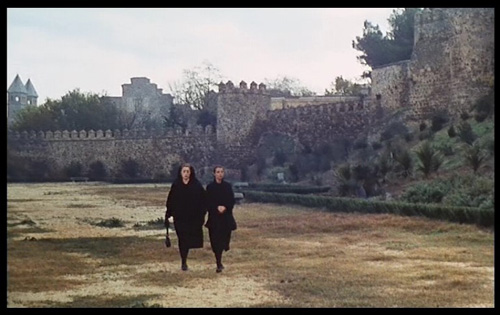
tristana-bunuel-dvd-review-bfi-pdvd_005.jpg

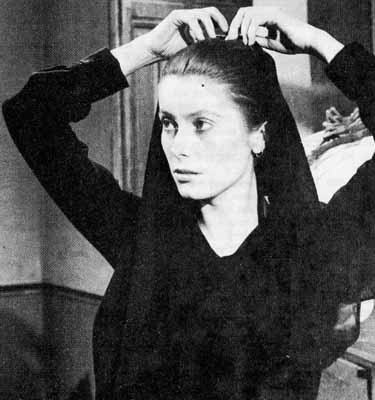
Women In Black

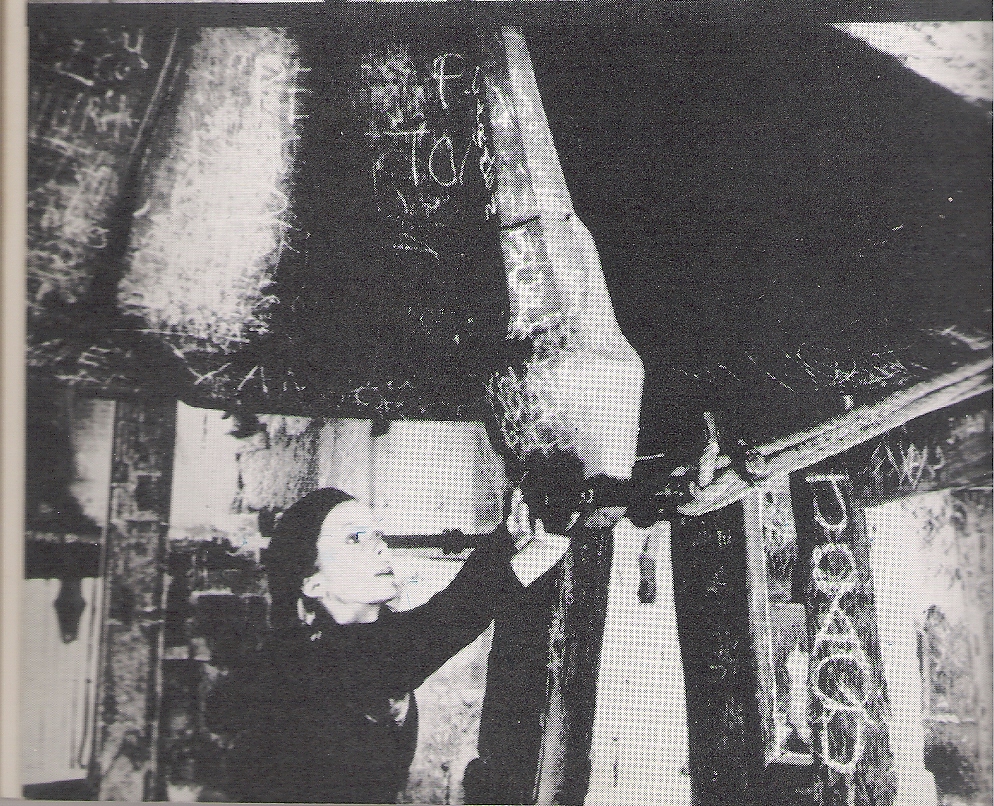
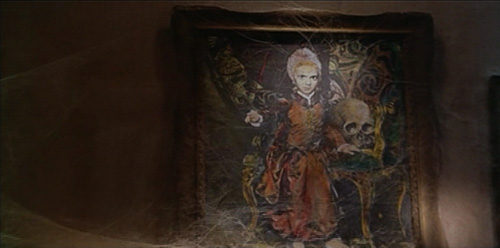
Tristana really feels like a novel, the story, the characters are so detailed and finely drawn. Also it takes place over about 20 years or so which somehow adds to it’s literary pedigree. In the beginning Deneuve is an innocent girl who following the death of her mother becomes the ward of Fernando Rey. Don Lope (Rey) is an aging Don Juan, obsessed with chivalry, dueling, sticking up for the underdog but this does not prevent him from seducing the childlike girl he has taken in to protect. Tristana (Deneuve’s name in the movie) dreams of climbing a bell tower with a deaf mute boy (Saturno) she examines the huge bell and is horrified to find Don Lope’s head attached to the end of the clapper. She awakens from this nightmare screaming.
bell.jpg

Tristana, let go of that huge penis, I mean bell clapper!

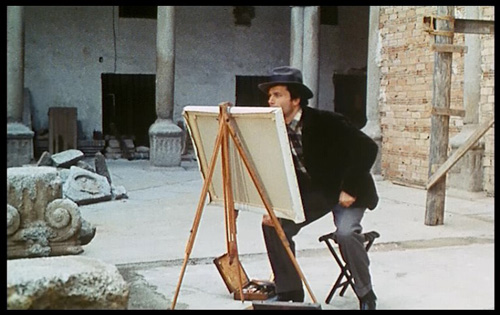
After being Don Lope’s concubine for a number of years Tristana meets a young artist Horacio (Franco Nero) she falls in love with him and runs off.
tristana-bunuel-dvd-review-bfi-pdvd_009.jpg

Unsuccessful Artist

A while later Horacio writes to Don Lope that Tristana is deathly ill and needs help. Don Lope fetches her back to his home. She is at death’s door and in order to save her life the doctor must amputate her leg. Don Lope is horrified but secretly overjoyed knowing she will never escape his clutches again. Tristana turns bitter and strange. As one critic said the star of the film is not Deneuve but her amputated leg! It certainly made a hit with Alfred Hitchcock, when he met Bunuel he kept saying” That Leg! That Leg!”.

expose.jpg

Tristana exposes herself to the Masturbating Mute

The once shy girl exposes herself to the deaf mute Saturno from her balcony and tortures the aging Don Lope eventually killing him by leaving the window of his bedroom open as he struggles with pneumonia. Then Bunuel does a very strange thing. In rapid fashion he flashes a montage of clips that retell the story in reverse accompanied by the sound of a church bell playing in reverse. It works incredibly and since it is the end of the film there is no need to explain it or recover from it, the film is over. I last saw Tristana about 20 years ago at a special screening at the New York Film Festival in Lincoln Center. I don’t know if it ever came out on DVD but Hopefully you will be able to see it at a revival theater in 35mm the way it was intended to be seen.
tristana2.jpg
I’m writing this as part of a Bunuel Blog-A-Thon, you can check out the rest of the blogs here:http://flickhead.blogspot.com/.
And here for your delectation is the trailer for Tristana

Jean Luc Godard, Anna Karina, Vivre Sa Vie

Written by Joe D on September 23rd, 2007

godardanna.jpg

The Alchemistic King and Queen of Cinema

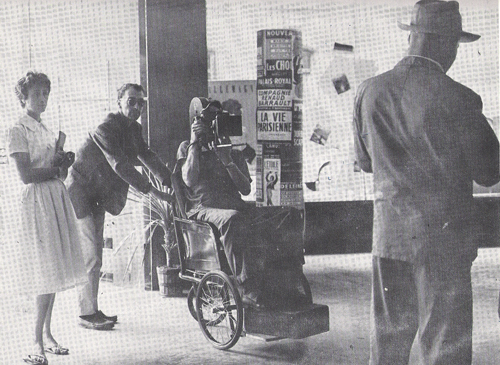
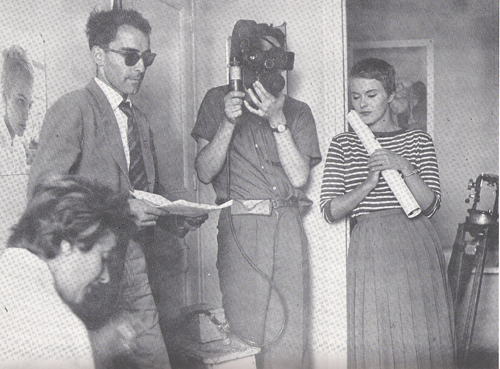
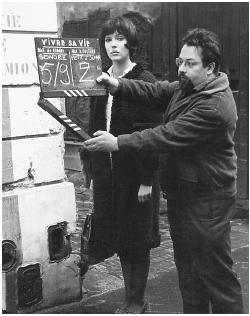
Here are some production stills from a couple of Godard’s early films. I’m also including a link to a scan of the scenario for Vivre Sa Vie. Don’t worry it’s only one page! It illustrates perfectly the incredible creativity Godard was capable of.
godardonsetwheelchair.jpggodardonset.jpg
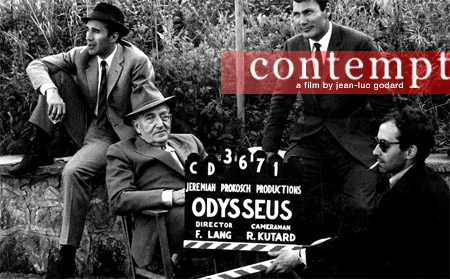
Fritz Lang was amazed at the “script” for Contempt. He said there were things in it like ” Dear Producer, how can I describe this scene? I won’t know what it is like until I see Bardot in the bath.”

contempt.jpg

Michel Piccoli, Fritz Lang, Jack Palance, Jean Luc Godard

Godard was acutely aware (maybe more than anyone else) of the Cinema’s ability to “record truth 24 times a second”. His early films have a particular resonance of truth. No other films bring to life what it was like to be a 20 year old running around, having fun, loving, being disappointed, living. Watching A Bande Apart, or A Woman Is A Woman creates in the viewer such a strong sense of the emotional reality of being a young person that you can’t help but be moved, feel those impulses course through your veins once again. They are like emotional time capsules or time machines transporting us back to our lost youth.

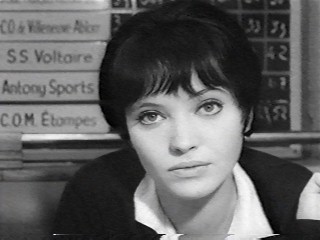
vsv031cnanalooksupjpg.jpg

One Of The Greatest Film Actresses Of All Time

Is it because there was barely a script to get in the way of the actors? Did it allow them to just “be” and therefore let the camera eye capture their naked souls perfectly? I believe so. Read the scenario for Vivre Sa Vie, is there anyone today that works like this or even thinks like this?

sjff_03_img1159.jpg

Shooting Vivre Sa Vie

I recently watched the Criterion Collection DVD of A Face In The Crowd. There is an interview with Andy Griffith in the special features section. Griffith tells the story of his first day on the set with Elia Kazan. Kazan tells Griffith ” The movie camera is a machine that will record what you are thinking through your eyes and then communicate it to everyone else.” An incredible piece of directing.

protectedimage-2php.jpg

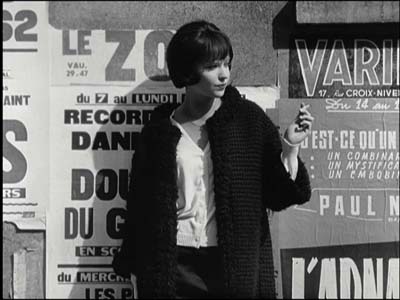
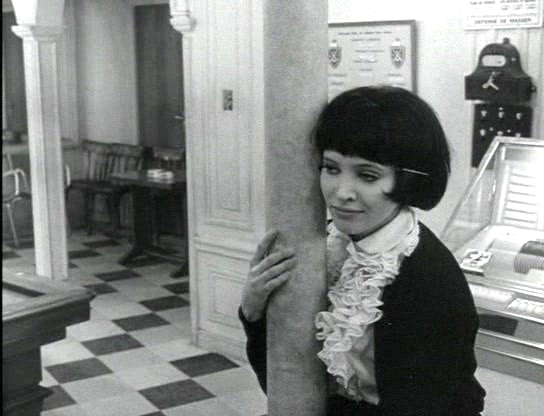
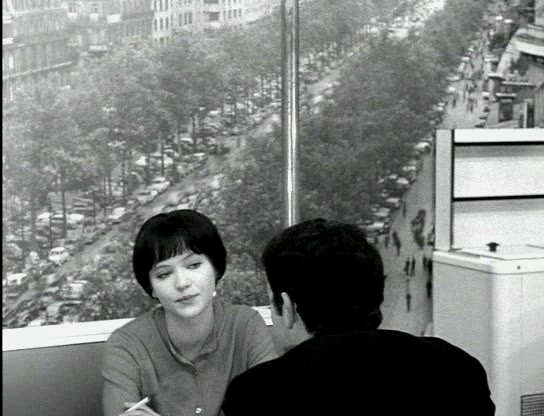
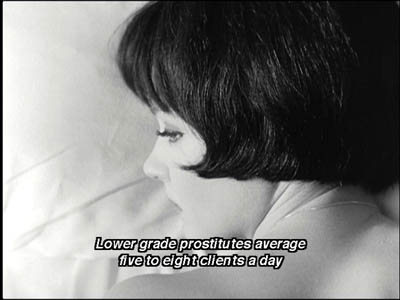
Godard understood this phenomenon and played it like a virtuoso. His films are like trapeze acts with no nets to interfere with our enjoying them. Vivre Sa Vie is a an incredible piece of filmmaking. Anna Karina is one of the greatest film actresses of all time. The Film Gods were smiling when they caused her to meet Godard on the chessboard of Cinema. Vivre Sa Vie is composed of 12 chapters each one with a title card heading. Each section is so creatively filmed and acted and photographed it never ceases to amaze you.
vivre-sa-vie-godard-1962-divx-vf08204018-06-37.jpg

The first scene is a breakup between a man and a woman in a cafe. It is shot on their backs, making them anonymous or like everyman and everywoman.
protectedimagephp.jpg
There is an incredible scene in a Cinema where Karina watches Dreyer’s The Passion Of Joan Of Arc, a silent film. Falconetti and Artaud’s beatific faces on the screen, intercut with Karina’s face, tears streaming down her cheeks, she belongs with them. The lowly prostitute is the same as the Saint, both will be sacrificed.
vivre-sa-vie-godard-1962-divx-vf05999518-05-07.jpg

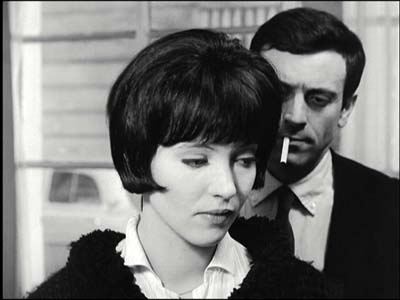
Later a scene plays out at a table in a cafe with Nana and her pimp. The camera moves around them catching them in an odd profile two shot, their faces jutting in from opposite sides of the frame just as he asks her to smile, “I can’t” she says but we hold in this two shot until she breaks and smiles, submitting her innocence to the will of this pimp.
protectedimage-1php.jpg

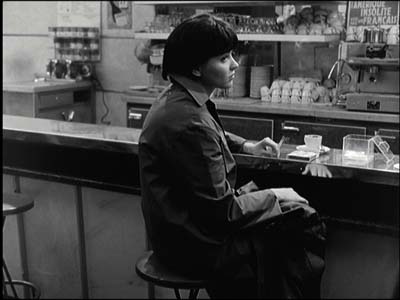
Nana sits in another cafe and discusses life, thought, existence with an aging philosopher(Brice Parain- playing himself) it’s incredible.
protectedimage-3php.jpg

I understand Godard would not give the actors their lines until just before each scene, then he would only shoot one or two takes because he loved the freshness of a first take. I’m reminded of Charlie Rouse, tenor saxophonist and long time collaborator of Thelonious Monk, who said Monk would usually go with the first take of a recording, sometimes the second but never the third.
vivre-sa-vie-godard-1962-divx-vf03466418-01-38.jpg

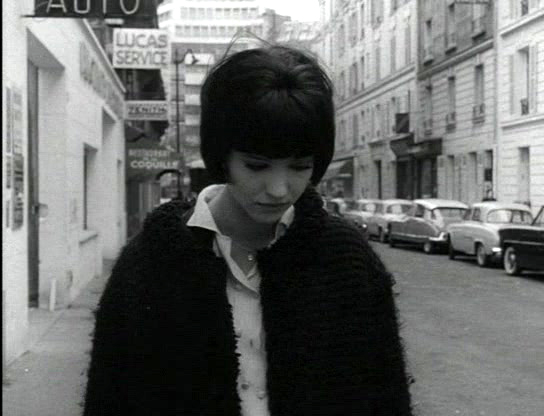
Vivre Sa Vie is concerned with the elemental , the fundamental truths of existence. Godard understood this vis a vis Cinema and his street scenes capture portraits of a civilization like a fly trapped in amber, elemental as the first films of the Lumiere brothers when inexperienced audiences fled screaming at the shot of an approaching train. By capturing reality in such a way, he captured an emotional truth specific to the age and emotional makeup of his characters(especially Karina) that is so true it’s impossible not to be moved, to re-experience that age and energy and through this mechanism Godard creates a canvas where the audience can project themselves and interpret the film as they feel it. I think every person that watches this film will bring something different away from it. With Vivre Sa Vie Godard has created a machine that allows you to look into yourself and examine your feelings, thoughts,and experiences through the magical prisms that are Anna Karina’s eyes.
vivre-sa-vie-godard-1962-divx-vf02461518-03-48.jpg

Click The Magic Link below to read the scenario of Vivre Sa Vie published in Film Culture, Fall, 1962.
Godard Scenario “Vivra Sa Vie”

Joseph Losey’s The Damned

Written by Joe D on September 13th, 2007

thesearethedamned_400.gif
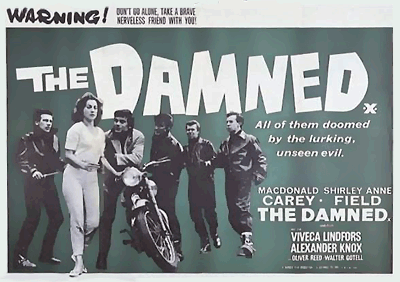
Yowza! What a crazy movie! I had heard about this one for years and finally got a chance to see it a couple months ago on TCM. It’s a very good film.

image4.jpg

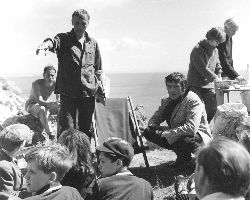
Losey Directs

For one thing it has about 3 or 4 plots stitched together like Dr. Frankenstein’s monster,The Damned takes place in a small seaside town in England , visiting American MacDonald Carey floats in on his yacht and is bewitched by young & beautiful Shirley Anne Field. Her incestuously jealous brother ( Oliver Reed) doesn’t take kindly to the attention Carey is paying his sister so he and his Teddy boy gang kick Carey’s ass good and proper almost like he was rooting for the opposing soccer team!

damned.gif

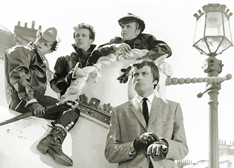
Ollie the Sadistic Fop!

Anyway Carey bumps into sculptress Vivica Lindfors and her pal super top secret scientist Alexander Knox, they live in the town, Lindfors up on a bluff overlooking the sea where she creates cool kind of organic apocalyptic sculpture and Knox in an underground bunker surrounded by barb wire, soldiers, guns, guard dogs, and searchlights where he creates mutated children.
frink_small-head.jpg

a Sculpture By Frink from the same period

Some how Carey and his young concubine fleeing the gang wind up in a subterranean compound habituated by radioactive children, genetically engineered to survive in a post nuclear apocalyptic world!

damned_lobby_card.jpg

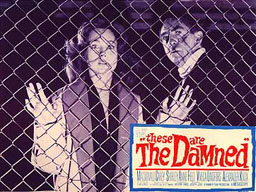
Oliver Reed bullies the sculptress by smashing some of her work (it’s incredible sculpture made for the film by Elisabeth Frink) then Ollie winds up in the Atomic Children’s Ward as well. The ending is bleak, bleak, super bleak with the added amorality of the government killing people, torturing these children, doing whatever evil horrible things it wants to in the name of National Security. Rings a Bell, n’est pas?

image3.jpg

Here Comes The Government

Joseph Losey had a strange, uneven career. He went to the same high school as Nicholas Ray. His first feature was The Boy With The Green Hair I saw it on Million Dollar movie as a kid and it’s stayed with me all these years, I should watch it again. Losey was named by the Commie witch hunt HUAC, but he never named names like a lot of others. Instead he moved to England and made the rest of his films in Europe. I recommend this film, it has made me want to check out some of Losey’s earlier works like The Prowler and The Criminal and even though I swore I’d never watch it, his remake of M.

Le Doulos, Jean Pierre Melville, Jean Paul Belmondo

Written by Joe D on September 9th, 2007

le-doulos.jpg

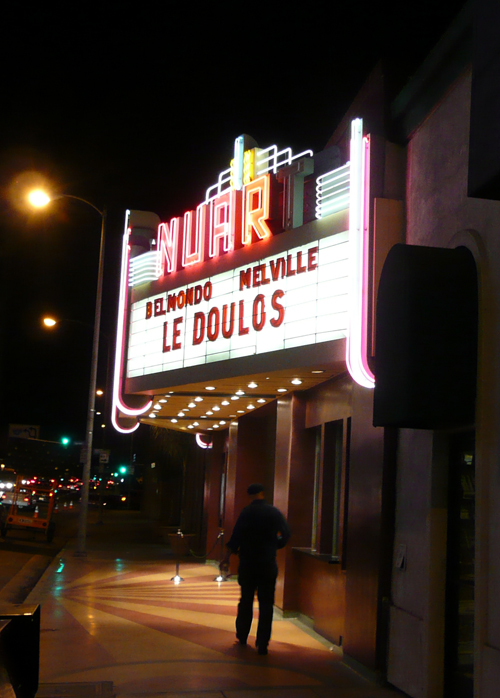
Rialto Pictures has done it again! They re-released a classic film from the early 60’s. Jean Pierre Melville’s Le Doulos.
title.jpg

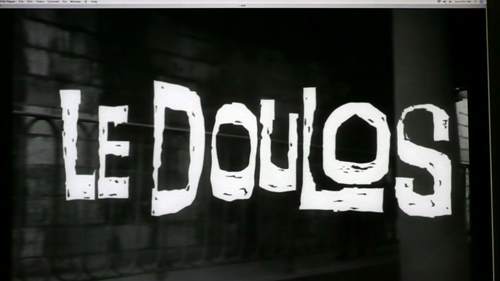
Super Cool Graphic

They resurrected Melville’s Army of Shadows last year, another gem. I really like their technique, find a super cool film that was never released here ( or minimally released) make a few restored prints and do a limited traveling theatrical exhibition. This keeps the overhead low and gives people all over the country ( at least in the big cities) a chance to see these films in a theater. Also it generates interest for DVD sales! A win/win situation.
lucky-13.jpg

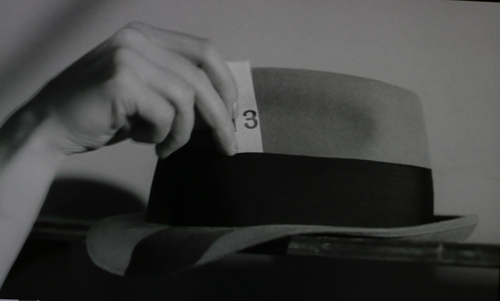
Doulos means hat

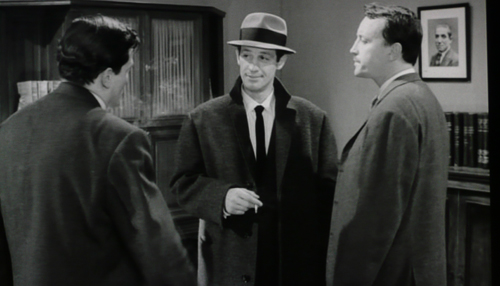
So I went to the Friday night 10:30 pm show at the Nuart Theater in Santa Monica and it was at least 3/4 full! Right On! The movie is great , a little convoluted with a lot of characters and a big expositional flashback, probably all inherited from the Serie Noir novel it was based on but worth the effort. Jean Paul Belmondo gives an austere focused performance. He is incredible, sharp as a razor and ruthless but with a deep sense of honor.
belmondo.jpg

Shooting Star Belmondo

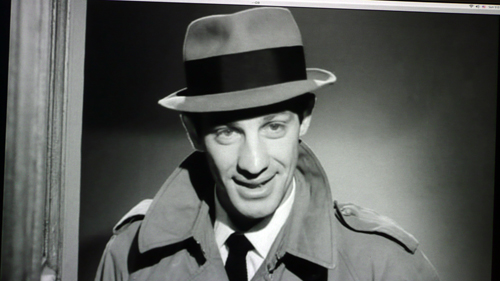
Watching this film I was made aware of his astounding versatility. He can be very funny, ice cold, sexy, cool and pull off dangerous stunts, and his persona leaps off the screen, you want to know him, be his friend or depending on your orientation, sleep with him, in a word he is a movie star. A star of the ice blue super cool part of the Spectrum. Melville the americanophile delivers his noir take on a Hollywood Gangster Film. The Hat, the Trench Coat, symbols oF The Detective, the Lone Wolf that operates outside of the Law but is subject to his own strict moral code.
american-car.jpg

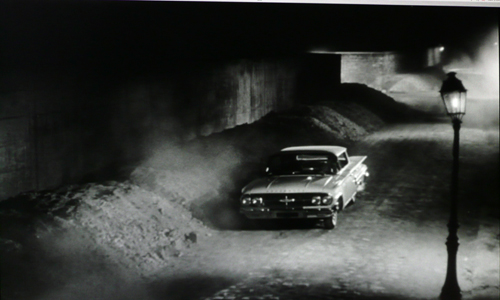
Le Car American

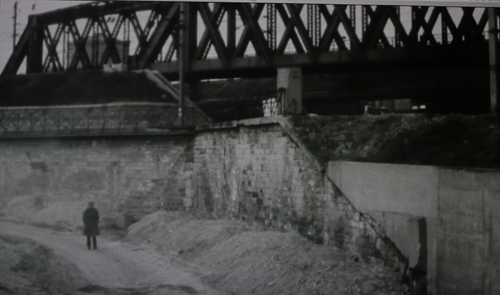
Characters drive around Paris in big American cars, just like Melville did. The atmosphere of this film is astounding, fog, train whistles screaming at you and hurtling out of the mist like Forces of Fate, oblivious to the lives of the insignificant men pursuing their nefarious ends under their trestles, struggling like ants over gold, jewels, money, women, power, death.
train.jpg

Trains Rush By like the Crushing Fates Of Greek Tragedy

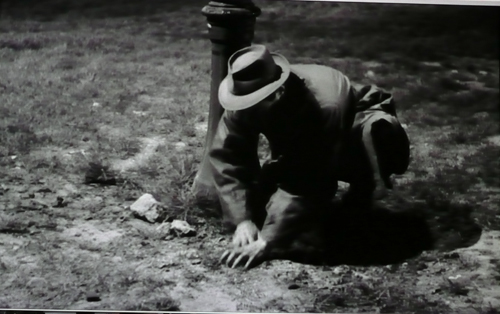
Betrayal, Loyalty, Revenge, Love, Need. The pieces on the Chessboard. A man digs a hole like an animal with his bare hands and buries jewels wrapped in a handkerchief, a block of bank notes and a pistol swathed in an oil cloth. The spoils of a murder he’s just committed.
dig.jpg

Digging Like an Animal

And the Police, doggedly pursuing the criminals who treat them with studied indifference, cooly facing long stretches in prison, The Police prying, forcing information with intimidation, blackmail, whatever it takes. Trying to turn a crook into a doulos or finger man, a rat. There is a famous scene at Police HQ where Silien (J.P. Belmondo) is being interrogated, the inspector circles Silien like a bird of prey, sniping at him , trying to trip him up, his two detectives chime in from time to time, the camera dances with them all in the confined glass enclosed space and without noticing it, a 10 minute scene has played out before you, all without cutting once! a masterpiece of camera movement, blocking, dialog, looks, sounds.
surround.jpg

The One Take Scene
I feel it’s a direct homage to Orson Welles’ Touch Of Evil. Everyone always talks about the opening shot of that film but it’s the scene in the love nest apartment where Quinlan plants the dynamite and his partner discovers it that blows me away, and that’s the scene I think Melville is referencing. Check it out, the dialogue is so perfectly deilvered you’ll have a hard time noticing it doesn’t cut! Melville’s attention to detail is superb as well, the locations, cars , clothes, casting. This film was made at the Rue Jenner Studio. The Studio Melville owned in Paris! How cool is that the guy had his own studio! The set pieces are all excellently executed, a caper gone wrong, a sly set-up to throw blame on the wrong men, A tense scene at a nightclub where Belmondo pulls the bad guy’s girl, right from under his nose. These scenes click like clockwork.
babe.jpg

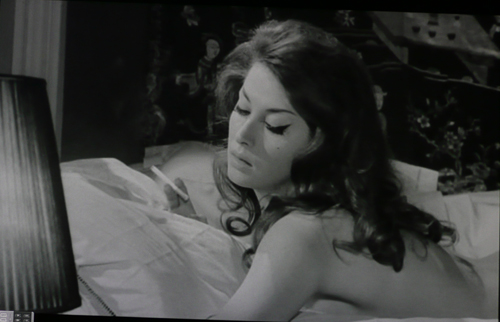
Bad Guy’s Babe in Belmondo’s Bed

It’s also full of textures, sensual moments, tactile pleasures.
hoers.jpg

Sensual. Tactile Elements

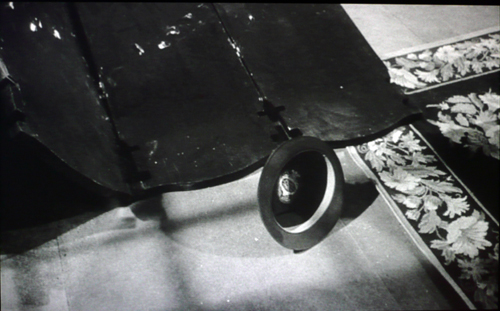
At the end of the film there is a shot of a hat falling, rolling towards the camera. Suddenly in the middle of a camera move the image freezes. Did Melville not want us to see what the camera was panning to reveal? Why did he freeze? I think it gives a horrible finality, to freeze like that in the middle of a move.
freeze.jpg

The Final Frame
A lot of films end with freeze frames but this one had a powerful effect on me. Check it out and see if you agree now that you have the chance.
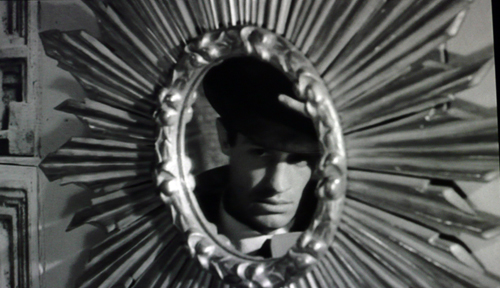
mirror.jpg

Always Adjust Your Hat

Kill, Baby… Kill!

Written by Joe D on September 3rd, 2007

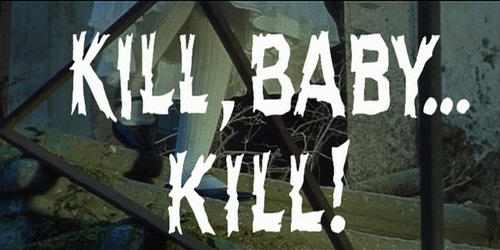
kill-baby-title.jpg

I bought a few videos at Jerry’s since he’s closing up shop. One of them was Mario Bava’s Operazione Paura (USA Title: Kill, Baby… Kill!). What an amazingly cool movie. This is the first time I’ve seen it and it ranks up there with Black Sunday.
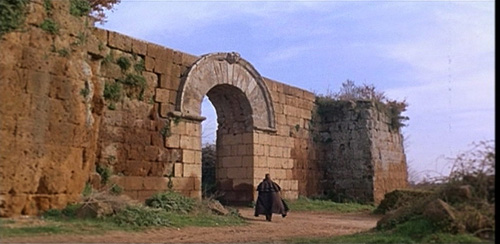
arch.jpg

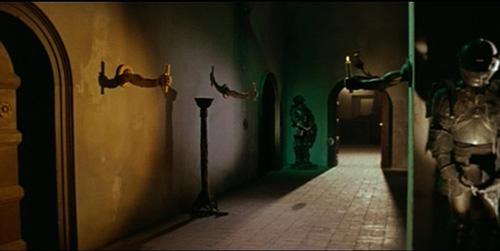
Excellent Locations

Bava was a supreme visual artist as the screenshots will attest. He studied to be a fine artist but followed in his father’s footsteps and became a Cinema Artist instead. His father Eugenio was a sculptor and the father of Italian Cinematographic Special Effects, in fact according to the excellent commentary by Bava expert Tim Lucas, Eugenio invented the so-called Schufftan Process on Cabiria years before Schufftan used it on Metropolis!
blur.jpg

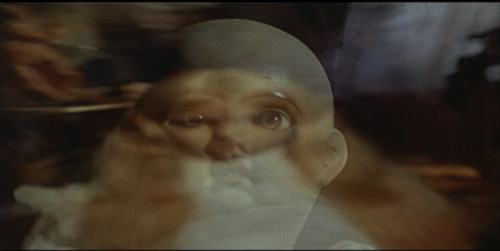
Bava’s father gave him the ripple glass used in this shot

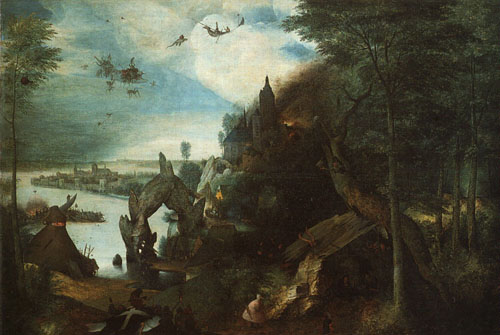
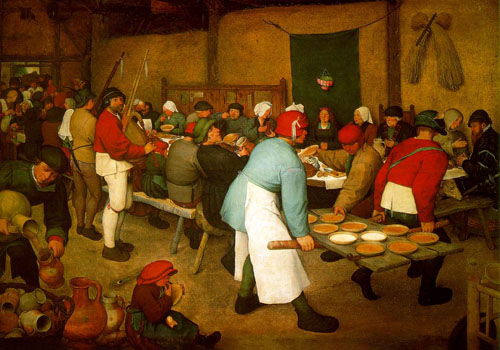
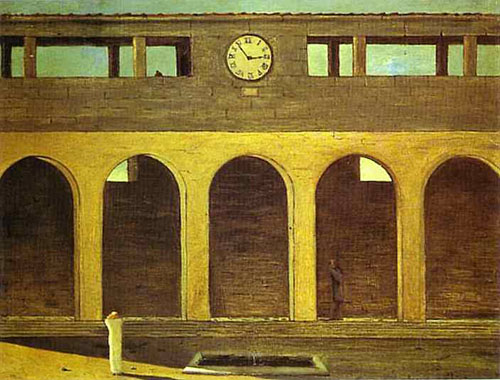
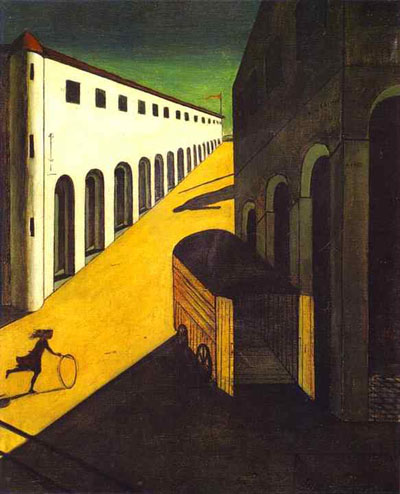
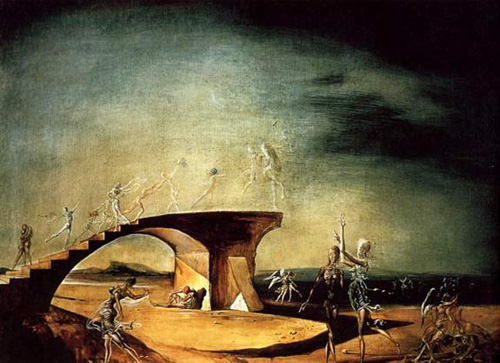
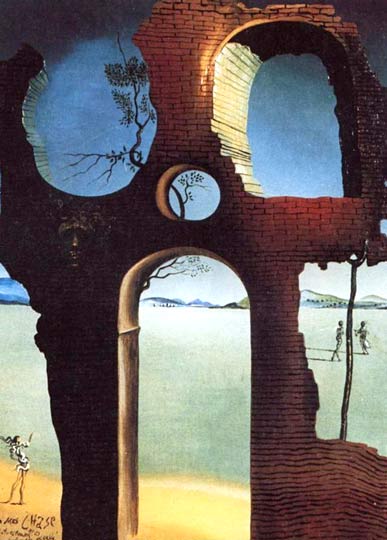
The apple didn’t fall far from the tree as Mario uses many incredible in camera effects in his films. Effects that he designed and executed himself! The only person around today that does this kind of thing is Michel Gondry. But back to our movie. There are so many painterly compositions in this film. I’ve selected a few paintings I was reminded of.
brueg1-4.jpgwedding.jpgchirico13jpg.jpgchirico9ajpg.jpg45brokenbridge.jpg41ruinwithheadofmedusa.jpg
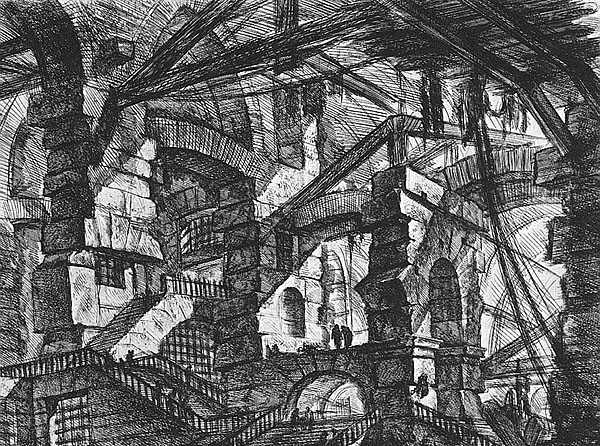
Mario studied Art History and he grew up in Roma, surrounded by great art and it’s evident here. Some of the artists brought to mind by Kill, Baby… Kill are Peter Breughel the elder, Piranesi, di Cherico, and Salvador Dali.
piranes3.jpg

An etching by Piranesi

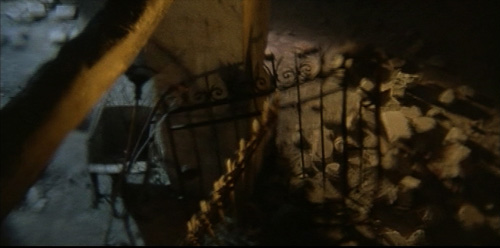
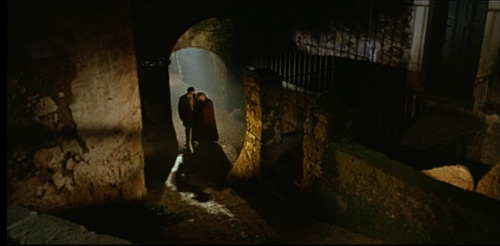
arch-nite.jpg

A CinePainting By Bava

Existential town squares, surreal crumbling landscapes, strange scenes of medieval village life are all brought to mind.
cemetary.jpg

Here’s one in the Studio

This film was made for next to nothing but looks so incredible, Bava was a true “painter with light” as a cameraman and director.
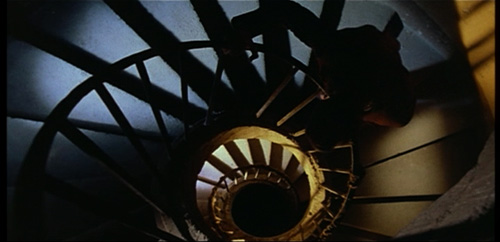
spiral.jpg

All The Colors Of The Dark

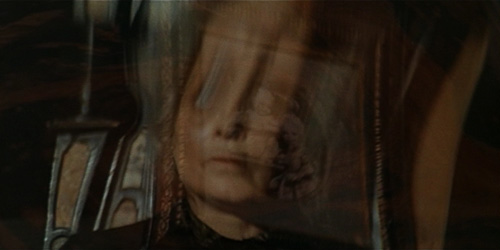
His use of colored gels in composing a scene is unequaled, as well as his beautiful camera moves, always in the service of telling the story, never drawing attention to themselves. He would use ripple glass in front of the camera, or a distorting mirror, or shoot through a painting on glass, or as I mentioned earlier use colored lights to create an effect. All done In camera! Nowadays it’s all put together on a computer after the shoot is over and at much greater expense.
swing.jpg

Child’s Play

The music is by Carlo Rustichelli, an old school Italian composer, he scored many peplums (Muscle man films, Machiste, Hercules, Samson). But according to Lucas he only wrote one piece expressly for this film. A beautiful piece that works perfectly. The instruments are Celeste, Vibraphone, Harp, and Fender Bass, and usually there’s a child’s laughter playing over it. Great! There is also some pipe organ pedal music used. My friend Danieli Luppi ( a great Italian composer) told me that many of these film scores were done at a studio in Rome called Forum. It’s in the basement of a church and when the church was empty they would use it’s pipe organ! It gives an even more chilling aspect to horror movie music to know it was recorded in an old church. The rest of the score is cobbled together from other Bava films and other uncredited composers. Tim Lucas says the producers ran out of money halfway through the shoot. People had to work for free and Bava was never paid! So when it came time to score the movie there was no dough! Bava had to call in some favors and get whatever music his friends could give him. I’d like to talk about the Italian method of film scoring vs. the american way. The Italian composer would read the script and write themes, sometimes he’d record the music before the film was shot! The american on the other hand has a stopwatch and some idiot director yelling at him” OK on this frame I want a sting! When her eyes move I want a change in the music!” It’s so micro managed you lose the musical flow! When you edit a movie you are creating a visual music out of the shots, there’s a rhythm, a pace, a heartbeat, it’s musical. So when you put a piece of music against a scene magic happens, things coincide, sync up, play as one. I personally like the Italian way better.
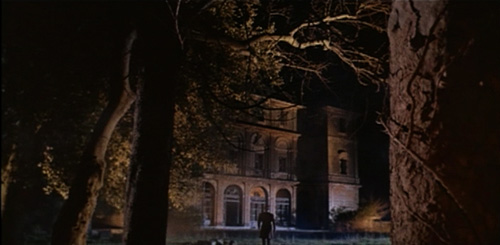
nite-villa.jpg

The Haunted Villa
inn.jpg

The Inn
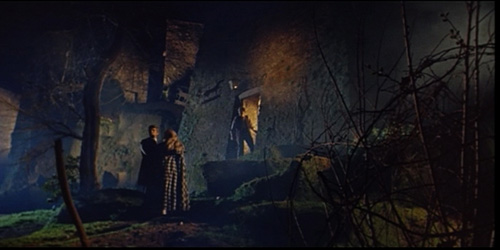
loc-2.jpgloc-3.jpg

Visions Of Hell

The locations chosen for this film are so great, they convey the atmosphere perfectly, also this is a period piece set in 1907, today that means $100 million dollars! The budget for this film was about $50,000! Fog machines and fake cobwebs add a lot of creepiness, but they have to be lit right or else they look bad.
window.jpg

The Kill Baby at the Window

dali.jpg

A Daliesque composition

There is an amazing sequence in the film where the hero Dr. Eswai is confronted by the ghost of a little girl in her mother’s haunted villa. The female lead Monica Schuftan disappears, he hears her cry from another room and rushes to save her, he enters a Moebius strip of time and space rushing from room to room, trying to reach Monica but always entering the room he just left. He sees someone exiting just as he enters, he runs faster finally catching up to the fleeing phantom, he grabs the guys shoulder and turns him around only to discover, himself! Super Cool!
chase1.jpgchase2.jpgchase3.jpgchase4.jpgchase5.jpg

Moebius Chase Scene

Also a dream sequence made of distorted shots that works really well.
dream-1.jpgdream-2.jpg

In Dreams

After this Bava was picked by Dino DeLaurentis to direct Diabolik. Dino wanted to give him a large budget but Bava refused. He knew if he accepted a lot of money he’d have to accept the control that went with it and that was not for him. He enjoyed making films his way, he evolved a technique of special effects so he could create anything his imagination came up with and for very little money. Lamberto Bava, Mario’s son said all the Italian intellectuals and big time filmmakers would go to see Bava’s films. Luchino Viscounti gave Operatzione Paura a standing ovation when he saw it.
hall-ball.jpg

Have a Ball, Baby

And Federico Fellini lifted the figure of the little girl and her ball symbolizing evil and dropped it into his film Toby Dammit a year later. Bava a super talented creator worked in genres looked down upon by the critics of his day, he worked with miniscule budgets and a lot of unknown actors, that’s why he was able to accomplish so much. Like another of my favorite artists, Chester Himes, who wrote genre detective stories brought out in cheap paperback editions but enabling him to give free reign to his creative spirit. If you like horror, if you’re interested in seeing pure creativity splashed across the silver screen, if you love film, see Kill, Baby… Kill!
painting.jpg

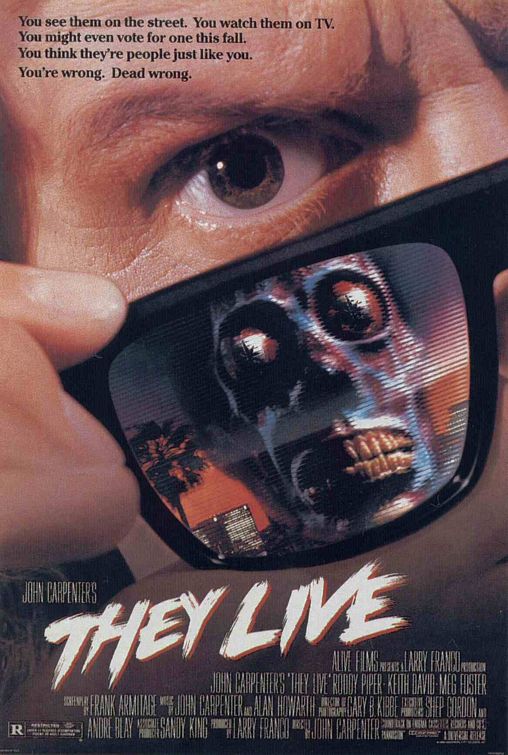
They Live

Written by Joe D on August 31st, 2007

they_live.jpg

Before there was The Matrix, before V for Vendetta, there was John Carpenter’s They Live. A super cool concept, alien mind control working through Television, Billboards, Newspapers, all media. The Aliens run everything and they keep the humans hopping like hamsters on a wheel. I watched some of Halloween last night and I started thinking about John Carpenter, I really like Starman my old pal Jack Nitzsche did the score for that movie and it’s very cool. Mark Boone Junior , star of One Night With You and prominently featured in the upcoming 30 Days Of Night is in Carpenter’s Vampires. He gets cut in two by a vampire when he answers the door and he slowly slides apart. I saw Carpenter once at Musso and Frank’s, the oldest restaurant in Hollywood. I had gone there with Boone to meet a producer when Carpenter called Boone to his table. His hair is white as snow, he wears jet black welders goggle type glasses and he can’t stand sunlight, kind of like a vampire from his film. I guess he got over exposed to ultra-violet radiation while making The Thing ( his masterpiece) and now he must stay covered like a Bedouin when outdoors.
theylive.jpg

Look Familiar?

But back to They Live, like I said a great idea, the film is crazy, there’s a fight scene between Rowdy Roddy Piper and Keith David that goes on for a very long time, I found it on Youtube so I’m including it and the trailer. Roddy finds some sunglasses that enable the wearer to see the aliens among us and see their mind control techniques in action. Also Roddy has one of the best action lines in action movies. ” Gentlemen, I’ve come here to chew bubblegum and kick ass. And I’m all out of bubblegum!” A guilty pleasure.

Trailer

World’s Longest Fist Fight

Forbidden Games

Written by Joe D on August 27th, 2007

brigitte-fossey.jpg

Bridget Fossey

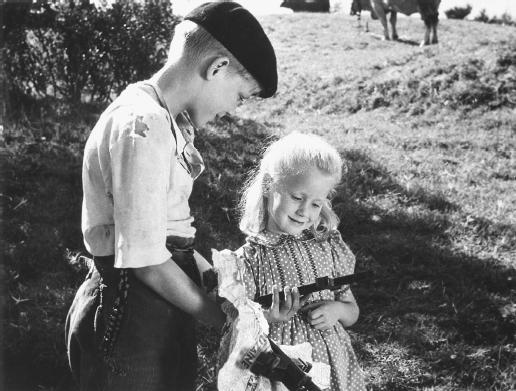
Once in a great while a film comes along that rocks you to your very roots. Forbidden Games is such a film. It is by the great Rene Clement. He created several master works like, Purple Noon (The original Talented Mr. Ripley), and Rider On The Rain with Charles Bronson but this one is my favorite . I first saw this film when I was a young lad, it played on The Million Dollar Movie back in New York on WOR Channel 9. I must offer thanks to the unknown programmer of that show. I saw Peter Brooks Lord Of The Flies, Bergman’s Virgin Spring, De Sica’s Two Women, Bunuel’s Robinson Crusoe, Losey’s Boy with The Green Hair, and Fellini’s La Dolce Vita all on The Million Dollar Movie and it made me a cinephile for life.
sjff_01_img0247.jpg

The Peasant and The Princess

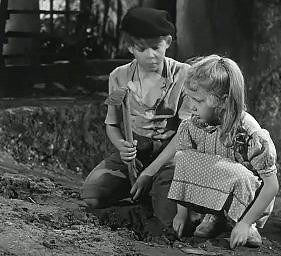
Forbidden Games starts with a long line of people on a country road, they’re fleeing Paris as the Nazi’s approach. We meet a young couple with a beautiful daughter, the little girl has a puppy she cherishes. Suddenly a sound from the sky, a German Messerschmidt fighter plane, it strafes the refugees, killing the girls parents and the puppy. The girl wanders away in shock carrying the tiny dog. She’s found by a farm family and brought into the farm house. These rough hewn folk marvel at her finery and her beauty. The young son of the farmers immediately falls in love with this rare jewel that’s appeared like a vision in their midst. The little girl tries to cope with her parents demise in a strange way.She and the boy create a fantasy cemetery burying the puppy and any other deceased creatures they come across. The imagery is powerful, romantic, emotionally intoxicating. It’s like a fairy tale come to life.

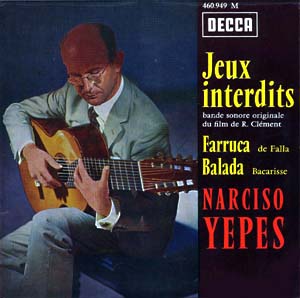
interdits.jpg

A Fairy Tale Come To Life

Clement understands that by using children as protagonists, we (the audience) experience the film as children. We re-experiance the time of our innocence and our most vivid impressions of life. The music is by the wonderful guitarist Narcisco Yepes. I had the good fortune to see him play at Alice Tully Hall in New York and he was incredible. He played a 10 string classical guitar of his own design.

jeux_interdits_460949m.jpg
Check out his music, it’s great and check out this film it’s tragic beauty will touch your soul. Below is a clip from the film, sorry about the lack of subtitles.

Film Noir Classics Collection, Volume 4-Part 2

Written by Joe D on August 24th, 2007

nyc.jpg

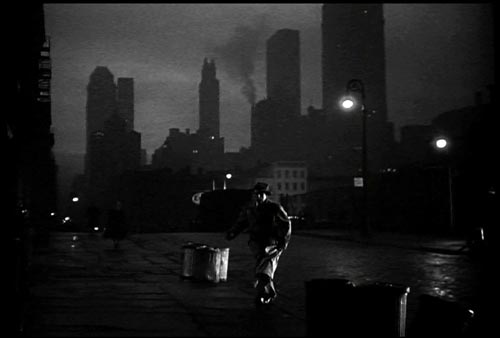
A limping figure comes out of the fog

Wow! I just watched an incredible film! Act of Violence directed by Fred Zinnemann, superb cinematography by Robert Surtees, excellent music by Bronislau Kaper, and magnificent performances by Van Heflin, Robert Ryan, and Janet Leigh. This film falls into that sub genre, Screwed Up Veteran Noir. A guy who got his mind bent by WWII tries to fit into his home life back here in the States but he can’t! When we first see Robert Ryan he’s just a shuffling silhouette coming out of a pre dawn NY cityscape, we follow him into a crummy Brownstone and up the steps to his apartment. The camera tracks following him in and tilts down as he opens a dresser drawer revealing the 45 automatic he pulls out from under his undies. Then it tilts back up showing his face for the first time.
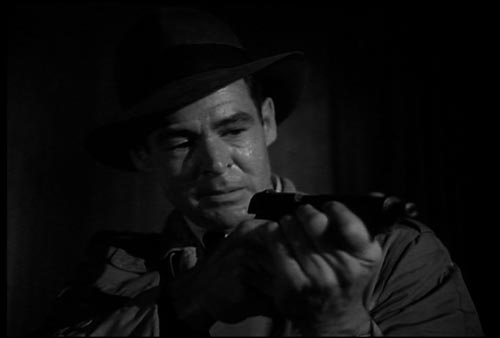
cu-rr.jpg

A genius at portraying the dark and twisted

Zinnemann has defined this character with two elements , his limp and his gun, before showing us his face, Brilliant! Let me take a second to talk about Robert Ryan. He looks like a grown up Howdy Doody but grown up twisted, dark. American as apple pie but the apples are rotten, there’s a worm eating at the heart of them. Ryan portrayed racists, psycho veterans, Anti- Semites, Gay bashers, and he did it in a way that allowed you to see his humanity, he wasn’t ever a stereotype, he was always real. This was at a time when very few films took on these controversial subject matters. Not only did it take guts for Ryan to play these parts it also took a hell of a lot of talent! He exposed the dark underbelly of the American psyche, when everybody was blowing the happy horns of victory after the war, Ryan and some dedicated filmmakers(like Zinnemann ,Wyler, Dymtrk) dared to talk about the problems the returning Vets faced. And dared to portray some Vets as something less than heroes. Here he’s an obsessed veteran charged with a holy mission, to avenge his comrades savagely cut down in a P.O.W. camp during an escape attempt. He is like Ahab stalking the white whale Van Heflin, relentlessly pursuing him, the sound of his dragging foot striking fear into the hearts of those who hear it and realize it’s significance.
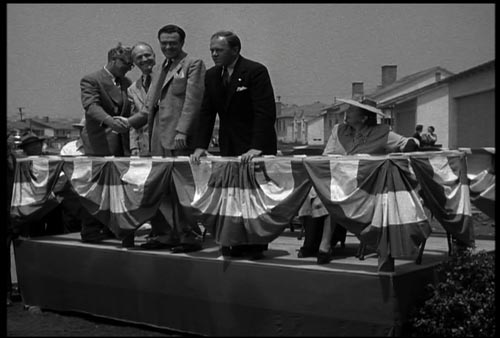
award.jpg

The Hero with a Terrible Secret

We first see Van Heflin at an awards ceremony, this brings to mind the scene in Rolling Thunder where William Devane, a returning POW is honored in his small town. Van is married to the delicious Janet Leigh, they have a darling tow headed son, they live in a Craftsman house in a picturesque small town.
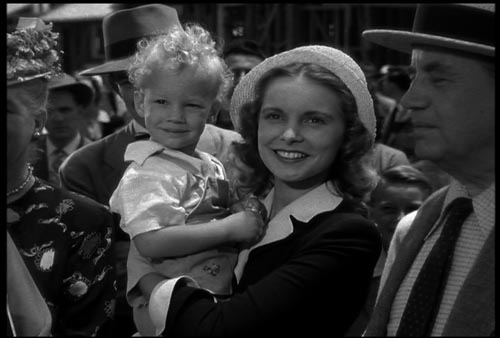
janet-baby.jpg

The Beautiful Dream of the Returned Veteran

They’ve got it all until Ryan shows up , an evil reminder of a dark deed , a mortal sin Van committed in a POW camp.
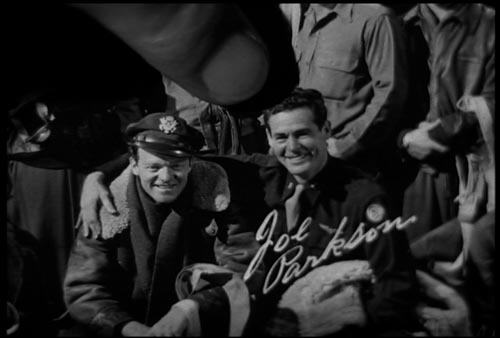
photo.jpg

Once Upon A Time they were Friends

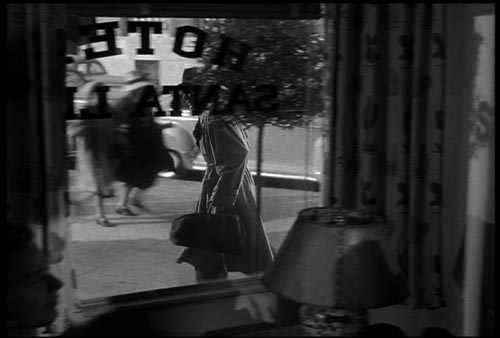
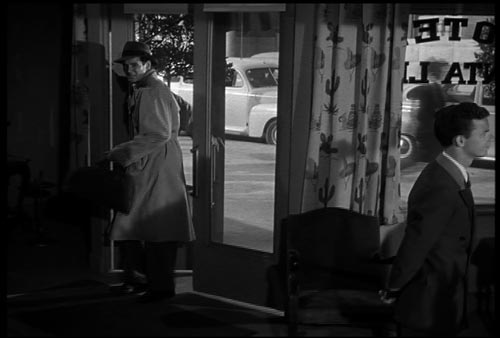
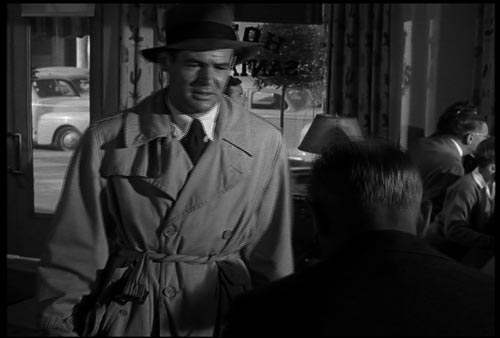
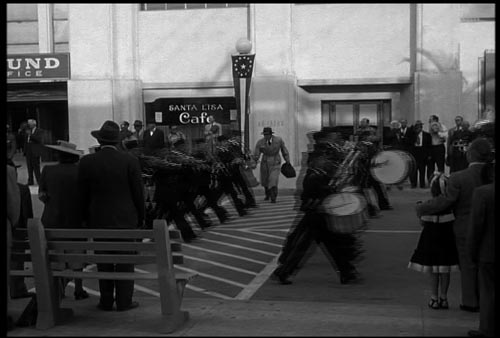
The issues in this film are so real it elevates the story from the genre to a lofty psychological plane. Once it starts I dare you to try and stop watching it! Noir was a B genre, they were made fast, a lot of the conventions of noir , the stylish shots were partly created to save time as for example when you have two characters talking to each other but both facing the camera, this saves the time of doing reverses, moving the camera, relighting, etc. There is an incredible shot early in the film. Robert Ryan has just arrived in California, he gets off the bus and starts to cross the street, a cop stops him because a Veterans parade is coming by, he waits but cuts through when there’s an opening, the camera pans with him revealing that it was in a hotel lobby shooting through the picture window, it catches Ryan coming through the entrance and tracks back with him to the desk where he checks in. This is all in one amazing shot! Yet done in such a natural way that you might not notice it. Check it out! parade.jpgoner.jpgparase5.jpg
parade6.jpg

All One Shot

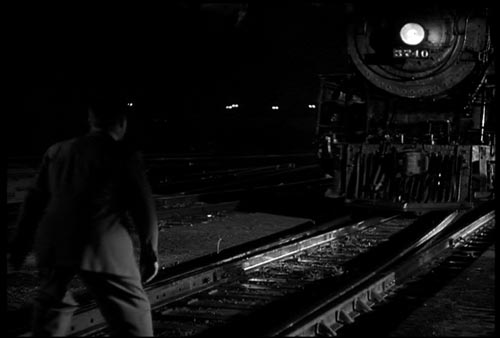
Zinnemann is an actors director. 16 vastly different performers got Academy Award nominations for their roles in his films. Van Heflin is great in this film, the best work I’ve ever seen him do. I think Gregory Peck is excellent in Zinnemann’s Behold A Pale Horse , the list goes on and on. Another interesting aspect of Film Noir, for that matter any B genre film. Due to the lower budget, their was less risk for the studio. The filmmakers could try things they wouldn’t dare on A pictures, like the subject matter of this film. It’s only by taking chances that you reach the stratospheric heights. Compared to Act Of Violence Zinnemann’s From Here To Eternity is a soap opera. Don’t get me wrong it is a very good film but the studio is making a huge investment in that project, they can’t take chances, they have to make it appeal to as many people as possible.
train.jpg

Taking Chances on a Noir Track

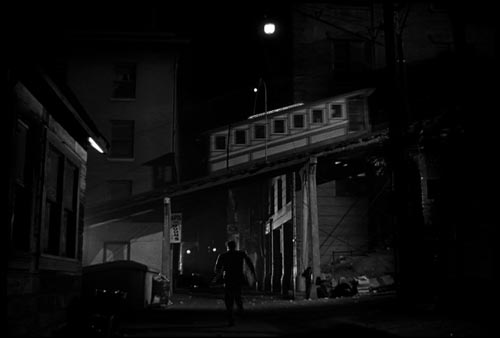
The locations are great, at one point Van flees to Los Angeles to escape Ryan. Ryan tracks him and almost gets him, Van runs into the streets and passes the touchstone of great LA noir, Angel’s Flight! I didn’t know this was in there, what a great surprise!
angels-flight.jpg

The Quintessential Noir Landmark, The Train To Nowhere

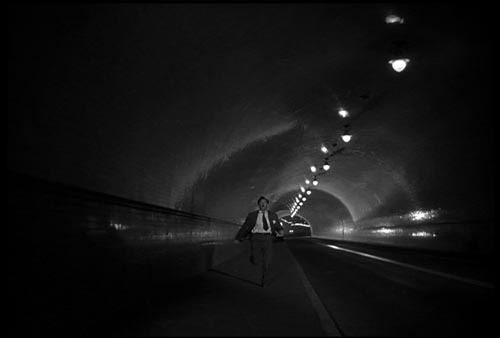
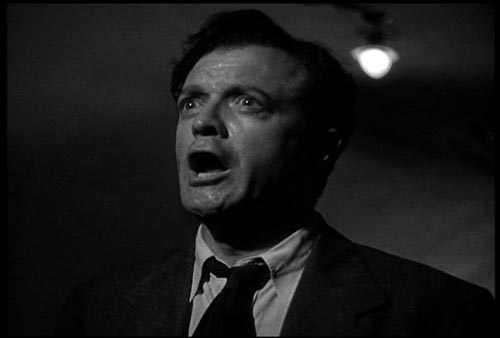
Later Van is running from himself, he enters the 2nd street tunnel. He’s flashing back to his men in the POW camp trying to escape through a tunnel they dug. The entire flashback is executed with voices ringing in Van’s head as he runs, stumbles through the tunnel. It works amazingly well! Another noir budget cutting device, a creative solution to the flashback needed at this point in the film, it’s better than showing the Stalag, the dead men, the SS officer! It’s great! Also pay attention to the editing, jump cuts bringing us closer and closer to Van as he cracks apart, forced to face what he’s kept hidden inside. This is 1948 years before the French New Wave.
tunnel.jpg

Flashback in a tunnel
tunnel2.jpg

The 2nd Street Tunnel

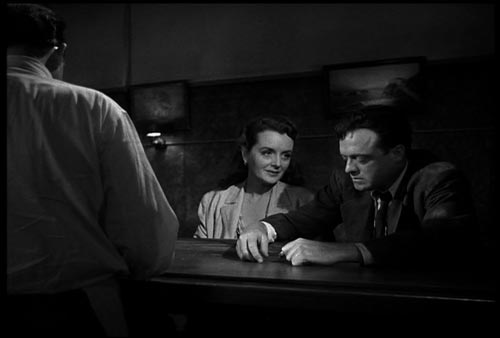
By the way I used this same tunnel as a location in my film One Night With You. Van goes down the mean streets of LA stumbling into a bar where he meets Mary Astor, an aging hooker, looking for kicks. She is incredible, the real deal, a woman pushing 40, not an ingenue with a wig. She’s terrific!
mary-astor.jpg

Mary Astor, once she chased the Maltese Falcon

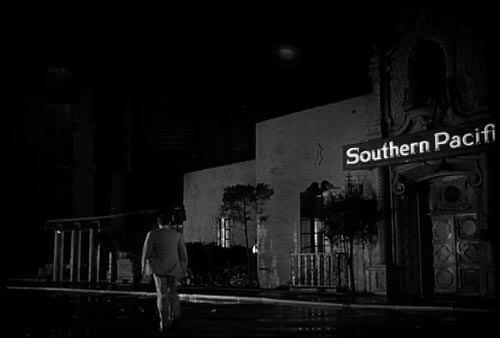
The end of the film is sort of played out like a noir Western, with a shootout at the train station, it’s very good , maybe not up to the incredible heights of the rest of the film but very well done. The train station location if I’m not mistaken is the Glendale station dressed to be Santa Lisa, the fictional small town of our story. That station still exists, it’s a beauty, used in many films, even a silent Buster Keaton opus.
station.jpg

Next Stop, Glendale!

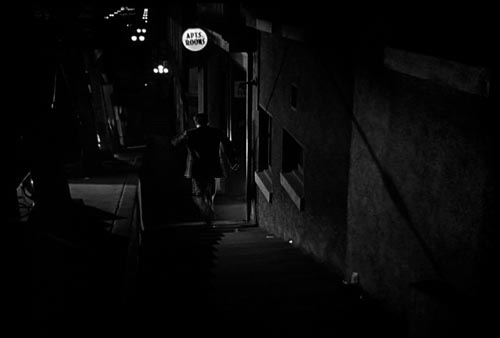
So please check this film out. I love stories about problems from out of the past showing up and haunting guys, about the problems of returned Veterans, about obsessed, relentless pursuers, about people trying to run away from themselves on the dark streets of a dirty noir city.
bunker-hill.jpg

Down these mean streets…
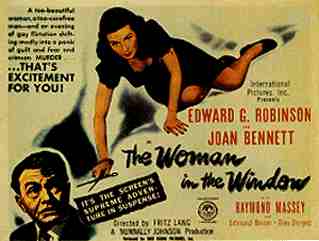
The Woman in The Window

Written by Joe D on August 23rd, 2007

thewomaninth.jpg

Obsessee, obsessor

I worked on restoring Fritz Lang’s Woman In The Window a few years ago with my friends over at Triage Motion Picture Services. For some reason or another ( probably an idiotic executive decision) the original negative had been destroyed. “Abernathy, what are all these old cans taking up all this valuable space at our studio?” “Those are the original negatives of the films the studio produced in the 30’s, 40’s and 50’s, sir” ” Get rid of that trash!” Anyway in the case of Woman In The Window all that was left was a Fine Grain made in the early 60’s and a nitrate release print from the original 1944 run. I compared the two elements and picked whatever shot was best to create a new negative.
image.jpg

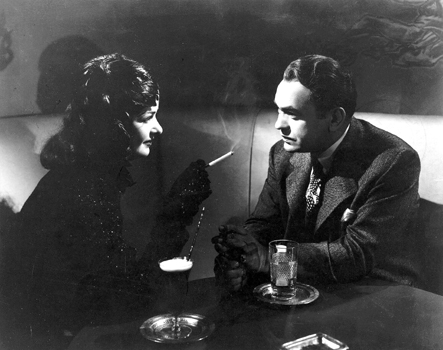
Joanie B. and Eddie G.

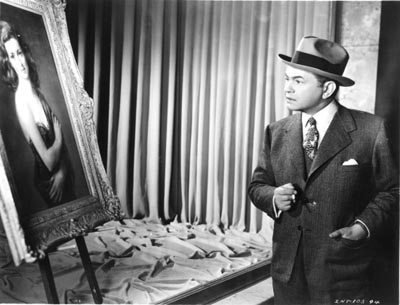
Edward G. Robinson is a college professor who sees a portrait of a woman in the window of a store next to the club where he hangs out with his buddies.
contempt.jpg

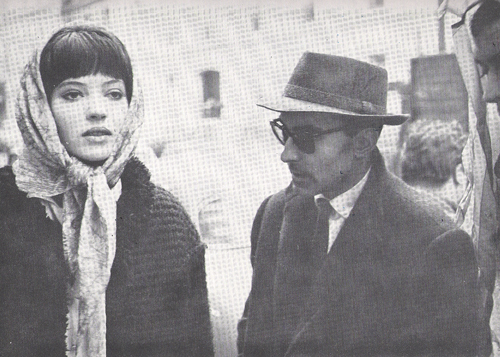
Fritz Lang in a publicity still from Le Mepris, that’s Godard working the clapper

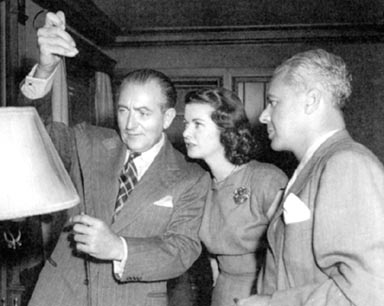
The woman in the window is the lovely Joan Bennett, she was married to producer Walter Wanger, but I guess he wasn’t wanging her enough so she had an affair with her agent, Jennings Lang. Wanger found out about it and waylaid the two, waiting for them outside their trysting place, Marlon Brando’s Beverly Hills apartment! Walter blasted the agent with two bullets one of which nicked Jennings nutsack. Wanger later said he was aiming for JL’s gonads, he wanted to make him a castrato!

lang-bennett-wanger.jpg

Herr Lang, Joan Bennett, Walter Wanger

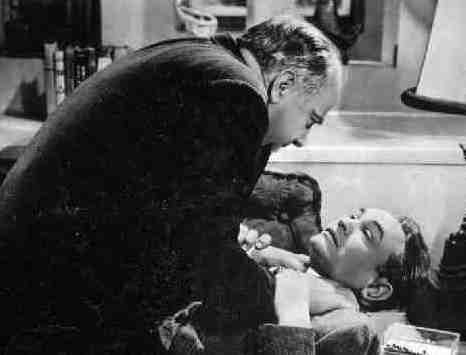
But enough digressions. Woman In The Window is an excellent film, it’s beautifully made and the scene in Joan Bennett’s apartment where Eddie G. kills Bennett’s older jealous sugar daddy is a tour de force, powerful as a nightmare from which you can’t wake up. I’ve often wondered if this scene is so strong because Fritz Lang has been accused by one of his biographers of murdering his first wife in an apartment in Berlin. Is he wrestling with his own demons? His own guilt?

poster.jpg

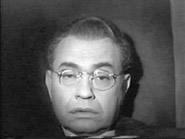
Then the ultra slimy ( and I mean that as a compliment) Dan Duryea shows up and begins blackmailing Bennett. These scenes are great as well, the beautiful, sexy Joan B. forced to be nice, to pretend she’s attracted to a man she hates, it’s cheap, degrading, sleazy. You’ll love it! The only thing that hasn’t stood the test of time is the ending, I don’t want to give it away but all it needs is a trombone going “Wahhh Wahhh” to really make it bad. In defense of Lang I guess it was a new, novel idea in 1944 and the technique used in the transitional shot is amazing. Without giving it away totally , Edward G. is sitting in a big overstuffed chair in an apartment, the camera tracks in to a tight close up of his face, then it tracks back revealling him in an entirely different location. There’s no dissolve so you know the crew was flying walls in and out, changing furniture, replacing props, all in a few seconds. Really a great effect.

womeninwindow-185.jpg

The Magic Close Up

Back in the mid 70’s I was in LA, I went to UCLA to see a program of Fritz Lang’s American films. It was hosted by the distinguished film critic Charles Champlin. Introducing The Big Heat he made a comment that Lang’s American films were his best work. I took exception to that, Metropolis, M, these are towering giants of world film, among the greatest films ever made! I like Lang’s American stuff but come on! How could this clown say such a thing! Was it American chauvinism or what. So I spoke up and told him what I thought, he tried to dismiss my comments in a rude “you don’t know what you’re talking about” way. Well, Mr. Champlin you were wrong and you’re still wrong.
image3.jpg

I’ll kill you, Charles Champlin
woman-in-the-window-the-lang-1.jpg

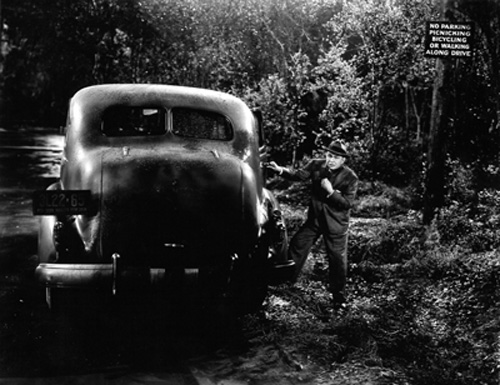
Edward G. prepares to dump the corpus delecti

During the restoration of this film I noticed a difference between the two versions I was using as source material. In the Nitrate print from the 1940’s there’s a scene where Eddie G. is pulled over by a cop while driving with the body of a dead man in the trunk of his car. The cop asks for his ID and Eddie gives it to him. Upon examining it the cop says ” Wanley huh, what is that Polish” Whereupon an angered Eddie G. snaps back “No, it’s American!” This exchange was excised from the Fine Grain version made in the 60’s maybe because of sensitivity to Polish jokes. They had blown up a shot to get rid of the line by creating a new cutaway. I had to be creative to get it to cut back in but I did it, so if you watch a new release of the film it’s in there. See if you can tell how I did it. In any case it’s a great honor for me to have made an edit in a Fritz Lang Film.
mepris41.jpg

Film Noir Classics Collection, Volume 4

Written by Joe D on August 21st, 2007

ray.jpg

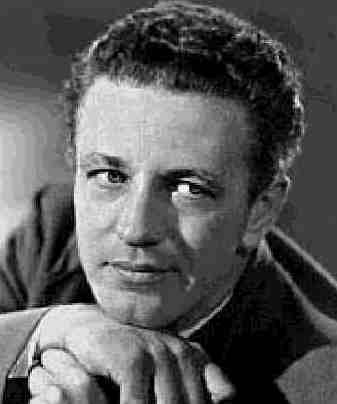
Young Nick Ray

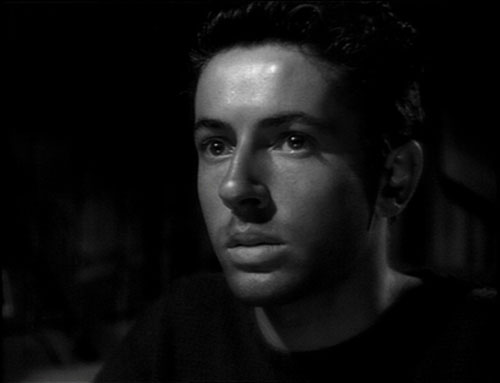
I just got the 10 film set Film Noir Volume 4. the first film I watched was Nick Ray’s They Live By Night. This was Ray’s first film and it’s a very impressive debut to say the least. I have been wanting to see this movie for years! i couldn’t ever find a copy of it so when I saw it as part of this collection I grabbed it. I was not disappointed. This movie is excellent. The acting is great especially the scenes between Farley Granger and Cathy O’Donnell. Their innocence and emotional transparency is moving, beautiful.
a-nicholas-ray-they-live-by-night-dvd-review-pdvd_011.jpg

Young Farley

I recently watched a giallo starring Farley Granger called Amuck. It also starred the lovely Barbara Bouchet. A cool movie and interesting to compare to They Live By Night if only to see Farley as an innocent on the run in the rural south versus a decadent rich semi aristocrat in Venice.
A friend of mine took a film course Nick Ray taught at SUNY Purchase in the mid 70’s. He said on the first day of class Ray shows up with sunglasses so black they looked like they were spray painted, his hair was shocking white, as white as the snow he was chopping on the desktop and shovelling up his nose. “From now on this class will meet at midnight!” Ray barked, and they did meet at midnight from then on, making a class film with Ray directing.
a-nicholas-ray-they-live-by-night-dvd-review-pdvd_014.jpg

Young Cathy O’Donnell

They Live By Night does bear comparison with Citizen Kane. Both were made at RKO, both were by first time directors and Night was produced by John Houseman who had been Welles producing partner at the Mercury Theater. There is a sense of experimentation in them both, a refreshing breaking of rules, unconventional angles, fresh ideas. Greg Toland asked to shoot Kane. He knew Welles had never made a film, he also knew Welles was a super talent uninhibited, full of crazy ideas, and Toland knew with his skill he could realize them. We have that dynamic of an unorthodox talented newcomer here in this film. Years later around the time of 55 Days at Peking Ray saw Bunuel’s Nazarin. He was blown away, excited by the film. He arranged for it to be distributed in the US. Ray asked Bunuel how much the film had cost. Bunuel replied” 50,000 dollars.” Ray responded” I wish I could make a film like that, with that freedom.” Bunuel said” Why don’t you do it. Make a film for $50,000.” Horrified Ray answered ” I can’t do that! Everybody would think I was washed up!”
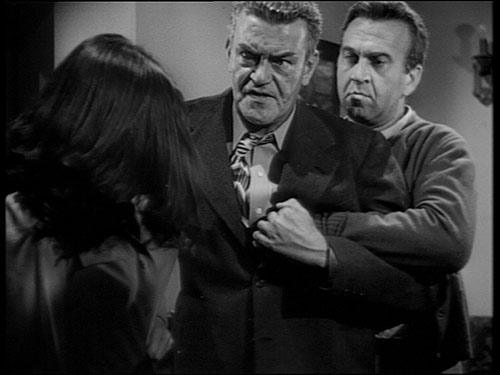
The rest of the cast is excellent as well. Great character actors, great faces. Jay C. Flippen, the frog faced tough guy who started in vaudeville was never better. Howard Da Silva plays a one eyed psycho and is thoroughly despicable.
a-nicholas-ray-they-live-by-night-dvd-review-pdvd_013.jpg

Flippen & DaSilva
a-nicholas-ray-they-live-by-night-dvd-review-pdvd_019.jpg

She made a deal with the Devil, I mean the F.B.I.

Helen Craig, a tough broad that will do anything to get her husband out of jail,is as traitorous as a rabid rattlesnake. Great!
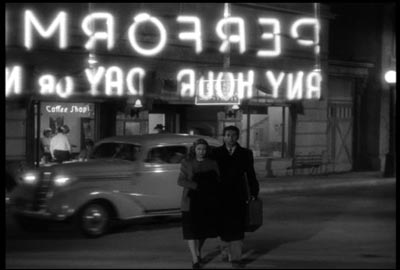
The filmmaking is top notch, the locations, the sets, all superb. The attention to detail is so real, so alive, it’s like they got real tools from a working garage for the gas station and the diner feels greasy and neon lit in a truly unique but real way.
neon.jpg

The magic of Neon
I must comment on the fact that one of the two credited art directors is Albert S. D’Agostino. I am a huge fan of his work and I’m planning on posting about him soon. Also we share similar last names. He was the head of the art department at RKO, my favorite studio.And this is the earliest use of a helicopter shot I can think of, very cool.
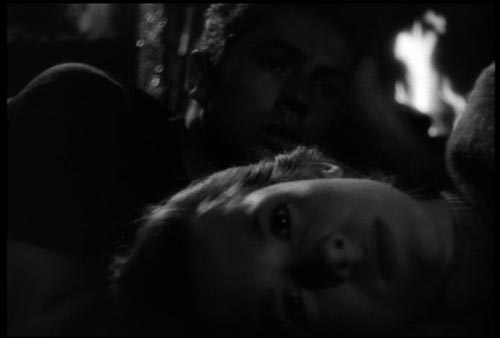
fire.jpg

Ultra Romantic Imagery

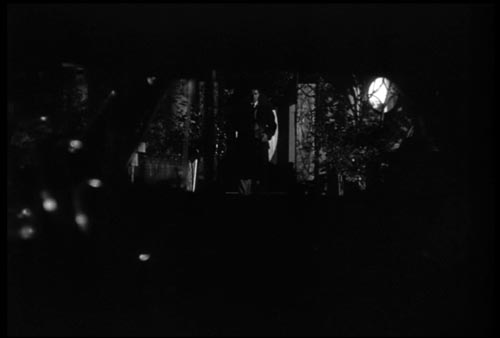
There are some beautiful shots and wonderful lighting effects, a close two shot of Farley and Cathy in the flickering firelight, shots through windows with neon signs, the creepy shot of Farley leaving the pseudo justice of the peace’s office, heavy with tragic foreboding.
they-live.jpg

Heavy with Tragic Foreboding

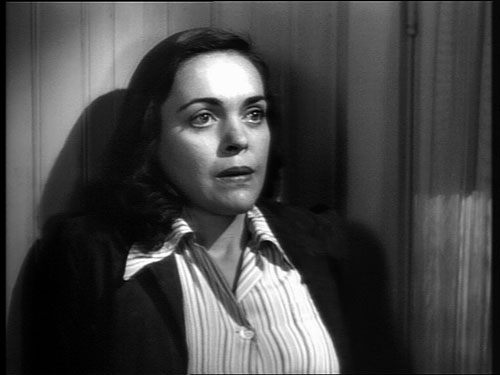
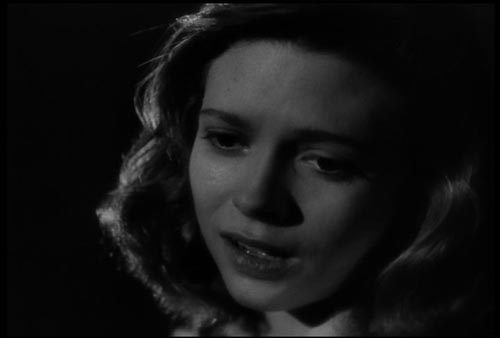
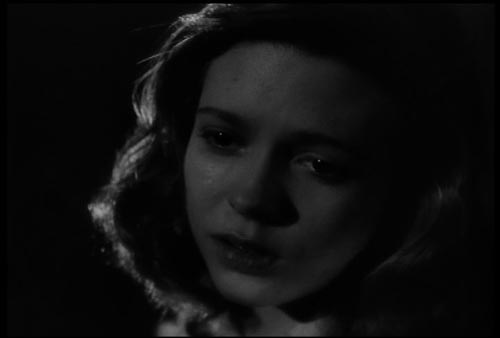
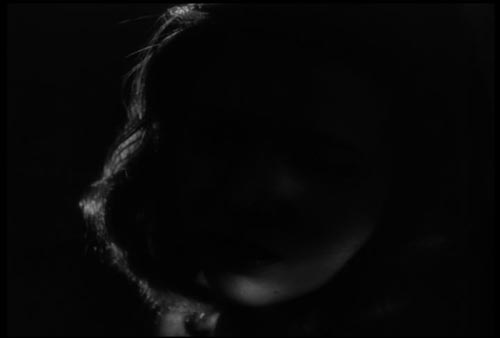
But one shot that really stood out to me is the final shot of the film. It’s a Close Up of Cathy, she’s framed in a doorway, highlights in her hair, her face suffused with a soft light, slowly the light on her face fades out, this was done on the set with a dimmer for as her features get darker and darker the highlights in her hair stay the same, a beautiful in camera effect. I believe the script says something like “she is swallowed by darkness.”
cu1.jpg
cu2.jpg
cu3.jpg

She is swallowed by darkness

I saw another film from this set at the Film Noir Festival at the American Cinematech 2 years back, Crime Wave, an excellent noir by Andre de Toth. I’ll write about that one soon. But so far it’s thumbs up for this collection. Check it out!