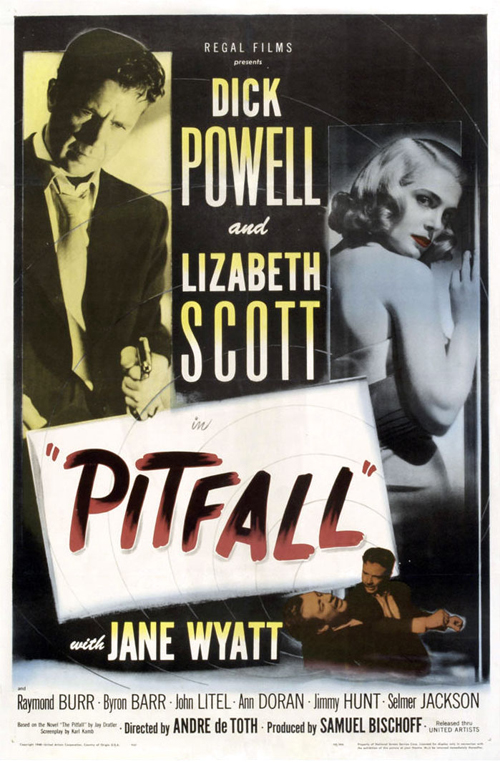
I’m writing about a little known but great movie, Andre de Toth’s Pitfall. A noir gem, hard to see but worth the effort! I got a laser disc copy, I don’t think it’s on DVD yet. It features great performences by Dick Powell, Lizabeth Scott, Raymond Burr ( in his first meaty role), and Jane Wyatt ( who steals the show!). There’s something about these European directors that came here in the 40’s, like Billy Wilder. They could see through all the moralistic bullshit and make films that dealt with emotional realities, truths, not whitewashed happy ending sentimental dreck. Pitfall delivers, it’s a classic noir tale, we start with a happy American family, Dad, Mom, and Junior.
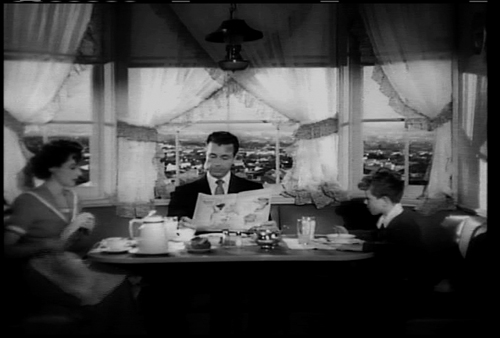
The American Dream
Dad is an insurance investigator, one of his operatives is Raymond Burr, a creepy simian in an oversized suit.
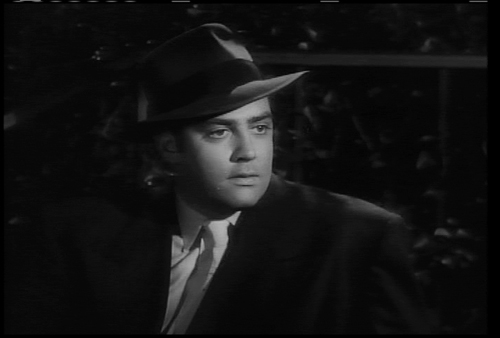
The Look OF Lust For Lizabeth
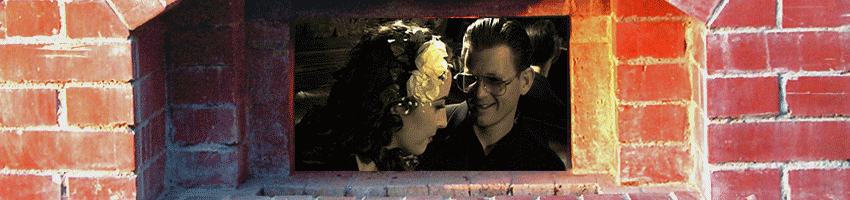
They investigate sexy model Lizabeth Scott, (who we first see in revealling short shorts). It seems Scott’s husband embezzeled funds from his employer so he could keep Scott in minks and speedboats and other luxurious items. Now investigator Dick must reclaim said booty. Unfortunately for him he is mesmerized by Scott’s booty and after a hair raising ride in her speedy motorboat he’s hooked like a Marlin off Mexico. The first phase of the Film Noir Formula, Femme Fatale in need attracts chump with a lot to lose.
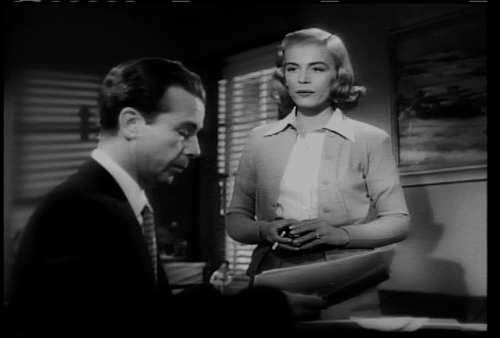
Dig those noir Venetian blinds
But don’t forget about dear old Raymond Burr, he’s got the hots for Lizabeth himself, he even warns Dick to keep away. But maybe this fans Dick’s flame even more! Liz tells Burr she wants nothing to do with him but that doesn’t stop him, he stalks her, follows her, waits for her on her doorstep. He’s like a large drooling chimpanzee ogling her everywhere she goes. He even shows up at her work (she’s a department store model) and insists to the madam, I mean matron that she model a dress for him, it’s a creepy degrading scene, you’re going to love it!
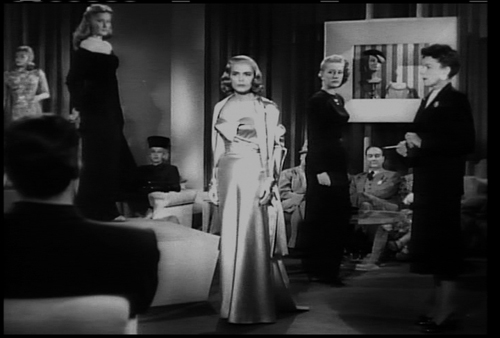
The Shining Object Of Desire
Burr kicks the shit out of Dick, waylaying him as he’s parking his car in his garage! The low down lily livered skunk! But Dick gets revenge, once Jane has healed him up, he heads over to Burr’s apartment and as soon as Ray opens his door, Dick coldcocks him! Very satisfying!
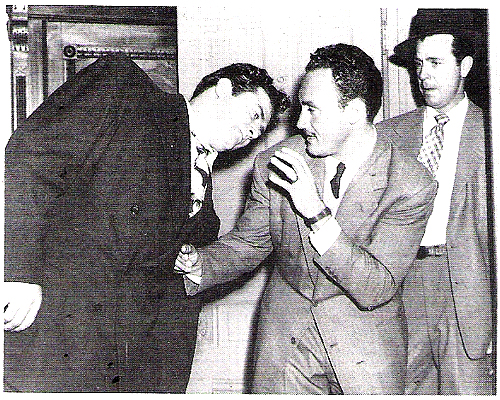
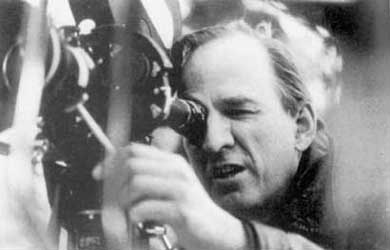
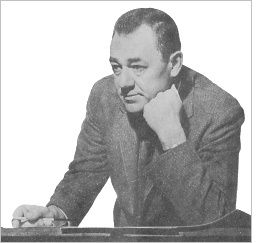
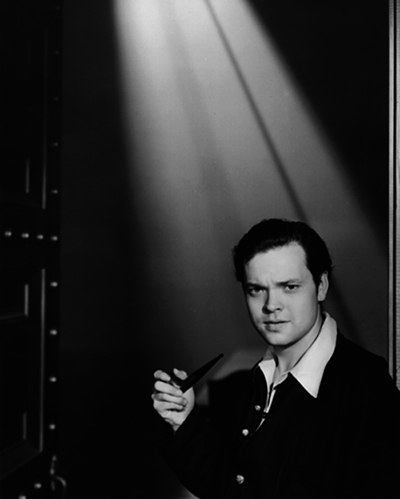
Director de Toth shows Dick Powell how to slug big bad Burr
Also Burr rats on Dick, working up Lizabeth’s husband who’s rotting in jail! Burr plays Iago to Liz’s husband’s Othello. When the guy gets out he’s ready to kill! He attacks Dick’s home late one night! I won’t reveal how it all turns out, you have to see this for yourself but I will say that Jane Wyatt, the mom from Father Knows Best delivers a rare true performence, like what a real woman would do if she finds out the man she loves had an affair. It’s beautiful just like her.
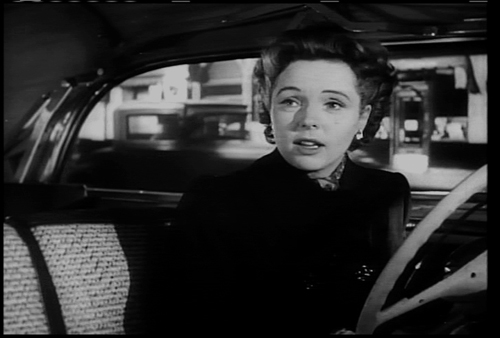
How could anyone cheat on a wife like this?
Also this movie has some of the best noir dialouge of all time! There are some great lines in here. I’d rate it just under Out Of The Past for noir dialouge excellence. Andre de Toth, the one-eyed Hungarian has served up a delicious dark noir, flecked with Americana and accented with European worldliness. Uncork some Tokay, drink, watch, enjoy.