I posted this trailer for your viewing pleasure. It’s chock full of groovy techniques, opticals, titles, graphics and great music. A must see movie in my book. Things to look for: The opening is shot on location in NYC, they filmed in the wreckage of the old Penn Station, before Madison Square Garden was built. Penn Station was an amazing place, look up some pictures. Marcello with blonde hair, “Hey, Blondie!”, Ursula Andress and her super groovy costumes, including the infamous 25 caliber brassiere. The cult that worships the Sun, The futuristic Citroen DS with the plexiglass roof. And how ingenious to shoot a film that takes place in the future in Rome! The ruins will still be there in 500 years, it’s not going to change that much. Also an incredible jazz score by Pierro Piccone, that’s Pierro himself playing the organ. It gives the movie an unforgettable ambience. I read somewhere that Marcello read the sci/fi story this film was based on and he made it happen! Handsome, a great actor, and smart too! And guess what, the editor was Marcello’s brother Ruggero Mastroianni. So find a copy, sit back, sip some Prosecco, and enjoy!
Here’s a scene from Bob Downey’s Putney Swope, it’s the Face Off pimple cream commercial. At the begining of the clip is a scene of stewardesses jumping up and down in slow motion, that’s from another commercial in the movie. Bob told me that after the premier, Billy Dee Williams chased him around the block because one of the stewardesses was Billy Dee’s girlfriend and he didn’t take kindly to her boobs being exposed in Bob’s movie. When you watch the whole movie there’s something else to be aware of, the voice of Putney Swope is really Bob Downey’s! He dubbed the entire part in that raspy growl. Bud Smith, the editor of Putney, told me he had to keep supplying Bob with tea and honey so his voice didn’t burn out during the dubbing. Maybe this is the origin of Bob Downey’s obsession with iced tea!
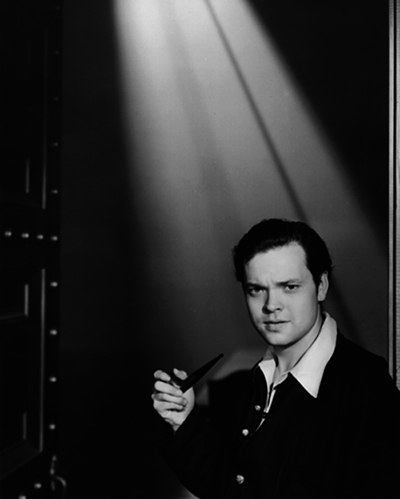
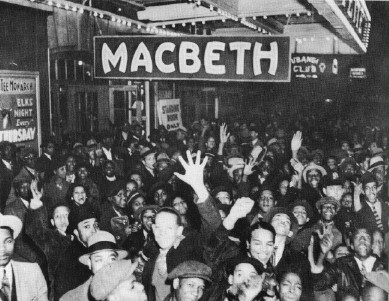
We all know about the 1936 Mercury Theater Production of MacBeth staged by Orson Welles, Welles set MacBeth in Haiti and used an all black cast. Ahead of his time don’t you think. (Around 1978 I met an old woman in a bar on 8th Ave. called Le Coq Au Vin. She was working in the wardrobe department at the Metropolitan Opera, she told me she had done costumes for Orson Welles and the Mercury Theater, including MacBeth!)
But did you know that just after the end of WWII Welles was broadcasting a weekly radio show from Hollywood. He received word from the NAACP about an injustice done to a returned black veteran, Issac Woodard Jr. Mr. Woodard had served with distinction in the South Pacific and earned a battle star. A cop back in his home town in South Carolina had beaten him savagely for no apparent reason other than the color of his skin. Mr. Woodard did not get medical attention in a timely manner for the same racist reason. As a result he was permanently blinded. Orson was outraged and began a one man campaign to bring the racist cop to justice. And after weeks of broadcasting dramatisations and accusatory monolouges “Wash your hands, Officer X!”,”We will give the world your Christian name!”, he succeded. The Dept. of Justice brought charges against the perpetrator who confessed. Ahead of his time as an artist and as a human being.
Fernando Rey was asked how he liked working with Luis Bunuel. He replied that he loved it with one exception. Whenever a scene was damaged in the lab or had some technical difficulty Bunuel would not reshoot it. He would just cut it out of the movie. This drove Rey crazy. Bunuel realized that you can cut anything out of a movie, it’s a very liberating thought. The human mind loves putting together puzzles, imposing patterns on chaos. Bob Downey told me he once bribed a projectionist to show the reels of one of his films out of order to see how it would play. So have a glass of champagne and toast the great Fernando Rey. Maybe his best scenes were damaged in the lab and never saw the light of day.
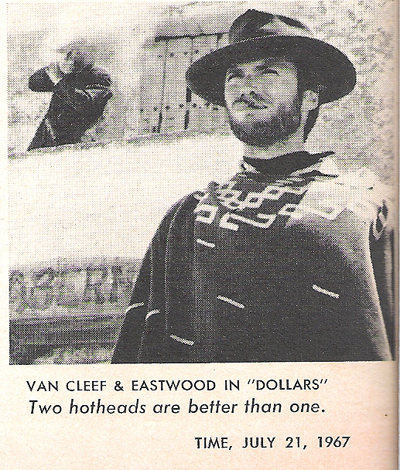
I found this BAD review of Sergio Leone’s great western For A Few Dollars More. It’s from an old copy of Time magazine. It perfectly illustrates the smug, superior attitude that Italian B movies have been subjected to. The idiot that wrote this review actually puts down Ennio Morricone’s magnificent score! I am posting this to make a point. Anything new or different is initially put down. If people don’t understand something they want to destroy it. But time has proven the Time reviewer wrong. Unfortunately the piece is unsigned, otherwise we could set the reviewer’s house on fire and shoot him when he comes running out! Just like the Rojo’s in A Fistfull of Dollars (which this review also puts down). Read full entry to see the complete review…
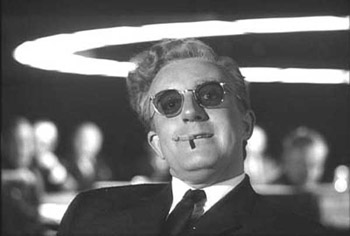
Okay in preparation for my podcast interview with Pablo here’s the Dr. Strangelove trailer, a work of genius! Pablo was contacted by Stanley Kubrick and asked to work on Dr. Strangelove. Kubrick had seen some commercials Pablo had made in England and was impressed so Pablo wound up doing the title sequence and the trailer. Pablo told me that Weegee was the still photographer for the film, Kubrick knew Weegee from his days in N.Y.C. when they were both struggling photogs. Ray Lovejoy was an editor I once worked with, a very nice guy and a great editor. He was the assistant editor on Dr. Strangelove ( also on Lawrence Of Arabia !). According to Ray, Peter Sellers did a lot of improvising during this film. Somewhere in Stanley Kubrick’s vault are outtakes of Sellers portraying the president as totally gay, and other wild variations on his characters. Sellers was to play the bomber pilot as well but he broke his ankle and Kubrick had to bring in Slim Pickens. Also Ray told me that Pablo ( who was sporting a Mohawk haircut and wearing an electric poncho- it was an electric blanket that Pabs turned into a poncho, so he could plug it in to keep warm) so terrorized the nighttime negative cutting crew at the lab in England that they all resigned! And when Kubrick had to move his Original Camera Negative from one lab to another, he used an armoured car, like a WWII tank. In any case check out the trailer, the use of quick cuts, the funny use of text, the sense of humor, it’s all vintage Pablo Ferro. And the music, Pablo recorded a xylophone player just hitting notes one at a time then cut them in as musical accents, a cool technique he invented. And also for your viewing pleasure the title sequence! There will be more about Kubrick, Dr. Strangelove and all the rest in upcoming episodes, so don’t touch that dial! Stay tuned in.
Here’s the trailer for Lucio Fulci’s Una Sul’Altra. A great movie! Fulci’s riff on Vertigo. I will soon publish a comparison between the two films but in the meantime enjoy this trailer! it’s full of groovy optical effects, done on an optical printer on film! I love the Italian title sequences that are full of crazy freeze frames, tinted images, animated titles, sand blowing away to reveal text. All shot on film and with a texture so rich you can almost taste it! Plus dig that crazy Riz Ortolani score! And Marisa Mell!
Here’s the Zardoz trailer in all it’s glory! It was created by the great Pablo Ferro. Pablo has done some incredible trailers like for instance Dr. Strangelove, A clockwork Orange, Z, . He also has created title sequences for Dr. Stangelove, Bullitt, Midnight Cowboy, Harold and Maude, A Clockwork Orange and many others. I will be posting a podcast interview with Pablo in the near future, so in the meantime I’ll upload some of his work as a preview of coming attractions.
P.S. I noticed that there is a cut in the trailer,after the line “The Gun Is Good” and after the giant head vomits guns all over Sean Connery and his men, the Giant head should say “The Penis Is Evil”. I guess the word “penis” is a no no, or maybe the censor really believes that the penis is evil so they castrated the trailer.
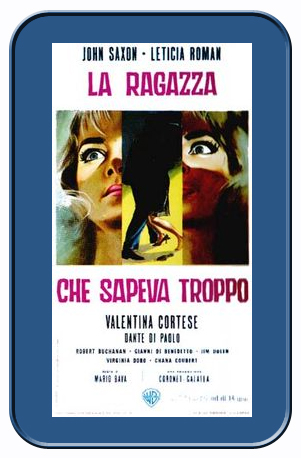
Here’s a trailer from what many consider the first giallo, La Ragazza che sapeva troppo, released in the USA as The Evil Eye. Directed by Mario Bava, the genre maker, starring John Saxon, Leticia Roman, and Valentina Cortese. I read an interview with John Saxon a few years back and he talked about how he got involved with this project. Leticia Roman contacted him and, representing herself as a producer working on the film, offered him the part. After some haggling Saxon accepted. Then, unbeknownst to John Saxon, she approached Mario Bava and said she represented Saxon and if Bava wanted him for the movie, he would have to give Leticia the female lead! Bava agreed and she got the part. During filming (according to the interview) Bava became infatuated with Leticia and was pressuring her to submit to his desires. She told him John Saxon was in love with her and he’s better back off as Saxon was jealous and would walk off the film or worse. Bava left her alone, Saxon knew nothing of all this at the time, he found out later. So here’s to Leticia Roman, a grandmaster of the chessboard of Cinema hustling.
I watched a classic B movie from 1955 last night. Big House U.S.A. Ralph Meeker is even more amoral than he is in Kiss Me Deadly. Here he plays a kidnapper nicknamed The Iceman. He starts off this romp by kidnapping a rich kid at summer camp who has bad asthma. He stashes the kid in an abandoned lookout fire tower and after the kid crashes through the rotted railing, the Iceman calmly picks him up and flings him off a precipitous cliff. What a guy. He gets the ransom stashes it and is promptly arrested. Dropped into Cascabel Island Penitentary, he gets to bunk with- Charles Bronson ( an early use of the name Bronson, instead of Buchinsky), Broderick Crawford ( the “brains” of the outfit, if you can believe that) Lon Chaney Jr. ( he’s carving an anotomically correct doll of a blonde bimbo when we first see him) and William Talman ( you’ll know him if you see him, a blond sleazebag). What a cast! Meeker is so evil, I think this portrayal got him the part of Mike Hammer in Kiss Me Deadly. That’s the next film he did and it’s great. But Crawford does his best to outdo Meeker, first he steams to death his henchman Dipsy so his escape plan won’t be found out then he has Talman kill Bronson while he’s asleep. This is directly after Bronson saves Crawford’s life! Then he directs Talman to disfigure Charlie with a blow torch and chuck him overboard so the cops will think it’s Meeker. Jeez! They all get their comeuppances in the end. But what an amoral crew! And this is 1955! I think movies from the 50’s can be pretty violent indeed. I guess after the horrors of WWII the American public needed more thrills, chills and spills! Another thing that’s great. The prison location. I love seeing guys in a huge prison machine shop or powerhouse. Like the part of White Heat where somebody tries to drop a 2 ton motor on Cody Jarrett ( James Cagney) and the Rat, (star of D.O.A.) Edmund O’Brien saves him so he can infiltrate his gang.
So if you like amoral noirish prison movies with a cast to kill for, check out Bighouse U.S.A.!
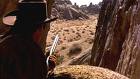
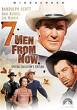
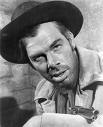
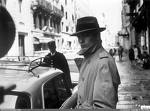
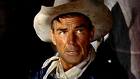
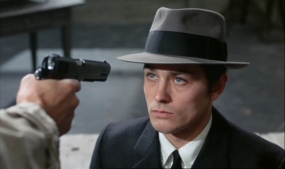
Last night I watched a documentary about legendary director Budd Boetticher. There were some excellent interviews with the man himself and other directors, Clint Eastwood, Quentin Tarantino, Paul Schrader, Robert Towne, Taylor Hackford (who directed a doc on Budd back in 71′ for KCET, around the time he made his film about Bukowski). At one point they were discussing Seven Men From Now and how during the climactic gunfight between Lee Marvin and Randolph Scott . Boetticher cuts away from Scott during his draw. You don’t see him draw his gun and shoot, you just see Marvin get shot before he can draw his gun, almost a magical cut. Then Hackford said what an influence on Sergio Leone, yeah I can see that but the magical fast draw was used almost exactly by Jean Pierre Melville in his masterpiece Le Samourai. Alain Delon (Costello) kills the club owner with an unseen quick draw. Delon confronts the guy in his office, while the clubman is sitting at his desk. We see the clubman get a gun out of his desk drawer, Delon still hasn’t made a move, the club owner starts to raise his gun, cut to Delon firing his pistol, killing Mseur. Club. The magical Boetticher gun draw reincarnated by Melville, one of the greatest miners of American Cinema Gold.
I found this clip fom Sweden, Heavan and Hell over at Bedazzled. It shows the incredibly well-known MahNa MahNa song in it’s original context, very surprising. Alessandro Alessandroni is the singer, and he told me he came up with the voice himself. Another example of his genius and his under appreciated role in world Cinema. [Note: this clip contains nudity, but it’s pretty mild by today’s standards].