The H-Man, Ishiro Honda

Written by Joe D on October 11th, 2007

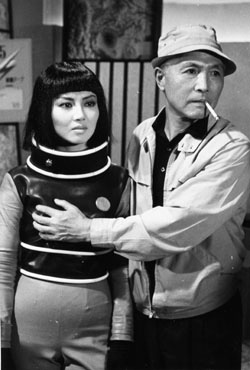
mz32.jpg

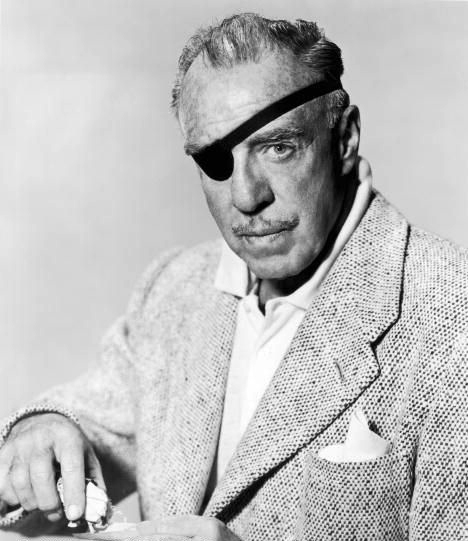
Ishiro Honda cops a feel off a Mysterian

Ishiro Honda created some of the most memorable images of my childhood. Rodan is an amazingly made film. Every shot looks like it was designed in the camera and the flashback sequence is one of the most powerful in Cinema. It’s an operatic monster movie. Ishiro was good friends with mega-director Akira Kurosawa and he directed 2nd unit on some of his epic battle scenes.

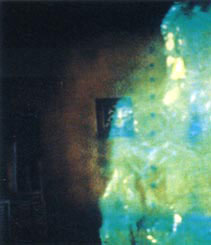
liquid_people_01.jpg

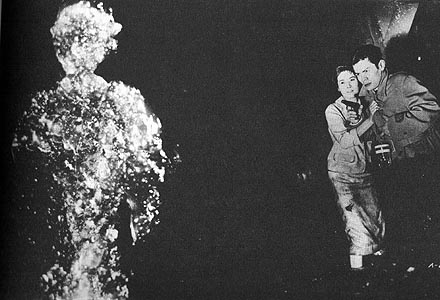
Look what a little radiation can do

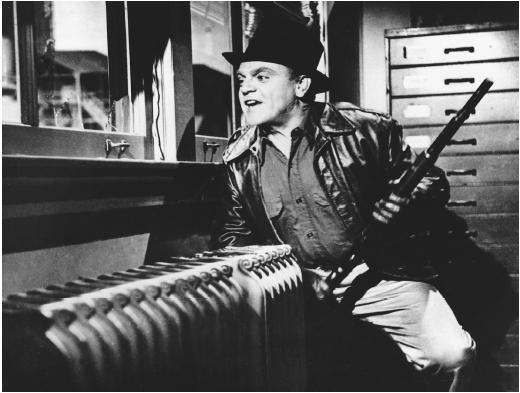
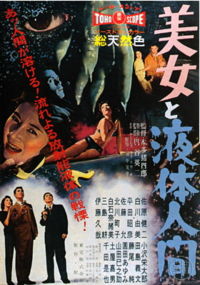
The H-Man is another cool movie.I was lucky enough to see it projected in Technicolor at Film Forum in NYC, let me tell you, that is the way to see that film! The eye popping color and design. Delicious!. It has an incredible sexiness to it. The gangsters, their babes, the nightclub complete with Japanese Jazz and wild dance numbers. The super slick clothes everyone wears and the monster.

200px-h-man_1958.jpg

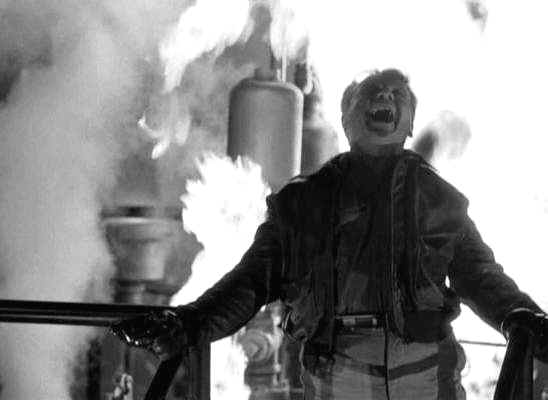
It’s a radioactive slime that slithers through storm sewers and dissolves people leaving only their clothes piled in a heap where they were taken. At one point a gangster kidnaps a woman and takes her into the sewer, he makes her strip and he gets naked so the police can find their clothes and think they were dissolvd into the collective radioactive slime that is The H-Man .

hman.jpg

Slime in the Sewer
It slithers into the nightclub office during a rain storm and threatens a performer. Sometimes it assumes a humanoid shape, rearing up on two gelatinous legs maybe some kind of sense memory of when it was a human. The best sequence of the film takes place on an abandoned ship. A trawler finds a ship adrift at sea, the crew board the ghost ship and look for survivors but they can’t find anyone. Unfortunately for them they find The H-Man.

200px-h-man_us.jpg

AKA- Beauty and The Liquid People
So open up a bottle of Nigori unfiltered Sake and checkout The H-Man, just remember you need someone to pour your Sake for you and you do the same for them, otherwise Bad Luck and you could wind up slithering in a sewer.

R.I.P. Bud Ekins

Written by Joe D on October 9th, 2007

1mmd.jpg

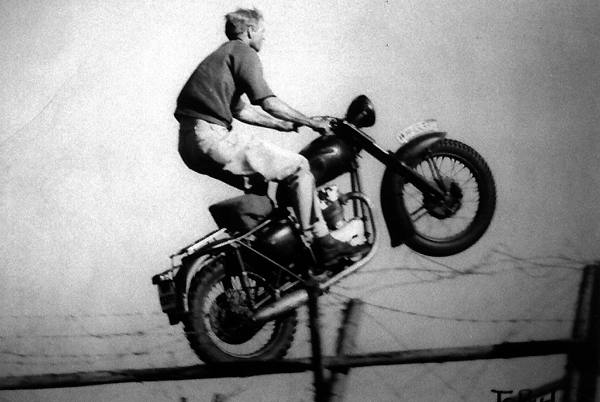
Bud Ekins in The Great Escape

Bud Ekins, the champion motorcyclist and stuntman has died. Probably his most famous stunt was doubling for Steve McQueen in The Great Escape. Bud did the jump over the barb wire fence at the Nazi POW camp. Everyone thought McQueen did the stunt himself but it was Bud.
budekn.jpgMr. Triumph

He also did a lot of the riding in the opening credits of the television series Then Came Bronson starring Michael Parks. It’s hard to get copies of this show but it’s definitely worth it, a very cool show and some of the shots of Bud, driving across an incredible bridge over Bixby Creek in Big Sur, zipping along the beach just at the edge of the breaking surf, are inspiring.

Bronson commercial featuring Bud

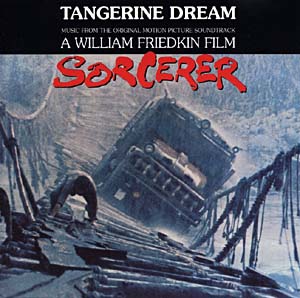
By the way Michael Parks is one of the stars of my film One Night With You. Joe Montgomery, my DP, grew up in Hollywood and told me he used to go to Bud Ekins motorcycle shop and watch Von Dutch pinstripe bikes. Bud Smith, an old friend and great editor, was an associate producer and editor on William Friedkin’s Sorcerer. Bud Smith was good friends with Bud Ekins. Ekins did stunt driving on Sorcerer and Smith told me he was in the cab of the truck with Ekins driving when they crossed the rope suspension bridge. If you look at the poster for Sorcerer there’s a picture of the truck on the bridge, it’s a frame enlargement from the 35mm original picture negative. In the next frame the truck falls off the bridge into the river.

sorcerer_mca10842a-706761.jpg

The Truck goes over in the next frame!

The two Buds were in the cab. Bud Smith said Ekins was cool as a cucumber, remembering to hold his radio and his cigarettes up over his head so they didn’t get soaked. Bud Ekins did the motorcycle stunt in Bullit as well, sliding across the highway during the great chase scene just before the climactic finish.

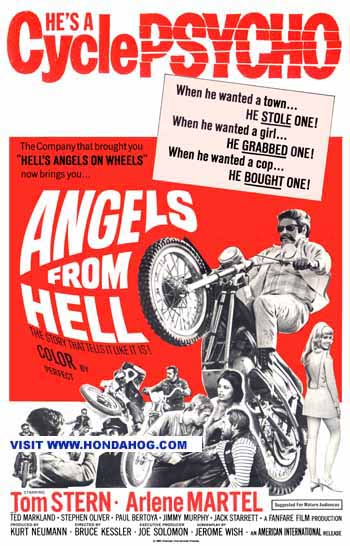
hell.jpg

That’s Bud doing the jump

I heard him on the radio one time telling of how Steve McQueen would buy whole batches of motorcycles from him, then he’d forget to make payments, Bud would have to go up to Steve’s house and repossess the bikes, then McQueen would find out , come down to Bud’s shop, yell at him, pay up, take his bikes back and they’d be friends once again! Goodbye Bud, you led a colorful life and gave us a lot of thrills at the movies.
1957-bud-ekins-big-bear-wi.jpg

Check out the dents in the front wheel!
Here’s a quote from Trailblazers about Bud’s racing career:
“In the 1950s, Bud Ekins was one of the first Americans to compete in Europe in the World Championship Motocross Grand Prix circuit. He also earned gold medals in the International Six Day Trial (now International Six Day Enduro). When he returned from Europe, Ekins dominated desert events. In 1955, riding a Triumph, Ekins won the Catalina Grand Prix. He also won the Big Bear Run – three times!”

Wine, Good!

Written by Joe D on October 5th, 2007

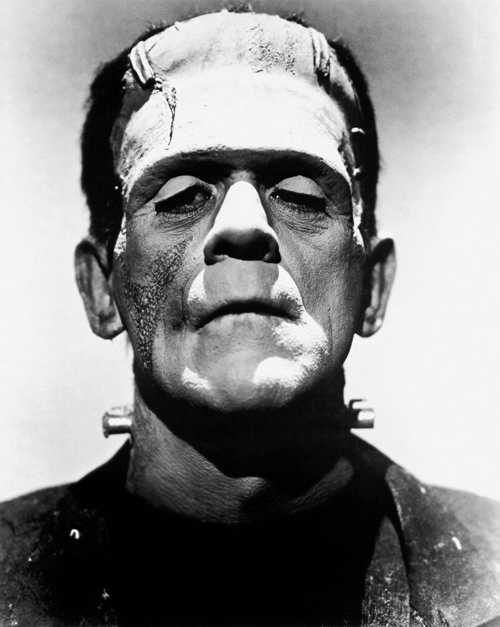
frankenstein.jpg

Thus spake Frankenstein after learning from the blind man about the finer things in life. I agree, not only do I agree but I go one step further, I make wine! My wife and I have a small vineyard next door to our house. We grow Syrah, We turn it into wine.
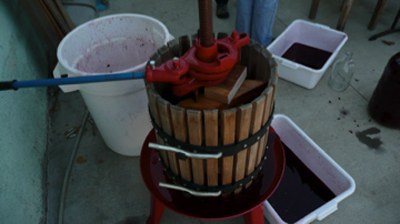
winepress.jpg

No, we don’t use our feet!

You can hear all about it tomorrow (Saturday) at noon and Sunday at 8pm on the KPCC, 89.3 FM show Off-Ramp (you can stream the show live from http://www.scpr.org or download the podcast from their website after the first airing). Here at Film Forno we love film but we love wine and food as well! And we’ll be writing all about it in future posts. So stay tuned in! Drink wine, watch movies, enjoy life!
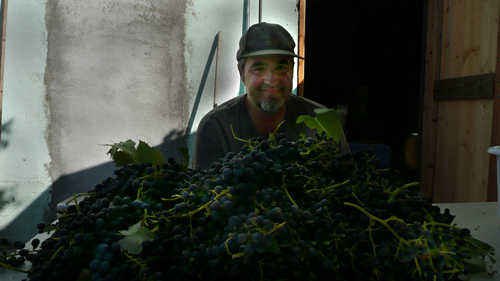
joe-grape.jpg

The little Old Winemaker, Me

Check it out! The wonderful folks over at KPCC put up a video promo of the show!

R.I.P. Charles B. Griffith

Written by Joe D on October 3rd, 2007

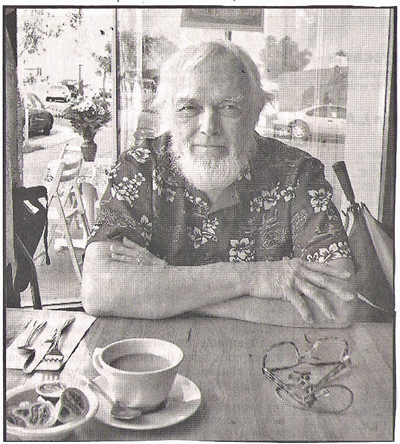
charlesbgriffith.jpg

A Real Gone Cat

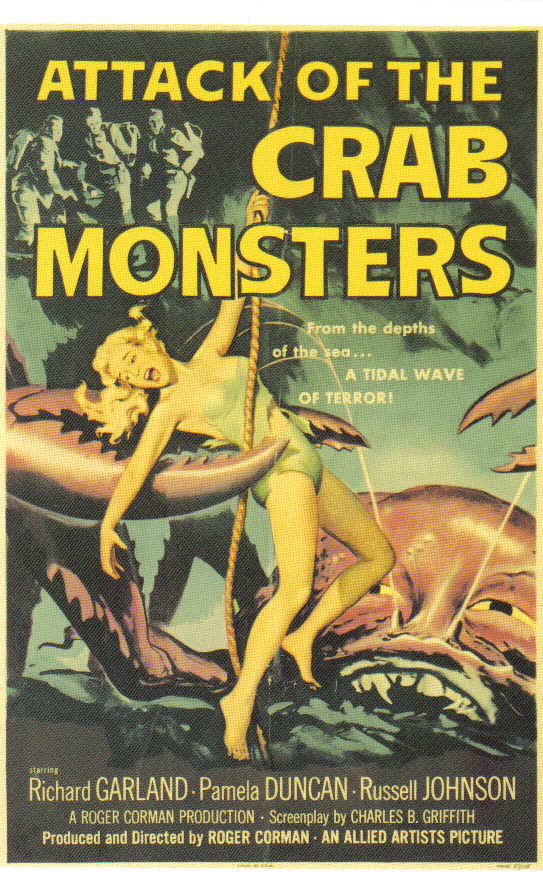
We’ve lost another rarity, an original voice in the Galaxy of Film. Charles B. Griffith, the creative motor behind some of Roger Corman’s best, most original films.
attack.jpg

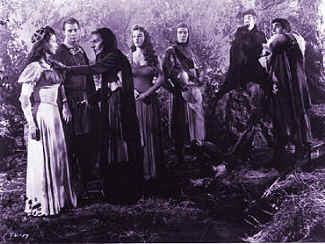
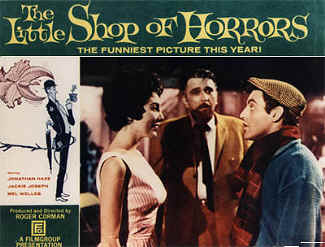
Bucket Of Blood, Not Of This Earth, Little Shop Of Horrors, and a weird one I liked as a kid The Undead, it had a ton of atmosphere maybe because a lot of it was filmed in an old ice house, also a lot of the dialog is in verse.

cheap_9.jpg

A Scene from The Undead, shot in an Ice House

cheap_7.jpg

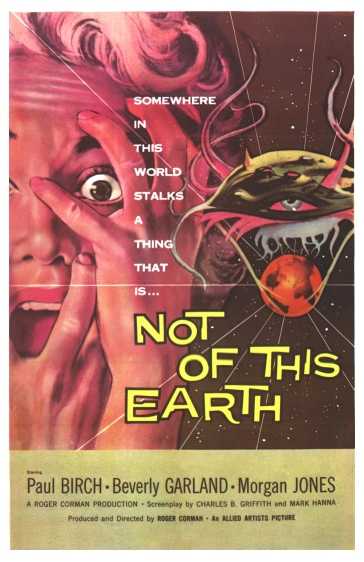
Bucket Of Blood is a very funny film that also documents the Venice Beach beatnik scene and the whole bongo playing coffeehouse artiste genre. Not Of This Earth is a super creepy evil alien takeover story with some excellent voice over and a cast of crazy characters. Check these out if you get a chance.

not_this_earth.jpg

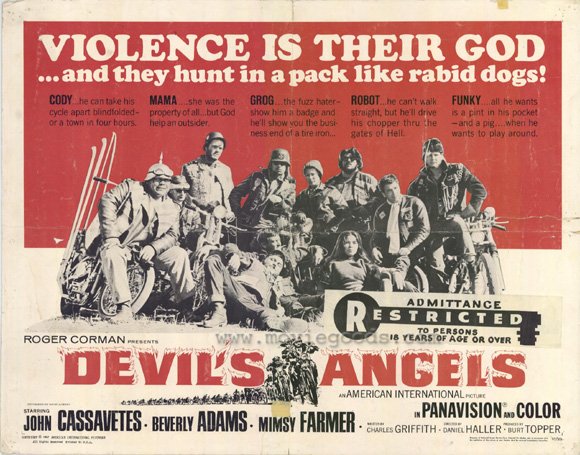
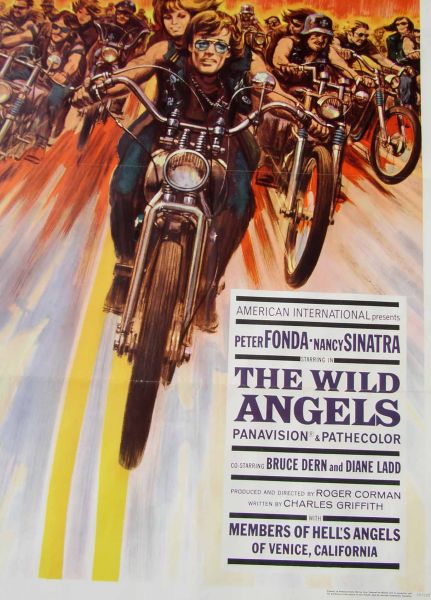
Charles B. also wrote some seminal biker flick’s for Corman and American International. Check out John Cassavetes and Mimsy Farmer in Devil’s Angels and Peter Fonda with Nancy Sinatra in The Wild Angels.
3150451020a.jpg

Cassavettes in a Biker Flick? How Cool Is That!

poster_5.jpg

Looks like a Jack Davis Drawing to me

Griffith would crank these scripts out in a week or two days or however much time Roger gave him maybe that’s why they’re so full of “spontaneous poetry”. Yeah daddio he was the Jack Kerouac of B movies or as Quentin Tarantino dubbed him “The Poet Laureate Of The Drive-In“.

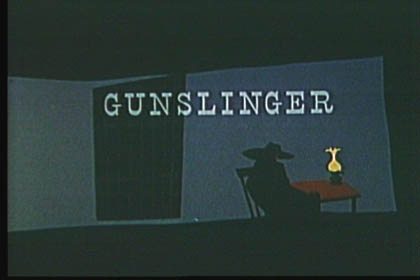
gunslinger1.jpg

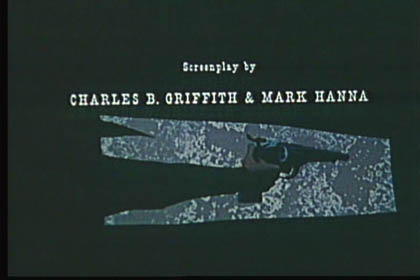
gunslinger2.jpg

Groovy Graphics
So Fare Thee Well Charles B. Griffith. They’re all laughing and snapping their fingers at The Big Drive-In in The Sky.

Trailer For A Bucket Of Blood

Here’s a cool interview with him:http://www.sensesofcinema.com/contents/05/35/charles_b_griffith.html

Goodbye Bunuel, His Hollywood Home

Written by Joe D on September 30th, 2007

To celebrate the end of the Bunuel Blogathon I did something I’ve been meaning to do for a long time. I looked up his old address in Hollywood, went there and took a picture. I got the address from some correspondence published in a book of his collected writings. This is where he lived with his family directly after he lost his job with the Museum of Modern Art in New York and right before he went to Mexico to make films. Around 1945/46. The 101 freeway was blasted through his old neighborhood about 100 yards from his house but this was several years after he moved to Mexico. Across the street is a new building I think it’s a school so we’re lucky his place is still there. bunuel-house.jpg

Bunuel’s Hollywood Hacienda-5642 Fountain Avenue

I watched a French documentary on Bunuel that one of the Blogathoners linked to on Google video. It was very good and at the end when the filmmakers went to Calanda they found the house Bunuel was born in being torn down. They filmed it’s demolition and put the end credits over it. Somehow fitting for a Surrealist admirer of the Marquis deSade

Sukiyaki Western Django

Written by Joe D on September 28th, 2007

Here’s a trailer for a new Samurai/Spaghetti Western Opus:Sukiayki Western Django. It looks pretty crazy, I’ll have to check it out. Also it features a guest appearance by the Crown Prince of Genre Art House Kick Ass Cinema: Quentin Tarantino!

Even More Bunuel, That Obscure Object Of Desire

Written by Joe D on September 26th, 2007

that_obscure_object_of_desire-1.jpg

Due to popular demand the Bunuel Blogathon continues with That Obscure Object Of Desire, Bunuels final film. Loosely based on a novel from 1898, The Woman And The Puppet which had already reached the screen in several incarnations, That Obscure Object Of Desire tells the ageless story of an older man (Fernando Rey) led on by a much younger woman (Angela Molina, Carole Bouquet).
that_obscure_object_of_desire.jpg

The old rake tempted by the seductress keeps coming back for more punishment like the Puppet in the novel’s title or like Charlie Brown always talked into trying to kick the football Lucy holds for him only to have it yanked away at the last second leading to his flying through the air and crashing to the ground. It’s like an eternal cycle, The Woman tempts the Man, he gives in to her demands with the understanding that she will sleep with him, not only does she not sleep with him she dances naked at a tourist strip bar, has sex with a younger man right in front of him, wears a chastity belt to bed with him, generally frustrates, humiliates and drives him crazy. He runs off vowing to never see her again. But she pursues him and like a Pavlovian Dog, he goes for it again.
m44c8db14c5e77.jpg

Good Luck With That!

They both cannot stop the cycle they are in. Like the mating dance of exotic birds they find themselves locked in this pas a deux time and again. Bunuel also throws a little subversive twist on the story by having two actresses play the part of Conchita. Is one the good girl and the other the bad, is this a comment on the duality of this woman? Maybe on the menstrual cycle and it’s effects on a woman’s personality? Or is it just Bunuel’s sense of humor, “Let the critics figure it out” Whatever the reason it works beautifully and like many Bunuelian masterstrokes inexplicably.

surrealism_that-obscure-obj.jpg

Care to Try Again? Come on!

The story I heard about the dual casting was this. Maria Schnieder was originally cast to play the part, maybe because of the extreme reaction to Last Tango In Paris she suddenly refused to appear nude in the film. I understand she was almost psychotic after Tango and you can see why. In any case Bunuel met with Silberman and they were about to call off the project entirely when inspiration struck. “I’ll have two women play the part of Conchita!” I don’t know why this solved the problem but it did and the film went on as scheduled.

obscure3.jpg

Gotcha!

As usual this film is rich with original ideas, jokes, images as for example Mathieu telling the story of his relationship with Conchita on a train, to a dwarf who just happens to be a psychologist, the misogynistic man servant, doesn’t every guy who has been mistreated by a woman have a friend that advises him to dump her or beat her or something like that and to make it Mathieu’s servant is a funny play on class distinctions.

obscure2.jpg

Strangers On A Train

But my favorite part of the movie is the end. Bunuel always has great endings to his films, I think of all filmmakers he really understood the power, the mysticism of the end of a film. You can do anything at the end of a play or a film because it’s over right after that. The audience must leave the theater, walk out into the sunlight, decompress back to reality. You don’t have to explain or follow through on what you do, it’s over. The Greeks understood this in their plays with the deus ex machina and Bunuel understood it better than any other filmmaker. So after exiting the train, Mathieu and Conchita stroll down a street in a big city, it’s semi-deserted, terrorists are planning a coordinated attack. They notice a woman in a shop window sitting in a chair darning a white lace mantilla that’s stained with blood. I don’t know why but something about this image is so powerful I am always moved by it. Maybe because Bunuel was able to realize an image directly from his subconscious, undiluted, unquestioned with the conviction only a Surrealist could have, is it so effective. Just after this during an argument our protagonists are blown to bits. THE END.

Trailer For That Obscure Object Of Desire

More Bunuel for the Blogathon

Written by Joe D on September 25th, 2007

belle.jpg

Here are some posters from my collection. Belle de Jour and two one sheets from Robinson Crusoe. I saw Crusoe as a kid. It played on the wonderful Million Dollar Movie on WOR-TV Channel 9 New York. It fascinated me even when I was 10 years old. I bought the DVD and there is an interview with the star Dan O’Herlihy. He tells of how the American producers were pushing Bunuel to hire Orson Welles for the part of Crusoe.
robin1.jpg

One of the producers knew Welles and felt he could talk him into accepting the part. Bunuel refused, maybe he sensed that two genius directors on one set might prove difficult. The producers arranged for a screening of Welles MacBeth so Bunuel could see Welles in period dress and with a beard. Bunuel watched the film. ” I don’t want Welles” he said, “Get me that guy.” Bunuel pointed at Dan O’Herlihy who played MacDuff and that’s how he got the part.
robin2.jpg

Tristana, Luis Bunuel Blog-A-Thon

Written by Joe D on September 24th, 2007

sd11.jpg

Portrait Of Bunuel by Dali

I’m writing about Tristana, a wonderful film starring Fernando Rey and Catherine Deneuve.
title-tristana-bunuel-dvd-review.jpg

Main Title floating over Toledo- note cool lack of drop shadow

This was Bunuel’s 2nd film made in Spain after the war. A lot of the intellectuals, artists, musicians, left Spain when the Fascists took over, including Bunuel. But in the early 60’s Bunuel was persuaded or allowed to make Viridiana. The film was viewed as subversive and banned by the Spanish government. Luckily a print had been smuggled out of the country and it won the Palme D’Or at Cannes.
tristana-bunuel-dvd-review-bfi-pdvd_010.jpg

Predator and Prey Role Reversal on the way

So it took many years for Tristana to reach the silver screen. Bunuel wrote the screenplay in 1964 but because the Spanish government kept denying permission to film it, it didn’t go into production until 1969. But Bunuel wasn’t sitting around idly, he rewrote the script four times and I think that’s why the finished film is so polished and chock full of great images and ideas.
55bunuel2shot.jpg

The Bishop of Toledo and Deneuve

Tristana is based on a short novel by Galdos, Bunuel had made Nazarin from a Galdos novel a few years before and he considered Galdos one of the greatest writers Spain has produced. Tristana was filmed in Toledo, a city Bunuel loved as a young man. While attending the Resedencia in Madrid he and a group of fellow students( Lorca, Alberti, Dali, etc.) formed an honorary society, the Order of Toledo. The rules were that you visited Toledo as often as possible and stayed up all night drinking and wandering it’s medieval streets.
tristana-bunuel-dvd-review-bfi-pdvd_005.jpg

Women In Black

Tristana really feels like a novel, the story, the characters are so detailed and finely drawn. Also it takes place over about 20 years or so which somehow adds to it’s literary pedigree. In the beginning Deneuve is an innocent girl who following the death of her mother becomes the ward of Fernando Rey. Don Lope (Rey) is an aging Don Juan, obsessed with chivalry, dueling, sticking up for the underdog but this does not prevent him from seducing the childlike girl he has taken in to protect. Tristana (Deneuve’s name in the movie) dreams of climbing a bell tower with a deaf mute boy (Saturno) she examines the huge bell and is horrified to find Don Lope’s head attached to the end of the clapper. She awakens from this nightmare screaming.
bell.jpg

Tristana, let go of that huge penis, I mean bell clapper!

After being Don Lope’s concubine for a number of years Tristana meets a young artist Horacio (Franco Nero) she falls in love with him and runs off.
tristana-bunuel-dvd-review-bfi-pdvd_009.jpg

Unsuccessful Artist

A while later Horacio writes to Don Lope that Tristana is deathly ill and needs help. Don Lope fetches her back to his home. She is at death’s door and in order to save her life the doctor must amputate her leg. Don Lope is horrified but secretly overjoyed knowing she will never escape his clutches again. Tristana turns bitter and strange. As one critic said the star of the film is not Deneuve but her amputated leg! It certainly made a hit with Alfred Hitchcock, when he met Bunuel he kept saying” That Leg! That Leg!”.

expose.jpg

Tristana exposes herself to the Masturbating Mute

The once shy girl exposes herself to the deaf mute Saturno from her balcony and tortures the aging Don Lope eventually killing him by leaving the window of his bedroom open as he struggles with pneumonia. Then Bunuel does a very strange thing. In rapid fashion he flashes a montage of clips that retell the story in reverse accompanied by the sound of a church bell playing in reverse. It works incredibly and since it is the end of the film there is no need to explain it or recover from it, the film is over. I last saw Tristana about 20 years ago at a special screening at the New York Film Festival in Lincoln Center. I don’t know if it ever came out on DVD but Hopefully you will be able to see it at a revival theater in 35mm the way it was intended to be seen.
tristana2.jpg
I’m writing this as part of a Bunuel Blog-A-Thon, you can check out the rest of the blogs here:http://flickhead.blogspot.com/.
And here for your delectation is the trailer for Tristana

Jean Luc Godard, Anna Karina, Vivre Sa Vie

Written by Joe D on September 23rd, 2007

godardanna.jpg

The Alchemistic King and Queen of Cinema

Here are some production stills from a couple of Godard’s early films. I’m also including a link to a scan of the scenario for Vivre Sa Vie. Don’t worry it’s only one page! It illustrates perfectly the incredible creativity Godard was capable of.
godardonsetwheelchair.jpggodardonset.jpg
Fritz Lang was amazed at the “script” for Contempt. He said there were things in it like ” Dear Producer, how can I describe this scene? I won’t know what it is like until I see Bardot in the bath.”

contempt.jpg

Michel Piccoli, Fritz Lang, Jack Palance, Jean Luc Godard

Godard was acutely aware (maybe more than anyone else) of the Cinema’s ability to “record truth 24 times a second”. His early films have a particular resonance of truth. No other films bring to life what it was like to be a 20 year old running around, having fun, loving, being disappointed, living. Watching A Bande Apart, or A Woman Is A Woman creates in the viewer such a strong sense of the emotional reality of being a young person that you can’t help but be moved, feel those impulses course through your veins once again. They are like emotional time capsules or time machines transporting us back to our lost youth.

vsv031cnanalooksupjpg.jpg

One Of The Greatest Film Actresses Of All Time

Is it because there was barely a script to get in the way of the actors? Did it allow them to just “be” and therefore let the camera eye capture their naked souls perfectly? I believe so. Read the scenario for Vivre Sa Vie, is there anyone today that works like this or even thinks like this?

sjff_03_img1159.jpg

Shooting Vivre Sa Vie

I recently watched the Criterion Collection DVD of A Face In The Crowd. There is an interview with Andy Griffith in the special features section. Griffith tells the story of his first day on the set with Elia Kazan. Kazan tells Griffith ” The movie camera is a machine that will record what you are thinking through your eyes and then communicate it to everyone else.” An incredible piece of directing.

protectedimage-2php.jpg

Godard understood this phenomenon and played it like a virtuoso. His films are like trapeze acts with no nets to interfere with our enjoying them. Vivre Sa Vie is a an incredible piece of filmmaking. Anna Karina is one of the greatest film actresses of all time. The Film Gods were smiling when they caused her to meet Godard on the chessboard of Cinema. Vivre Sa Vie is composed of 12 chapters each one with a title card heading. Each section is so creatively filmed and acted and photographed it never ceases to amaze you.
vivre-sa-vie-godard-1962-divx-vf08204018-06-37.jpg

The first scene is a breakup between a man and a woman in a cafe. It is shot on their backs, making them anonymous or like everyman and everywoman.
protectedimagephp.jpg
There is an incredible scene in a Cinema where Karina watches Dreyer’s The Passion Of Joan Of Arc, a silent film. Falconetti and Artaud’s beatific faces on the screen, intercut with Karina’s face, tears streaming down her cheeks, she belongs with them. The lowly prostitute is the same as the Saint, both will be sacrificed.
vivre-sa-vie-godard-1962-divx-vf05999518-05-07.jpg

Later a scene plays out at a table in a cafe with Nana and her pimp. The camera moves around them catching them in an odd profile two shot, their faces jutting in from opposite sides of the frame just as he asks her to smile, “I can’t” she says but we hold in this two shot until she breaks and smiles, submitting her innocence to the will of this pimp.
protectedimage-1php.jpg

Nana sits in another cafe and discusses life, thought, existence with an aging philosopher(Brice Parain- playing himself) it’s incredible.
protectedimage-3php.jpg

I understand Godard would not give the actors their lines until just before each scene, then he would only shoot one or two takes because he loved the freshness of a first take. I’m reminded of Charlie Rouse, tenor saxophonist and long time collaborator of Thelonious Monk, who said Monk would usually go with the first take of a recording, sometimes the second but never the third.
vivre-sa-vie-godard-1962-divx-vf03466418-01-38.jpg

Vivre Sa Vie is concerned with the elemental , the fundamental truths of existence. Godard understood this vis a vis Cinema and his street scenes capture portraits of a civilization like a fly trapped in amber, elemental as the first films of the Lumiere brothers when inexperienced audiences fled screaming at the shot of an approaching train. By capturing reality in such a way, he captured an emotional truth specific to the age and emotional makeup of his characters(especially Karina) that is so true it’s impossible not to be moved, to re-experience that age and energy and through this mechanism Godard creates a canvas where the audience can project themselves and interpret the film as they feel it. I think every person that watches this film will bring something different away from it. With Vivre Sa Vie Godard has created a machine that allows you to look into yourself and examine your feelings, thoughts,and experiences through the magical prisms that are Anna Karina’s eyes.
vivre-sa-vie-godard-1962-divx-vf02461518-03-48.jpg

Click The Magic Link below to read the scenario of Vivre Sa Vie published in Film Culture, Fall, 1962.
Godard Scenario “Vivra Sa Vie”

Mexican Horror, The Brainiac

Written by Joe D on September 21st, 2007

h05-p1.jpg
This is a film I really liked as a kid. The Brainiac has it all, it starts 300 years ago with an Inquisition. The Baron is on trial for being a witch. He’s condemned to die, as the flames lick around him he curses his persecutors. He points to a comet blazing away in the sky. “When it returns I will be back and I’ll take my revenge on your descendants.” Great set up.
inquisition-1.jpg

No One Expects The Spanish Inquisition!

He returns in 1960 Mexico and causes quite a ruckus. He’s a debonair, sophisticated guy. Rich and of royal lineage so all of society is clamoring to meet him.
baron.jpg

So Suave, So Sophisticated, So Fond Of Eating Brains

He uses some kind of mind control to make people do his will. Then he transforms into a strange monster with exaggerated features( a racial stereotype?) and a forked tongue that he jabs into the back of his victims necks so he can suck their brains out.
brainiac.jpg

Ooga Booga!

One of my favorite scenes is where the Baron is entertaining some guests at his castle-like pad. They’re playing bridge or cribbage or whatever the upper class Mexican would play in 1960. Suddenly the Baron breaks out in a sweat, he looks as if he might faint. He excuses himself from his guests and retires to another room. There is a huge wooden treasure chest in the room. The Baron takes out an ancient key and opens it. Inside the chest is an ornate serving dish of heavy silver and in the dish is a human brain. The Baron grabs a sort of chalice and begins eating. Within moments he is refreshed and he returns to his guests.
brains.jpg

Curiously Refreshing

There are some sexy sequences where the Baron uses his powers to subdue beautiful women. The catholicism of Mexico gives the imagery a certain perversion that is very powerful.
attack1.jpg

Slip Her The Tongue

To quote the maestro Luis Bunuel:” Eroticism without Religion is like an egg without salt.” There are several Mexican Horror films from this period I found oddly disturbing. The Witch’s Mirror and The Curse of The Crying Woman The Curse Of The Doll People and The Vampire’s Coffin. They were obviously made for very low budgets. In Brainiac there are several scenes staged before a slide projected background, an interesting technique. All these films are very atmospheric and have a primitive ruthlessness that is effective.
braineat.jpg

Do You Like It From The Back, My Dear?

Also I only saw the K. Gordon Murray versions of these films. He dubbed them in English at his own low budget sound facility.
soundlab.jpg

K. Gordon Murray’s Dub House
There’s something about that simple unadorned sound mix that adds to the wierdness of these films. If you’ve ever seen Ed Wood’s Plan 9 From Outer Space you might remember the Bela Lugosi footage narrated by Wood. It shows Bela coming out of his house, smelling a flower and walking off, while the narration tells of the recent death of his wife.
belaphp.jpg

Bela Baby

The sparseness of that voice with hardly any background sound creates an eerie feeling in the spectator. Maybe because we’re not used to hearing such raw, unadorned sound. Most movies have music, backgrounds,sound effects, foley, and production sound all mixed to create an aural world. These films have such a different sonic palate that we’re unbalanced but we don’t know why. I’ve also heard rumors of a Satanic cult on Long Island that held Black masses whenever a K. Gordon Murray Horror film was on. If you watch any it will make sense to you.
marks.jpg

Brainiacne

Estes Park Film festival

Written by Joe D on September 18th, 2007

p1000243.jpg

The historic Park Theater

It’s incredibly beautiful here in Estes Park Colorado. We saw elk butting heads on the golf course yesterday, the golfers had to play around them.
elk.jpg

Fore!

Estes Park is a pretty little town surrounded by rough, rock escarpments and pine covered mountains. There’s a stream running through the town, right behind the main street. The Starbuck’s has the most beautiful patio right on the stream. But the real gem on the crown is the Park Theater. This is the 2nd oldest operating theater in the USA and soon to be the oldest as a theater in Pennsylvania that had that distinction is closing. The theater is a time capsule into our movie heritage. The guys at the festival, Sean, Cliff, Pete, and Tony are all film buffs and are super proud of the theater.
booth1.jpg

3 Cool Cats-Pete, Tony, Sean in the booth!
cliff.jpg

Cliff, Wild Man Of The Mountain

They took great pleasure in showing me around and brought out some recently discovered treasures. Recruiting trailers from WWII, “Women Join The Wacs, Uncle Sam Needs You!”, “Buy Liberty Bonds”, all kinds of amazing historical stuff. Box office receipts from the original presentation of “Gone With The Wind”, original posters from a lot of movies including King Kong and Frankenstein. It’s incredible! An old projector from the silent days complete with Vitaphone record player. The owner of the theater, Sharon Seeley, is super committed to keeping that theater going and I applaud her and her daughter Jenna for doing a great job and a great favor to all film lovers.
sharonjenna.jpg

Sharon and Jenna-First Ladies of Theater Preservation

This theater is a priceless treasure trove of American Cinema History! The guys told me that there are tons of artifacts piled up in the storage spaces that need to be catalogued and preserved. The Park opened in 1913 and has been showing movies ever since! There’s a Valentino poster in the lobby.
kong.jpgfrank.jpgvalentino.jpgmae.jpg
It was a real honor for me to have my film One Night With You screen there. I scrambled like mad to get a 35mm print ready in time for the festival and thanks to my pals at Triage Motion Picture Services I made it. Sean, Tony (the projectionist, a young guy totally committed to film, quality projection, and old theaters),Pete, Cliff, and Jenna were really happy we could project on film. It’s a FILM festival! show it on FILM if possible.

parktheatrenight.jpg


Night Falls on The Park Theater. Psst! It’s Haunted!

I’ve been to a few film fests in my day and I’ve got to say Estes Park was superbly organized! Everything went off without a hitch. I saw more films at this festival than any other. My hat is off to all the organizers. Hey Filmmakers! Go to this festival! It’s just starting to grow and I predict it will be the next Sundance. (Or maybe I should say what Sundance used to be before it got all corporate).
stanley.jpg

Welcome to The Stanley Hotel! Mwah Ha Ha!

We went to a screening of Horror/Fantasy type films at the Stanley Hotel. This is the spot where The Shining takes place. A cool creepy dreamlike joint. Beautiful but you expect to see a guy from 1920 come strolling around the corner.
The Horror/Fantasy screenings were great. Maybe because of the nature of the genre the films were consistently Cinematic. Effect Shots, creepy sequences, a lot of visually stunning stuff and a great sidebar to the Festival. So Filmmakers submit your films, Film Lovers Go to this festival. I guarantee an excellent time will be had by all.
P.S. By the way I won the Best Director Prize for my film One Night With You and I’m super happy and grateful to all these wonderful people up there in Estes Park!
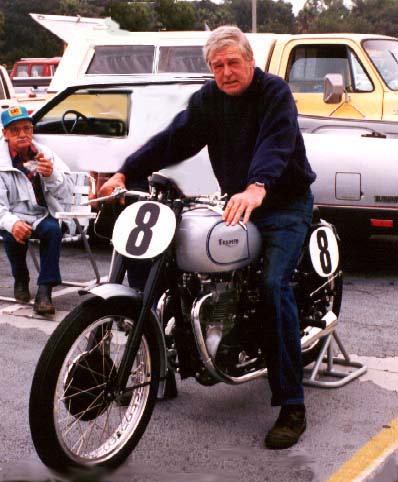
estes-scene.jpg

Beauty