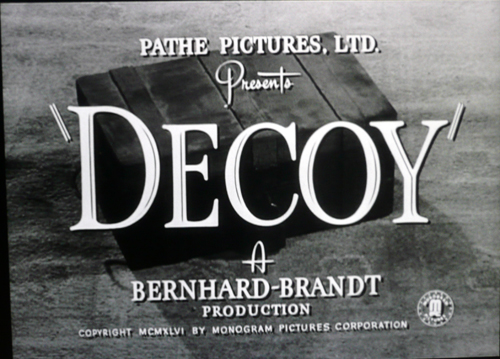
Film Noir Collection Vol.4, Decoy

Written by Joe D on October 31st, 2007

title.jpg
Another gem from this wonderful noir collection.
sink.jpg
Decoy is a great little film, in a similar vein to Edgar G. Ulmer’s Detour. Low budget but bursting at the seams with creativity, Decoy was recently re-discovered by a neighbor of mine, Bill Rush, who works at Warner Brothers. It hadn’t been seen since 1970 and it’s screening at the American Cinematheque Noir Program caused a sensation. Okay let’s begin at the beginning! A great weird opening! Close up on a battered, chipped porcelain sink, dirty hands come into frame, turn on hot water, steam blasts into the sink! Cold water will do, pan to a roll of paper towels suspended on a piece of twine, pan and tilt to a chunk of broken mirror revealing a disheveled zombie looking guy. We later find out he’s a dishonored doctor(Herbert Rudley).
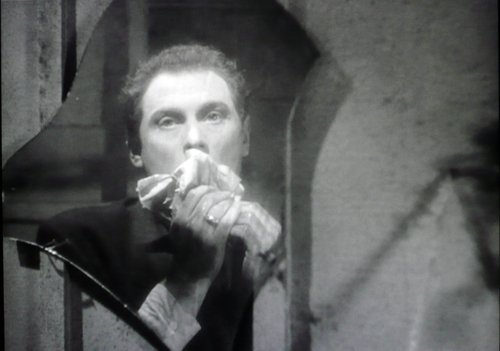
doc-mirror.jpg

Is this a Zombie Movie or a Film Noir?

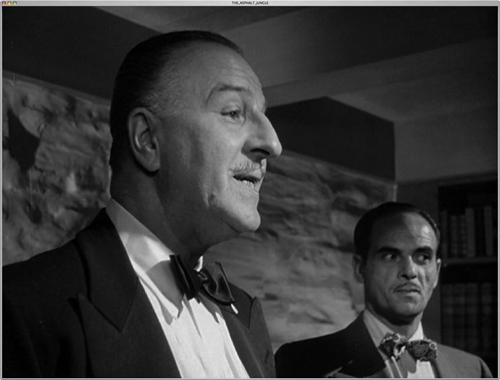
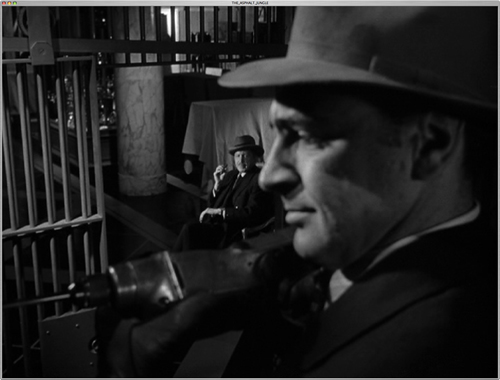
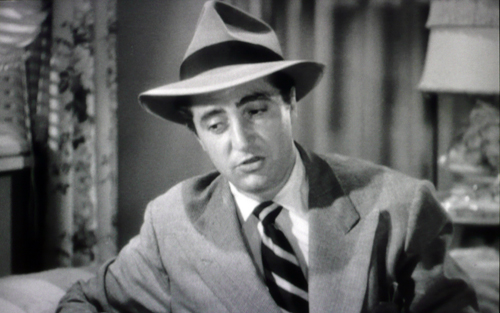
He exits the gas station rest room, stumbling like the undead, ignoring the cheerful good morning patter from the pump jockey, Hitching a ride into the city. He goes into a snazzy apartment building , followed closely but not close enough by Sheldon Leonard who plays Sgt. JoJo Portugal. By the way Leonard looks exactly like Mickey Cohen in this movie, his hat, his suit, his manner.
shel.jpg

Sheldon Leonard as Mickey Cohen…I mean, Sgt JoJo Portugal!
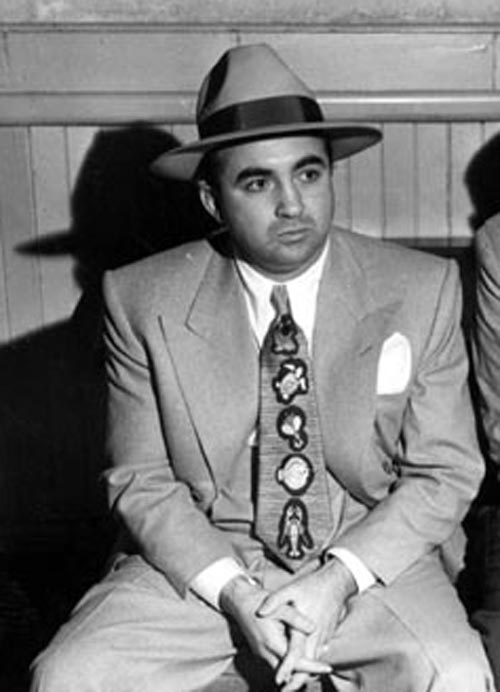
mc.jpg

Mickey Cohen as Mickey Cohen, The Mickster

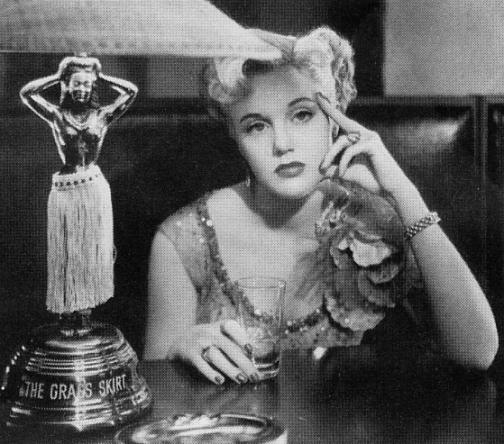
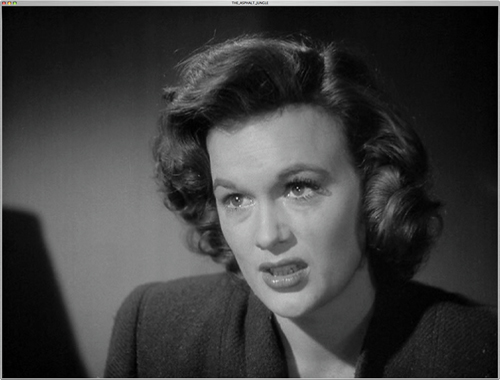
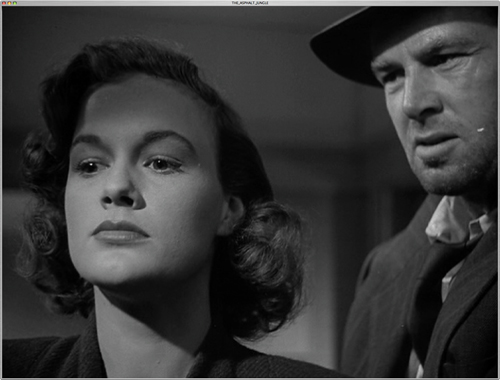
Portugal follows the Zombie but misses the elevator. When he gets off at the 2nd floor he has his gun out but he puts it away upon hearing a shot fired in a nearby apartment. Portugal busts in, the maid is crying, the zombie is finally dead and lying mortally wounded is one of the most evil females ever captured on Celluloid. Margot Shelby (Jean Gillie)
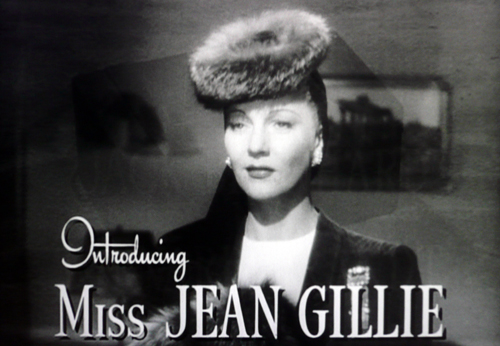
miss-jean.jpg

Beautiful, Ruthless, Deadly

She tells Portugal the story in flashback, a story so heartless and calculating, it makes you question your sanity. Let’s get this straight right now, this film is out there, crazy!
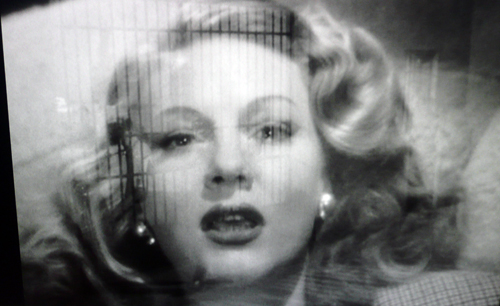
flashabck.jpg

Let the Flashback Begin!

Margot wants money, she lives for the finer things, and she will do anything to get them, I mean anything! Her older beau is in stir, he killed a bank guard while stealing $400,000 and now he’s gonna get the big whiff! Cyanide gas up in Q.
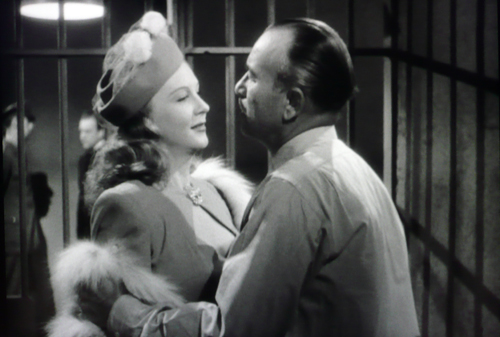
prison.jpgShe’s playing with the old letch, Robert Armstrong ( He was Carl Denham in King Kong!)

Trouble is he hasn’t told Margot where he stashed the loot and he won’t tell her unless he gets out. She hatches a diabolical plan with the aid of a gangster named Jimmy Vincent. But there’s a catch Vincent wants her and half the money.
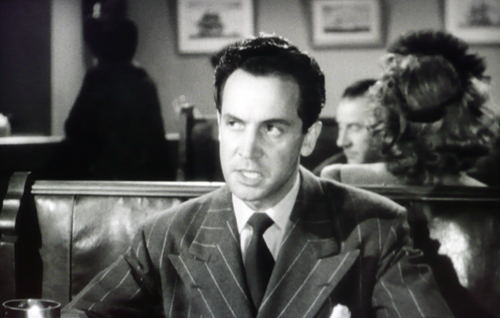
jimmy.jpg

Tough Guy Jimmy Vincent, just another sucker

She needs a doctor to help with her plan to spring her death row beau, Frank. They’re going to revive him after he’s pronounced dead! OK, this evil, amoral monster finds a dedicated doctor, he works in a poor neighborhood, he volunteers at a clinic. He cares about curing people not making money.
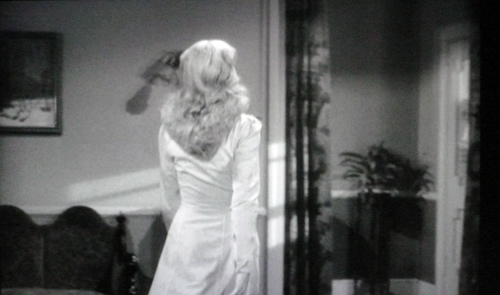
hair.jpg

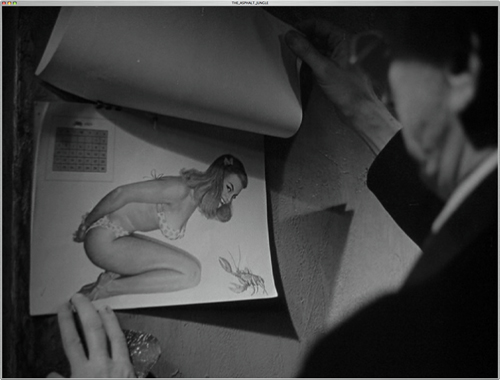
Fetishistic Detail #1 The Nurse’s Hair

But our femme fatale seduces him, not only does she seduce him, he falls so in love with her he sacrifices his ideals, his career, his life, everything for her. As a matter of fact every man in this film falls for this icy goddess of evil! They all want her for themselves and this enables her to destroy them all. Frank gets the gas chamber, the scene is shot from his point of view and the audience watching the execution looks like people in a movie theater watching a film! Maybe the director was holding up a mirror to the audience as if to say” Look at yourselves, entertained by watching a man suffer and die!”.
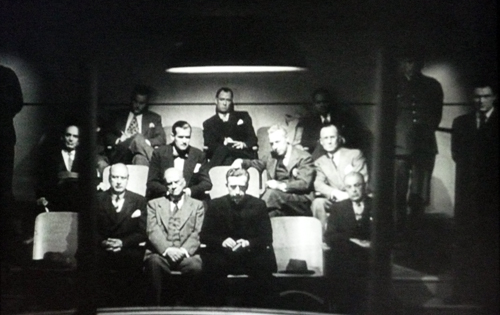
pov.jpg

Mirror, Mirror

They steal Frank’s body and Dr. Craig brings him back to life.
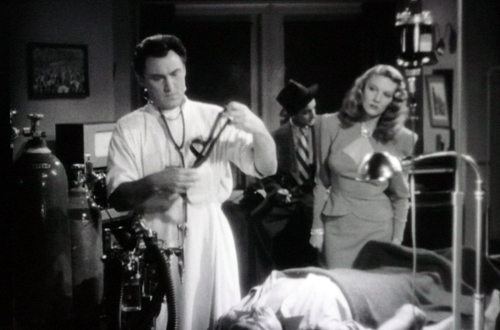
revive.jpg

Elements Of A Horror Film

He draws a map of where the money is hidden and then they kill him! They brought the guy back to life and 5 minutes later they kill him! Insane!
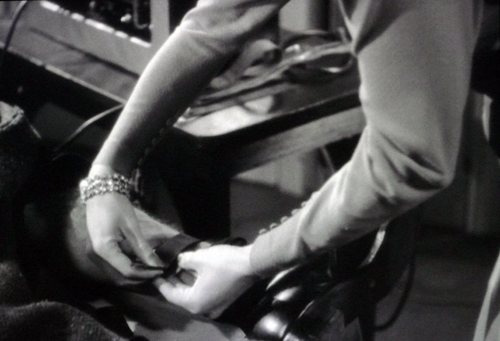
strap.jpg

Fetishistic Detail #2- Jeweled Hands Strap A Dead Man’s Ankle To An Operating Table

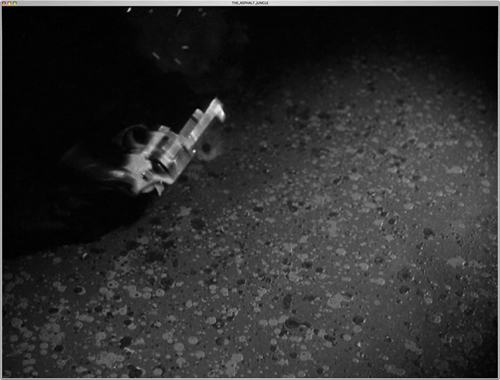
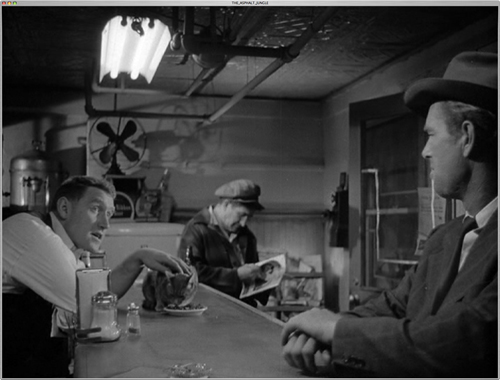
They go to dig up the cash, along the way they stop for a quick bite and a drink. Dr. Craig gets drunk. Margot exits before the boys and let’s the air out of a tire. They drive a ways and it seems like they have a flat. Jimmy Vincent gets out to fix it and after he finishes, she runs him over! She’s not sharing the boodle with anyone! In the print shown at the Cinematheque she runs him over, backs up over him, then runs him over again! This is cut to just one run over in the DVD, too bad! She coldly takes the map and a gun from Jimmy’s dead body, gets back into the car where the doctor says ” I want to kill you!” She hands him the gun,but she has faith in her power over this yutz, he can’t do it!
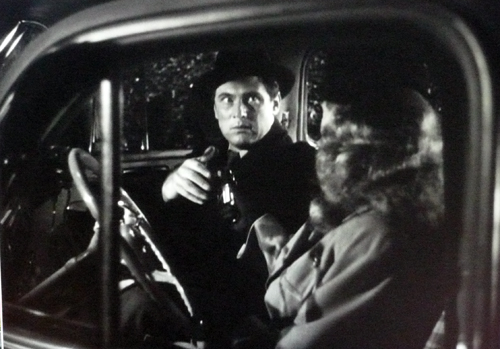
kill-me.jpg

Even Though she destroyed his life, killed a man in front of him, and will soon kill him, he can’t kill her, he still loves her and she knows it!

Margot drives gleefully to the buried treasure burial spot, paces it off, and goes crazy with gold lust, scratching at the ground and shrieking for the doctor to get something to dig with. He comes up with a huge knife, he raises it over his head, it looks like he’s about to kill her, but he drops to the ground and begins digging like a madman.
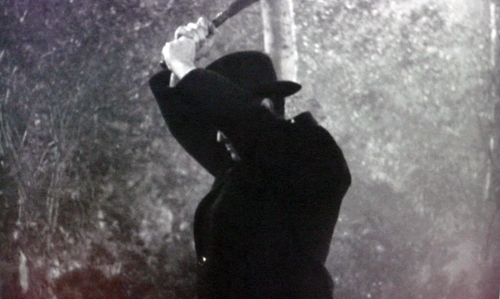
kill2.jpg

It looks like he might kill her, but no! He drops to the ground and digs like a will-less puppet!

He hits paydirt in the form of a small trunk. Margot laughs and screams like a delighted Banshee, then she pumps several slugs into the doctor. She grabs the trunk and splits, hysterically laughing in ecstasy.
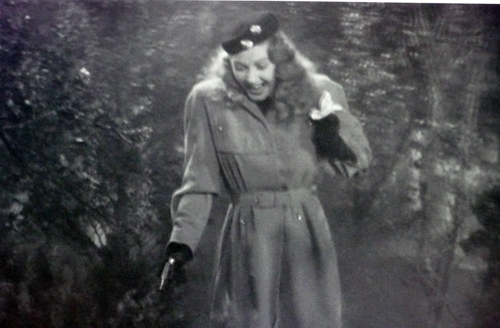
laughkill2.jpg

The Ecstasy Of Gold

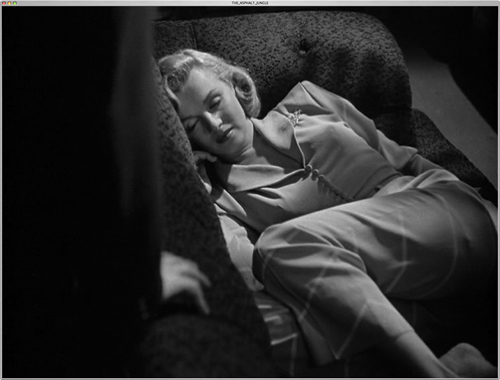
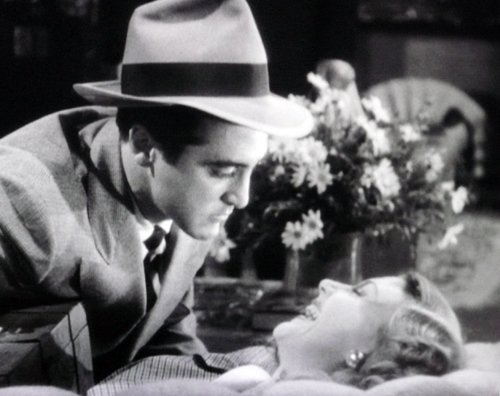
This is where we came in, the doctor wasn’t dead, he made it back town on willpower and sheer hate, and blasted Margot with his last bit of strength. The flashback ends, JoJo the cop has placed Margot on a couch. She looks up at him, flutters her eyelids. “Do you love me, JoJo?” she whispers. Jojo stops, looks at her, he does love her! He moves in for a last kiss. She laughs in his face! Makes a fool out of a man with her dying breath!
end.jpg

She died as she lived, laughing at foolish Men

Jean Gille gives a tour de force performance. She is incredible. This movie was made at Monogram Pictures, a low budget outfit that cranked out Bowery Boys films and some of Bela Lugosi’s final films. But the cheapness of this production actually adds something to this film. A mysterious element of inevitability, like we’ve seen it before but there’s nothing we can do about it. Jack Bernhard’s direction is top notch. Excellent understated camera moves, scenes that play in one shot. Fetishistic details that add an eerie underlying atmosphere of a Horror movie, a cross genre fertilization. The lighting is great, all broken light with shadows of leaves, venetian blinds etc., real noir touches. I also liked the props and the clothes, rings, jewelry, all felt hand picked. Once again the low budget gave the filmmakers a freedom to explore dark depths, to shed light on idiosyncratic psychology, to show us something we hadn’t ever seen before. Jean Luc Godard was a big fan of this movie and Monogram Pictures in general. He even dedicated his first film Breathless to Monogram. So once again I heartily recommend the Warner Bros. Film Noir Classics Collection, Vol.4, every film in this set is great!

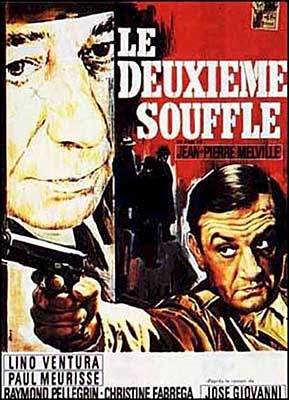
Jean Pierre Melville, Le Deuxième souffle

Written by Joe D on October 27th, 2007

deuxieme_souffle.jpg

Good Luck trying to see this one! I was able to see it last night at the American Cinematheque aka The Egyptian Theater on Hollywood Blvd. next door to the famous Pig & Whistle. It was great, such a treat to see a beautifully shot Black and White movie on a big screen.
amcin.jpg

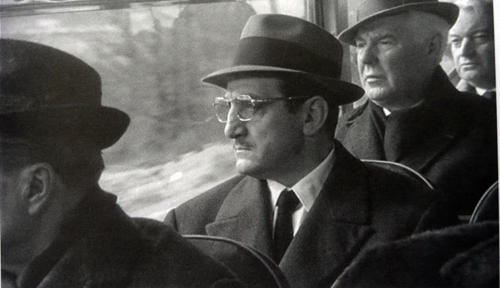
The opening is a study in economy and atmosphere as three men make a break from a prison. The image is very dark and the setting stark, a few high walls, a watch tower with spotlight, some guards walking a narrow alley between the high walls. One of the three escapees dies in the attempt. The other two make it and after running through a deserted forest board a moving freight train. the older of the two almost doesn’t make it, he’s helped by the younger guy, who pulls him onto the moving train. Gus( Lino Ventura) lies there struggling to catch his breath and we feel for the man, getting older, on the run, with nothing in his pockets. Maybe this is illustrative of the title The Second Breath or second wind, where after being exhausted one gets a renewed burst of energy. Gus will soon put this energy to use but first we are plunged into a vortex of underworld connections, deals, murder, police procedures, and in the process we meet the rest of the players in this drama.

1966_der_zweite_atem1.jpg

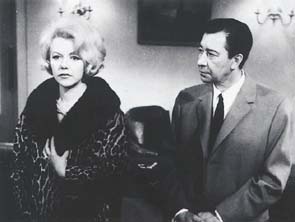
Manouche with Inspector Blot

Manouche ( Christine Fabréga ) runs a chic Parisian restaurant, she is very concerned when she learns of Gus’s escape. Is she his girlfriend? An ex-lover? No, she is in fact his sister and their relationship is an intriguing and unique one.

foto02.jpg

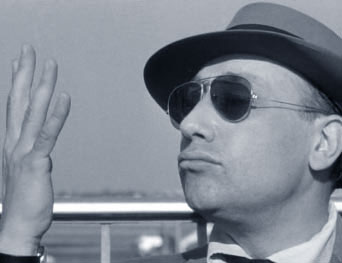
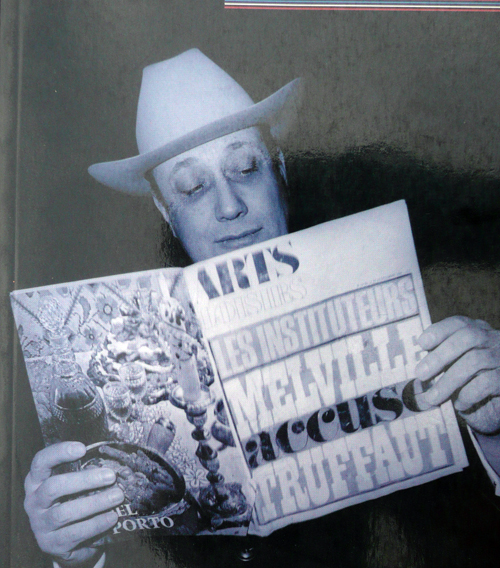
The Great Melville!

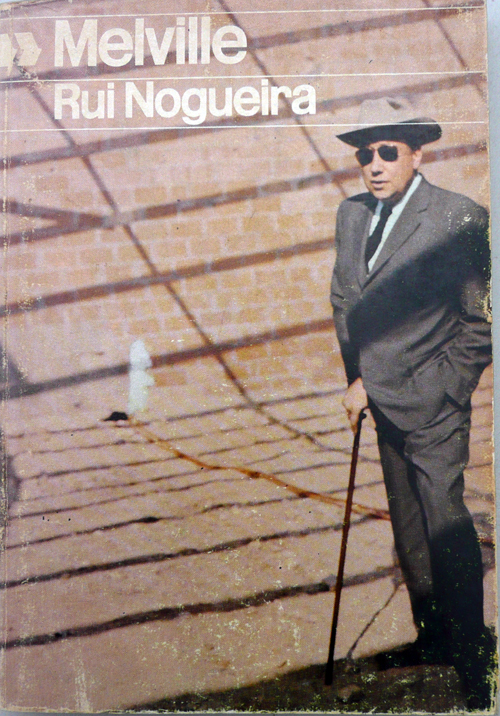
In Melville by Rui Nogueria, Melville says that in French gangster slang “sister” is a term for girlfriend. I believe Manouche is really Gu’s sister but the implied incest adds a compelling dimension to their relationship and Melville says “If I’ve let it be understood that Manouche is Gu’s sister, it’s because of the Enfants Terribles part of me- or rather because of the great homonyms Pierre or the Ambiguities.”
book1.jpg

A Great Book, Rare these days!

We also meet Inspector Blot (Paul Meurisse) a wise and very human police chief. He comes across almost as a father figure trying to understand these criminals and guide them to justice rather than smash them to bloody bits. He respects their code of ethics, maybe even admires them. He first appears in a tour-de-force scene right after a murder, where he explains how each witness didn’t see anything. It’s a long, complicated scene with a lot of movement and it’s done in one take. Brilliant!

figures.jpg

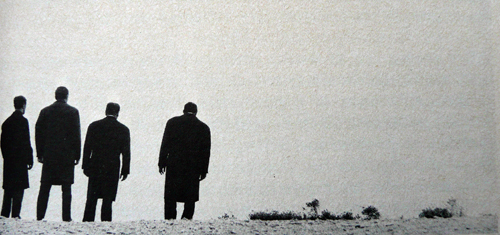
Figures In A Landscape
caper1.jpg

Setting Up The Heist

There’s also a armored car heist, pulled off with calculated ruthlessness that includes the cold blooded assassination of two motorcycle cops. Brutal.
masks.jpg

These Masks will appear in Melville’s Masterpiece- Le Circle Rouge

And a torture scene, like something from Melville’s resistance film Army Of Shadows.
torture1.jpg

Give Him A Drink!

Except in this film it’s the French police doing the torturing. The censors didn’t like that so the scene fades out as the torture starts and fades in when it’s over. We have stills of the missing footage but can’t someone locate the original footage and restore it to the way Melville intended? It must exist somewhere, even just a workprint. It would be a wonderful addition to a great film.
iorture2.jpg

A Still From The Missing Scene

The end of the film has an element reminiscent of Out Of The Past. When Gu lies dying, his last word is “Manouche!”. Later when Manouche asks Inspector Blot if Gu said anything, he says “No”. Trying to free her from a hopeless obsession. Like the deaf boy in Out Of The Past telling Jeff’s girl Jeff wasn’t coming back for her but was running off with the other woman when he was killed. A beautiful touch, one of the greatest endings in Cinema. This film was made at Studio Jenner. Melville’s own film studio in Paris. Unfortunately it burned a few years later and I understand there is no trace of it left today. I don’t think that Rue Jenner even exists. What a shame.
lino1.jpg

Lino Ventura, He and Melville didn’t get along but they made great films together

Le Deuxième souffle has never been released here in the USA. It’s not available on DVD here (I think it is in France). I was fortunate enough to see it through the good graces of the excellent programmers at The American Cinematheque during their French Crime Series. See it if you can. And to those that don’t think much of this film I can only say, open your eyes, you’re missing the Cinematic Part.
melville2.jpg

Peter Brook, Lord Of The Flies

Written by Joe D on October 21st, 2007

brook.jpg

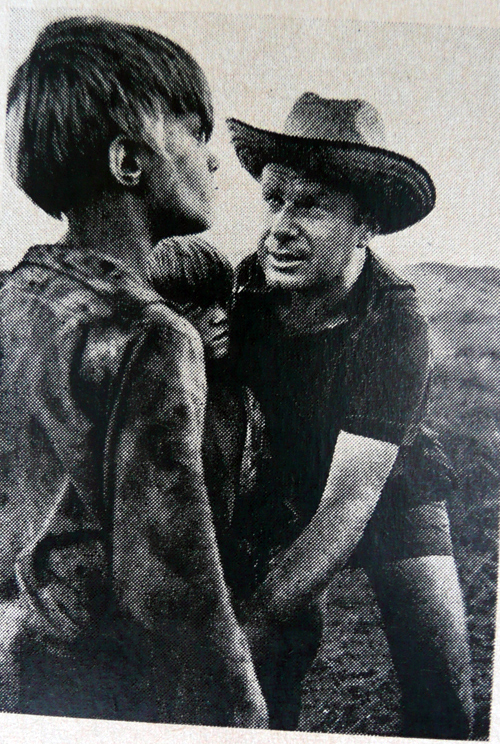
Peter Brook directs a young amateur

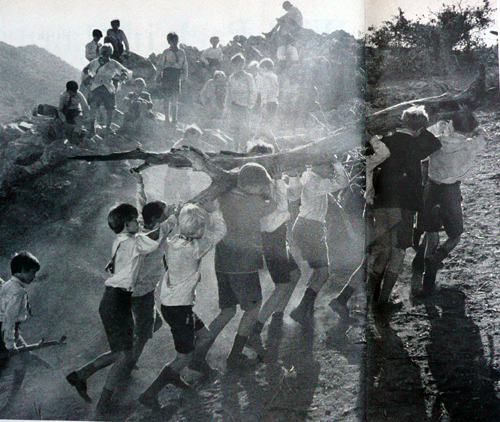
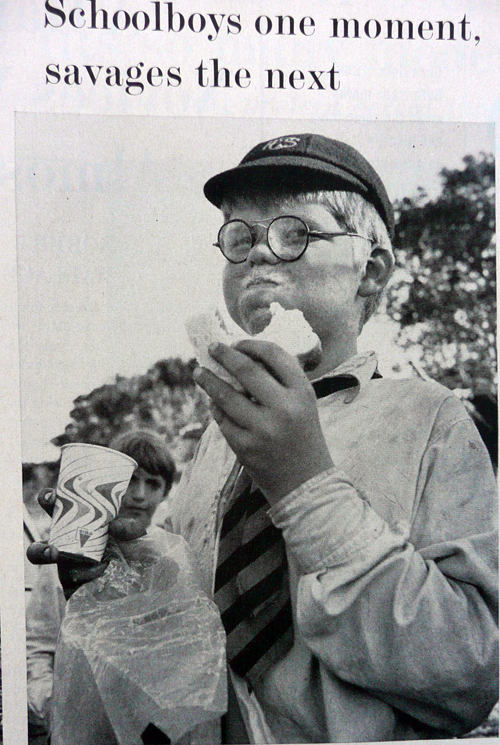
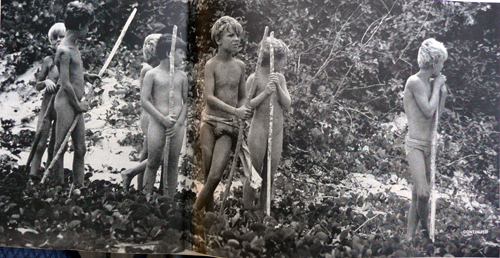
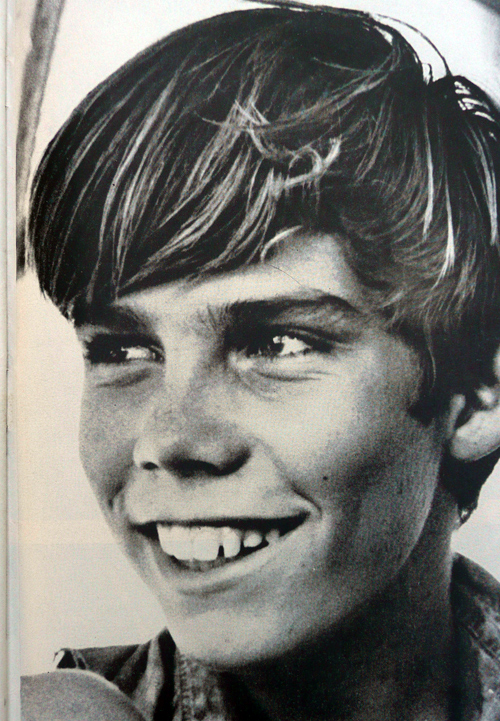
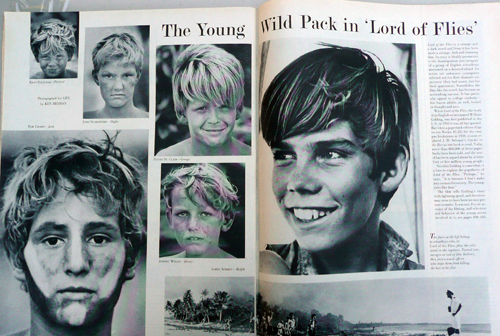
This masterpiece is another film I was exposed to at a young age through the auspices of The Million Dollar Movie. It had to be fairly soon after it was released theatrically (1961) I think I first saw it around 1963 or ’64. It made an indelible impression on me, I can still remember vividly many scenes and I have not seen it since back then! I found a Life Magazine article about the making of the film and the images here are from that. crowd.jpg

Still Somewhat Civilized

A plane crash during a future nuclear war strands a group of English school boys on a deserted tropical island. All the adults are killed and the boys must fend for themselves. They start off by being democratic, electing a leader, setting up rules and regulations, it seems to be going well. There is an unforgettable image of a group of choirboys marching up the beach, single file, dressed in their choir robes singing a Latin hymn, Kyrie Eleision. This music is perfect, eerie and unsettling in this context. Needless to say as time passes and the school uniforms turn to rags the boys revert to primitive forms of existence. The choir boys become hunters and begin acting wild, like Pagans. They kill a wild boar, roast it, and devour it in an incredible scene. The eating of meat turns the boys even more wild, setting their bloodlust racing. They find a “monster” living on top of a nearby hill and begin worshipping it.
piggy.jpg

The boy playing Piggy had to keep stuffing himself between takes to remain big, he lost weight anyway

Eventually sacrificing a weak boy named Piggy. He is overweight and subject to much ridicule, the hunters take his glasses to start a fire thereby incapacitating him and finally they crush him with a huge rock, toppled from a sea cliff. It’s pretty horrible.
naked.jpg

As the clothes disappear so does the morality

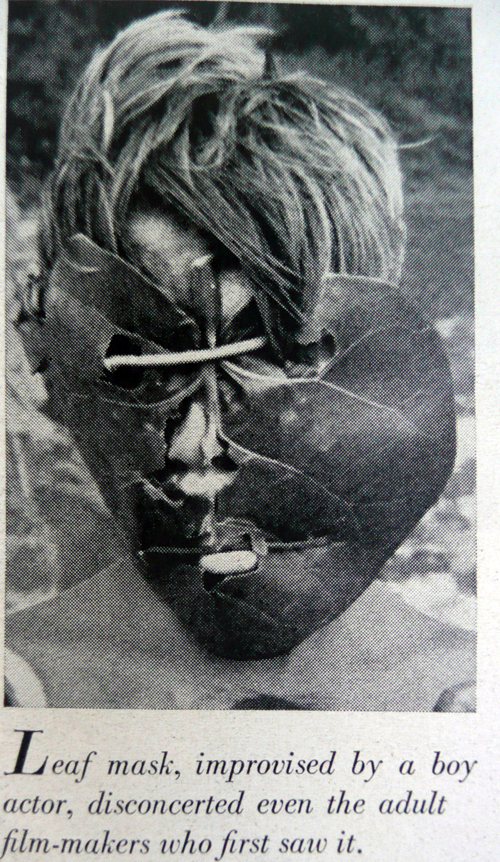
My hat is off to Peter Brook, he took amateur boys, some as young as 7 years old to an island for 3 months and created this whole brave new world, it’s nothing short of a miracle. The images and performances are absolutely superb.leaf.jpg

Peter Brook, maestro of theater, hand picked these boys and engaged in a bit of make-believe, play infused with ritual, the basis of all theater, cinema, art. A raw and savage creation, bursting at the seams with vitality, life force, nature. tom.jpg

Ralph, the duly elected leader is hunted like an animal by the film’s end

Lord Of The Flies was based on a book by William Golding. The article tells of the book’s history. It’s fascinating. The book was first published in the USA in 1955. It was a flop, all but ignored. The filmmakers went into pre-production in 1959 before the 1959 Capricorn paperback was issued. This paperback edition became a college campus bestseller, usurping Catcher In The Rye. How did the producer’s know this would happen? They didn’t. Film is a commercial medium, to be a success without major stars, a film must catch a cultural wave and ride it to popularity. Maybe they sensed the spirit of change, of youthful rebellion in the air.
2-page-spread.jpg

College campuses were influenced by the Beats, the Summer Of Love was nearing. The Vietnam War was heating up. Lewis Allen, Peter Brook and William Golding were in the right place at the right time. Below is a video someone posted on YouTube, It has music by Erik Satie and images from the film. Check it out, you’ll feel the primordial power of this film. Then rent it or buy it, but see it.

Raoul Walsh, James Cagney, White Heat

Written by Joe D on October 15th, 2007

titloe1jpg.jpg

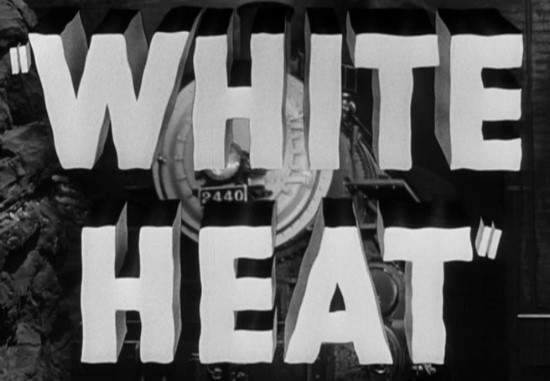
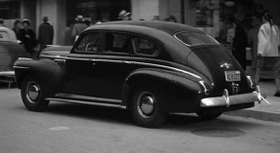
From the first frame of this movie you know you’re in for quite a ride, A big 40’s car hurtling through the desert night, filmed in such a way that you think it’s going to come flying off the screen into your lap.

white_heat_buick_1.jpg

This movie is so well directed. Raoul Walsh effortlessly takes us on an epic adventure, train robbery, prison, escape from prison,etc. It seems like so many short scenes flowing into another, fast paced full of action, tons of details, at the prison , the machine shop and mess hall all play a role in the story.
3239561.jpg

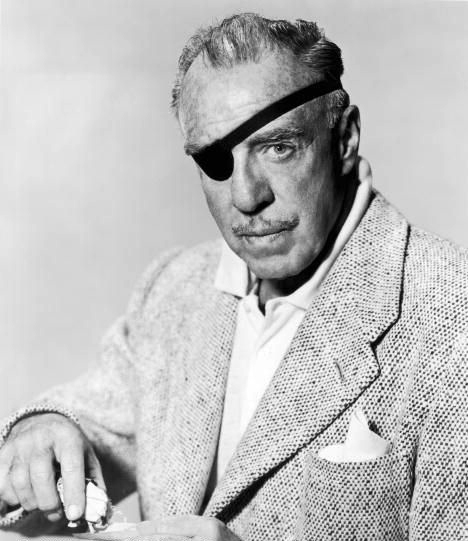
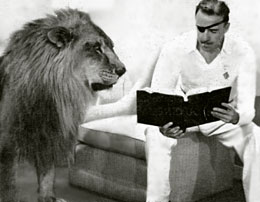
Raoul Walsh lost his eye when a jack rabbit jumped in front of his speeding car

The high tech crime fighting tricks of the G men, radio co-ordinating, these scenes remind me of Fritz Lang’s M , where he shows the technology of the police opposed to the tricks of the criminals. Walsh was a master of this fast paced action storytelling. Check out Gentleman Jim starring Errol Flynn. The scenes fly by like scenery outside a train window. Walsh was a master filmmaker. He had a lion for a house cat.

library_walsh.jpg

Raoul and his cat

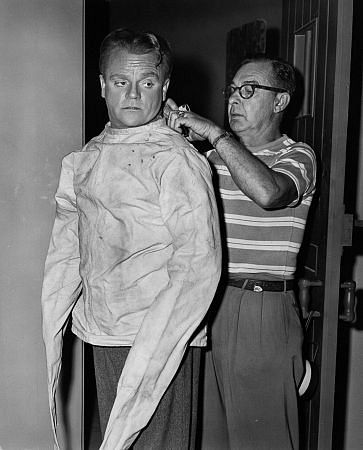
I read Walsh’s autobiography, it’s very good.I found out we both went to the same prep school (Seton Hall). He gives a lot of credit to James Cagney for his portrayal of Cody Jarrett. When Cagney sits on his mother’s lap and when he kicks Virginia Mayo off a chair and a lot of other great bits were all Cagney’s creation, according to Walsh.
0969_0022.jpg

Can you shorten the sleeves a little?

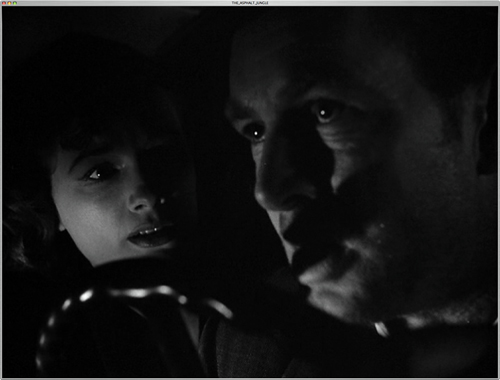
This is subversive filmmaking of the highest order! Walsh and Cagney show Cody Jarrett as a psycho killer, merciless to his enemies, able to coolly blast a guy trapped in the trunk of a car, while eating a chicken leg and making a joke! “I’ll give you some air!” Blam, Blam, Blam ,Blam!!! Great!
white_heat.jpg

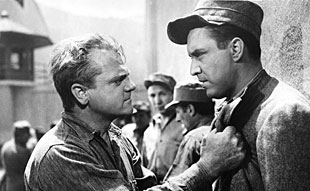
Cagney grabs a Rat, I mean Edmund O’Brien

The feds are seen as hard working, tireless, prosecutors of criminals but Walsh has the head fed using a long cigarette holder, an effeminate if not depraved prop. Is this a dig at J. Edgar Hoover? The cross dressing tyrant of FBI fame? Later the Fed has his arm in a sling, is he less of a man? And what about undercover rat Edmund O’Brien? Infiltrating criminal gangs by pretending to be a loyal pal, a “kid brother” to Jarrett and others. Watch the way O’Brien escapes from the surrounded payroll office during the climactic end sequence. He runs out under the cover of tear gas and literally slithers on his belly like a snake or a worm to get through a narrow gap in some pipes and into the safe arms of his fed friends.
sjff_01_img05324.jpg

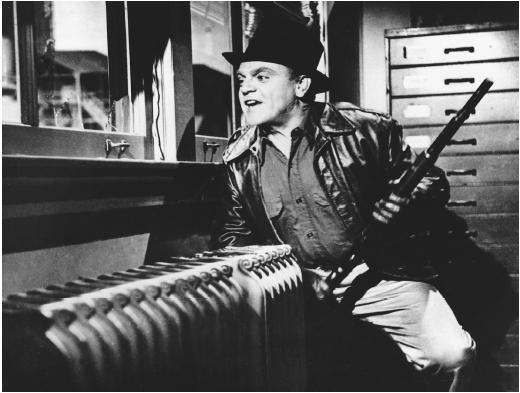
Come and get me ,copper!

Then he uses his sharpshooter skills to pump several bullets into Jarrett, who’s laughing his head off. “What’s holding him up!” O’Brien asks as he fires another round into his erstwhile friend. But Jarrett is buoyed up by his love for his mother, he’s finally fulfilled her lifelong prophecy, he’s made it to the top. “Top O’ The World, Ma!!” He yells triumphantly and he sees her watching him proudly, her eyes shining with admiration and love for a son only she can love, the flames of Cody’s immanent annihilation reflecting from those eyes that represent the whole world and everything in it to him.
whiteheat2as4.jpg

The End of The Hollywood Gangster Icon

The H-Man, Ishiro Honda

Written by Joe D on October 11th, 2007

mz32.jpg

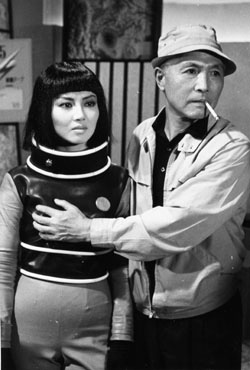
Ishiro Honda cops a feel off a Mysterian

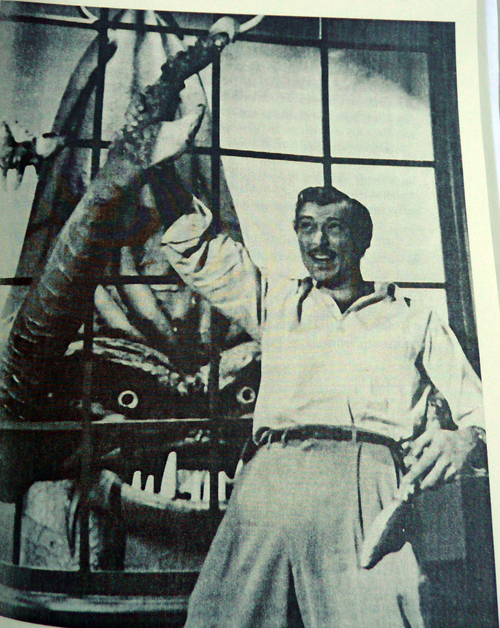
Ishiro Honda created some of the most memorable images of my childhood. Rodan is an amazingly made film. Every shot looks like it was designed in the camera and the flashback sequence is one of the most powerful in Cinema. It’s an operatic monster movie. Ishiro was good friends with mega-director Akira Kurosawa and he directed 2nd unit on some of his epic battle scenes.

liquid_people_01.jpg

Look what a little radiation can do

The H-Man is another cool movie.I was lucky enough to see it projected in Technicolor at Film Forum in NYC, let me tell you, that is the way to see that film! The eye popping color and design. Delicious!. It has an incredible sexiness to it. The gangsters, their babes, the nightclub complete with Japanese Jazz and wild dance numbers. The super slick clothes everyone wears and the monster.

200px-h-man_1958.jpg

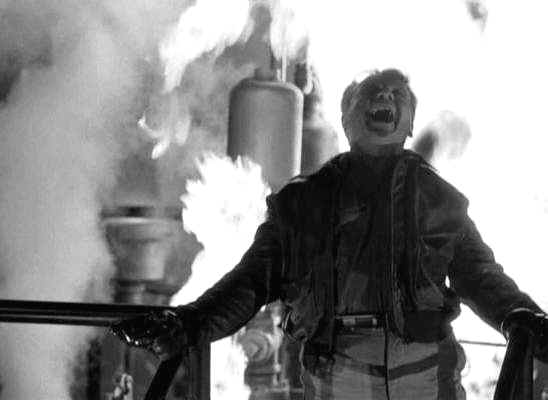
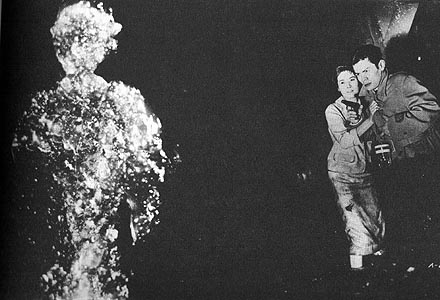
It’s a radioactive slime that slithers through storm sewers and dissolves people leaving only their clothes piled in a heap where they were taken. At one point a gangster kidnaps a woman and takes her into the sewer, he makes her strip and he gets naked so the police can find their clothes and think they were dissolvd into the collective radioactive slime that is The H-Man .

hman.jpg

Slime in the Sewer
It slithers into the nightclub office during a rain storm and threatens a performer. Sometimes it assumes a humanoid shape, rearing up on two gelatinous legs maybe some kind of sense memory of when it was a human. The best sequence of the film takes place on an abandoned ship. A trawler finds a ship adrift at sea, the crew board the ghost ship and look for survivors but they can’t find anyone. Unfortunately for them they find The H-Man.

200px-h-man_us.jpg

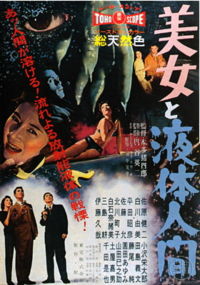
AKA- Beauty and The Liquid People
So open up a bottle of Nigori unfiltered Sake and checkout The H-Man, just remember you need someone to pour your Sake for you and you do the same for them, otherwise Bad Luck and you could wind up slithering in a sewer.

Goodbye Bunuel, His Hollywood Home

Written by Joe D on September 30th, 2007

To celebrate the end of the Bunuel Blogathon I did something I’ve been meaning to do for a long time. I looked up his old address in Hollywood, went there and took a picture. I got the address from some correspondence published in a book of his collected writings. This is where he lived with his family directly after he lost his job with the Museum of Modern Art in New York and right before he went to Mexico to make films. Around 1945/46. The 101 freeway was blasted through his old neighborhood about 100 yards from his house but this was several years after he moved to Mexico. Across the street is a new building I think it’s a school so we’re lucky his place is still there. bunuel-house.jpg

Bunuel’s Hollywood Hacienda-5642 Fountain Avenue

I watched a French documentary on Bunuel that one of the Blogathoners linked to on Google video. It was very good and at the end when the filmmakers went to Calanda they found the house Bunuel was born in being torn down. They filmed it’s demolition and put the end credits over it. Somehow fitting for a Surrealist admirer of the Marquis deSade

Sukiyaki Western Django

Written by Joe D on September 28th, 2007

Here’s a trailer for a new Samurai/Spaghetti Western Opus:Sukiayki Western Django. It looks pretty crazy, I’ll have to check it out. Also it features a guest appearance by the Crown Prince of Genre Art House Kick Ass Cinema: Quentin Tarantino!

Tristana, Luis Bunuel Blog-A-Thon

Written by Joe D on September 24th, 2007

sd11.jpg

Portrait Of Bunuel by Dali

I’m writing about Tristana, a wonderful film starring Fernando Rey and Catherine Deneuve.
title-tristana-bunuel-dvd-review.jpg

Main Title floating over Toledo- note cool lack of drop shadow

This was Bunuel’s 2nd film made in Spain after the war. A lot of the intellectuals, artists, musicians, left Spain when the Fascists took over, including Bunuel. But in the early 60’s Bunuel was persuaded or allowed to make Viridiana. The film was viewed as subversive and banned by the Spanish government. Luckily a print had been smuggled out of the country and it won the Palme D’Or at Cannes.
tristana-bunuel-dvd-review-bfi-pdvd_010.jpg

Predator and Prey Role Reversal on the way

So it took many years for Tristana to reach the silver screen. Bunuel wrote the screenplay in 1964 but because the Spanish government kept denying permission to film it, it didn’t go into production until 1969. But Bunuel wasn’t sitting around idly, he rewrote the script four times and I think that’s why the finished film is so polished and chock full of great images and ideas.
55bunuel2shot.jpg

The Bishop of Toledo and Deneuve

Tristana is based on a short novel by Galdos, Bunuel had made Nazarin from a Galdos novel a few years before and he considered Galdos one of the greatest writers Spain has produced. Tristana was filmed in Toledo, a city Bunuel loved as a young man. While attending the Resedencia in Madrid he and a group of fellow students( Lorca, Alberti, Dali, etc.) formed an honorary society, the Order of Toledo. The rules were that you visited Toledo as often as possible and stayed up all night drinking and wandering it’s medieval streets.
tristana-bunuel-dvd-review-bfi-pdvd_005.jpg

Women In Black

Tristana really feels like a novel, the story, the characters are so detailed and finely drawn. Also it takes place over about 20 years or so which somehow adds to it’s literary pedigree. In the beginning Deneuve is an innocent girl who following the death of her mother becomes the ward of Fernando Rey. Don Lope (Rey) is an aging Don Juan, obsessed with chivalry, dueling, sticking up for the underdog but this does not prevent him from seducing the childlike girl he has taken in to protect. Tristana (Deneuve’s name in the movie) dreams of climbing a bell tower with a deaf mute boy (Saturno) she examines the huge bell and is horrified to find Don Lope’s head attached to the end of the clapper. She awakens from this nightmare screaming.
bell.jpg

Tristana, let go of that huge penis, I mean bell clapper!

After being Don Lope’s concubine for a number of years Tristana meets a young artist Horacio (Franco Nero) she falls in love with him and runs off.
tristana-bunuel-dvd-review-bfi-pdvd_009.jpg

Unsuccessful Artist

A while later Horacio writes to Don Lope that Tristana is deathly ill and needs help. Don Lope fetches her back to his home. She is at death’s door and in order to save her life the doctor must amputate her leg. Don Lope is horrified but secretly overjoyed knowing she will never escape his clutches again. Tristana turns bitter and strange. As one critic said the star of the film is not Deneuve but her amputated leg! It certainly made a hit with Alfred Hitchcock, when he met Bunuel he kept saying” That Leg! That Leg!”.

expose.jpg

Tristana exposes herself to the Masturbating Mute

The once shy girl exposes herself to the deaf mute Saturno from her balcony and tortures the aging Don Lope eventually killing him by leaving the window of his bedroom open as he struggles with pneumonia. Then Bunuel does a very strange thing. In rapid fashion he flashes a montage of clips that retell the story in reverse accompanied by the sound of a church bell playing in reverse. It works incredibly and since it is the end of the film there is no need to explain it or recover from it, the film is over. I last saw Tristana about 20 years ago at a special screening at the New York Film Festival in Lincoln Center. I don’t know if it ever came out on DVD but Hopefully you will be able to see it at a revival theater in 35mm the way it was intended to be seen.
tristana2.jpg
I’m writing this as part of a Bunuel Blog-A-Thon, you can check out the rest of the blogs here:http://flickhead.blogspot.com/.
And here for your delectation is the trailer for Tristana

Jean Luc Godard, Anna Karina, Vivre Sa Vie

Written by Joe D on September 23rd, 2007

godardanna.jpg

The Alchemistic King and Queen of Cinema

Here are some production stills from a couple of Godard’s early films. I’m also including a link to a scan of the scenario for Vivre Sa Vie. Don’t worry it’s only one page! It illustrates perfectly the incredible creativity Godard was capable of.
godardonsetwheelchair.jpggodardonset.jpg
Fritz Lang was amazed at the “script” for Contempt. He said there were things in it like ” Dear Producer, how can I describe this scene? I won’t know what it is like until I see Bardot in the bath.”

contempt.jpg

Michel Piccoli, Fritz Lang, Jack Palance, Jean Luc Godard

Godard was acutely aware (maybe more than anyone else) of the Cinema’s ability to “record truth 24 times a second”. His early films have a particular resonance of truth. No other films bring to life what it was like to be a 20 year old running around, having fun, loving, being disappointed, living. Watching A Bande Apart, or A Woman Is A Woman creates in the viewer such a strong sense of the emotional reality of being a young person that you can’t help but be moved, feel those impulses course through your veins once again. They are like emotional time capsules or time machines transporting us back to our lost youth.

vsv031cnanalooksupjpg.jpg

One Of The Greatest Film Actresses Of All Time

Is it because there was barely a script to get in the way of the actors? Did it allow them to just “be” and therefore let the camera eye capture their naked souls perfectly? I believe so. Read the scenario for Vivre Sa Vie, is there anyone today that works like this or even thinks like this?

sjff_03_img1159.jpg

Shooting Vivre Sa Vie

I recently watched the Criterion Collection DVD of A Face In The Crowd. There is an interview with Andy Griffith in the special features section. Griffith tells the story of his first day on the set with Elia Kazan. Kazan tells Griffith ” The movie camera is a machine that will record what you are thinking through your eyes and then communicate it to everyone else.” An incredible piece of directing.

protectedimage-2php.jpg

Godard understood this phenomenon and played it like a virtuoso. His films are like trapeze acts with no nets to interfere with our enjoying them. Vivre Sa Vie is a an incredible piece of filmmaking. Anna Karina is one of the greatest film actresses of all time. The Film Gods were smiling when they caused her to meet Godard on the chessboard of Cinema. Vivre Sa Vie is composed of 12 chapters each one with a title card heading. Each section is so creatively filmed and acted and photographed it never ceases to amaze you.
vivre-sa-vie-godard-1962-divx-vf08204018-06-37.jpg

The first scene is a breakup between a man and a woman in a cafe. It is shot on their backs, making them anonymous or like everyman and everywoman.
protectedimagephp.jpg
There is an incredible scene in a Cinema where Karina watches Dreyer’s The Passion Of Joan Of Arc, a silent film. Falconetti and Artaud’s beatific faces on the screen, intercut with Karina’s face, tears streaming down her cheeks, she belongs with them. The lowly prostitute is the same as the Saint, both will be sacrificed.
vivre-sa-vie-godard-1962-divx-vf05999518-05-07.jpg

Later a scene plays out at a table in a cafe with Nana and her pimp. The camera moves around them catching them in an odd profile two shot, their faces jutting in from opposite sides of the frame just as he asks her to smile, “I can’t” she says but we hold in this two shot until she breaks and smiles, submitting her innocence to the will of this pimp.
protectedimage-1php.jpg

Nana sits in another cafe and discusses life, thought, existence with an aging philosopher(Brice Parain- playing himself) it’s incredible.
protectedimage-3php.jpg

I understand Godard would not give the actors their lines until just before each scene, then he would only shoot one or two takes because he loved the freshness of a first take. I’m reminded of Charlie Rouse, tenor saxophonist and long time collaborator of Thelonious Monk, who said Monk would usually go with the first take of a recording, sometimes the second but never the third.
vivre-sa-vie-godard-1962-divx-vf03466418-01-38.jpg

Vivre Sa Vie is concerned with the elemental , the fundamental truths of existence. Godard understood this vis a vis Cinema and his street scenes capture portraits of a civilization like a fly trapped in amber, elemental as the first films of the Lumiere brothers when inexperienced audiences fled screaming at the shot of an approaching train. By capturing reality in such a way, he captured an emotional truth specific to the age and emotional makeup of his characters(especially Karina) that is so true it’s impossible not to be moved, to re-experience that age and energy and through this mechanism Godard creates a canvas where the audience can project themselves and interpret the film as they feel it. I think every person that watches this film will bring something different away from it. With Vivre Sa Vie Godard has created a machine that allows you to look into yourself and examine your feelings, thoughts,and experiences through the magical prisms that are Anna Karina’s eyes.
vivre-sa-vie-godard-1962-divx-vf02461518-03-48.jpg

Click The Magic Link below to read the scenario of Vivre Sa Vie published in Film Culture, Fall, 1962.
Godard Scenario “Vivra Sa Vie”

Joseph Losey’s The Damned

Written by Joe D on September 13th, 2007

thesearethedamned_400.gif
Yowza! What a crazy movie! I had heard about this one for years and finally got a chance to see it a couple months ago on TCM. It’s a very good film.

image4.jpg

Losey Directs

For one thing it has about 3 or 4 plots stitched together like Dr. Frankenstein’s monster,The Damned takes place in a small seaside town in England , visiting American MacDonald Carey floats in on his yacht and is bewitched by young & beautiful Shirley Anne Field. Her incestuously jealous brother ( Oliver Reed) doesn’t take kindly to the attention Carey is paying his sister so he and his Teddy boy gang kick Carey’s ass good and proper almost like he was rooting for the opposing soccer team!

damned.gif

Ollie the Sadistic Fop!

Anyway Carey bumps into sculptress Vivica Lindfors and her pal super top secret scientist Alexander Knox, they live in the town, Lindfors up on a bluff overlooking the sea where she creates cool kind of organic apocalyptic sculpture and Knox in an underground bunker surrounded by barb wire, soldiers, guns, guard dogs, and searchlights where he creates mutated children.
frink_small-head.jpg

a Sculpture By Frink from the same period

Some how Carey and his young concubine fleeing the gang wind up in a subterranean compound habituated by radioactive children, genetically engineered to survive in a post nuclear apocalyptic world!

damned_lobby_card.jpg

Oliver Reed bullies the sculptress by smashing some of her work (it’s incredible sculpture made for the film by Elisabeth Frink) then Ollie winds up in the Atomic Children’s Ward as well. The ending is bleak, bleak, super bleak with the added amorality of the government killing people, torturing these children, doing whatever evil horrible things it wants to in the name of National Security. Rings a Bell, n’est pas?

image3.jpg

Here Comes The Government

Joseph Losey had a strange, uneven career. He went to the same high school as Nicholas Ray. His first feature was The Boy With The Green Hair I saw it on Million Dollar movie as a kid and it’s stayed with me all these years, I should watch it again. Losey was named by the Commie witch hunt HUAC, but he never named names like a lot of others. Instead he moved to England and made the rest of his films in Europe. I recommend this film, it has made me want to check out some of Losey’s earlier works like The Prowler and The Criminal and even though I swore I’d never watch it, his remake of M.

Le Doulos, Jean Pierre Melville, Jean Paul Belmondo

Written by Joe D on September 9th, 2007

le-doulos.jpg

Rialto Pictures has done it again! They re-released a classic film from the early 60’s. Jean Pierre Melville’s Le Doulos.
title.jpg

Super Cool Graphic

They resurrected Melville’s Army of Shadows last year, another gem. I really like their technique, find a super cool film that was never released here ( or minimally released) make a few restored prints and do a limited traveling theatrical exhibition. This keeps the overhead low and gives people all over the country ( at least in the big cities) a chance to see these films in a theater. Also it generates interest for DVD sales! A win/win situation.
lucky-13.jpg

Doulos means hat

So I went to the Friday night 10:30 pm show at the Nuart Theater in Santa Monica and it was at least 3/4 full! Right On! The movie is great , a little convoluted with a lot of characters and a big expositional flashback, probably all inherited from the Serie Noir novel it was based on but worth the effort. Jean Paul Belmondo gives an austere focused performance. He is incredible, sharp as a razor and ruthless but with a deep sense of honor.
belmondo.jpg

Shooting Star Belmondo

Watching this film I was made aware of his astounding versatility. He can be very funny, ice cold, sexy, cool and pull off dangerous stunts, and his persona leaps off the screen, you want to know him, be his friend or depending on your orientation, sleep with him, in a word he is a movie star. A star of the ice blue super cool part of the Spectrum. Melville the americanophile delivers his noir take on a Hollywood Gangster Film. The Hat, the Trench Coat, symbols oF The Detective, the Lone Wolf that operates outside of the Law but is subject to his own strict moral code.
american-car.jpg

Le Car American

Characters drive around Paris in big American cars, just like Melville did. The atmosphere of this film is astounding, fog, train whistles screaming at you and hurtling out of the mist like Forces of Fate, oblivious to the lives of the insignificant men pursuing their nefarious ends under their trestles, struggling like ants over gold, jewels, money, women, power, death.
train.jpg

Trains Rush By like the Crushing Fates Of Greek Tragedy

Betrayal, Loyalty, Revenge, Love, Need. The pieces on the Chessboard. A man digs a hole like an animal with his bare hands and buries jewels wrapped in a handkerchief, a block of bank notes and a pistol swathed in an oil cloth. The spoils of a murder he’s just committed.
dig.jpg

Digging Like an Animal

And the Police, doggedly pursuing the criminals who treat them with studied indifference, cooly facing long stretches in prison, The Police prying, forcing information with intimidation, blackmail, whatever it takes. Trying to turn a crook into a doulos or finger man, a rat. There is a famous scene at Police HQ where Silien (J.P. Belmondo) is being interrogated, the inspector circles Silien like a bird of prey, sniping at him , trying to trip him up, his two detectives chime in from time to time, the camera dances with them all in the confined glass enclosed space and without noticing it, a 10 minute scene has played out before you, all without cutting once! a masterpiece of camera movement, blocking, dialog, looks, sounds.
surround.jpg

The One Take Scene
I feel it’s a direct homage to Orson Welles’ Touch Of Evil. Everyone always talks about the opening shot of that film but it’s the scene in the love nest apartment where Quinlan plants the dynamite and his partner discovers it that blows me away, and that’s the scene I think Melville is referencing. Check it out, the dialogue is so perfectly deilvered you’ll have a hard time noticing it doesn’t cut! Melville’s attention to detail is superb as well, the locations, cars , clothes, casting. This film was made at the Rue Jenner Studio. The Studio Melville owned in Paris! How cool is that the guy had his own studio! The set pieces are all excellently executed, a caper gone wrong, a sly set-up to throw blame on the wrong men, A tense scene at a nightclub where Belmondo pulls the bad guy’s girl, right from under his nose. These scenes click like clockwork.
babe.jpg

Bad Guy’s Babe in Belmondo’s Bed

It’s also full of textures, sensual moments, tactile pleasures.
hoers.jpg

Sensual. Tactile Elements

At the end of the film there is a shot of a hat falling, rolling towards the camera. Suddenly in the middle of a camera move the image freezes. Did Melville not want us to see what the camera was panning to reveal? Why did he freeze? I think it gives a horrible finality, to freeze like that in the middle of a move.
freeze.jpg

The Final Frame
A lot of films end with freeze frames but this one had a powerful effect on me. Check it out and see if you agree now that you have the chance.
mirror.jpg

Always Adjust Your Hat

Kill, Baby… Kill!

Written by Joe D on September 3rd, 2007

kill-baby-title.jpg

I bought a few videos at Jerry’s since he’s closing up shop. One of them was Mario Bava’s Operazione Paura (USA Title: Kill, Baby… Kill!). What an amazingly cool movie. This is the first time I’ve seen it and it ranks up there with Black Sunday.
arch.jpg

Excellent Locations

Bava was a supreme visual artist as the screenshots will attest. He studied to be a fine artist but followed in his father’s footsteps and became a Cinema Artist instead. His father Eugenio was a sculptor and the father of Italian Cinematographic Special Effects, in fact according to the excellent commentary by Bava expert Tim Lucas, Eugenio invented the so-called Schufftan Process on Cabiria years before Schufftan used it on Metropolis!
blur.jpg

Bava’s father gave him the ripple glass used in this shot

The apple didn’t fall far from the tree as Mario uses many incredible in camera effects in his films. Effects that he designed and executed himself! The only person around today that does this kind of thing is Michel Gondry. But back to our movie. There are so many painterly compositions in this film. I’ve selected a few paintings I was reminded of.
brueg1-4.jpgwedding.jpgchirico13jpg.jpgchirico9ajpg.jpg45brokenbridge.jpg41ruinwithheadofmedusa.jpg
Mario studied Art History and he grew up in Roma, surrounded by great art and it’s evident here. Some of the artists brought to mind by Kill, Baby… Kill are Peter Breughel the elder, Piranesi, di Cherico, and Salvador Dali.
piranes3.jpg

An etching by Piranesi

arch-nite.jpg

A CinePainting By Bava

Existential town squares, surreal crumbling landscapes, strange scenes of medieval village life are all brought to mind.
cemetary.jpg

Here’s one in the Studio

This film was made for next to nothing but looks so incredible, Bava was a true “painter with light” as a cameraman and director.
spiral.jpg

All The Colors Of The Dark

His use of colored gels in composing a scene is unequaled, as well as his beautiful camera moves, always in the service of telling the story, never drawing attention to themselves. He would use ripple glass in front of the camera, or a distorting mirror, or shoot through a painting on glass, or as I mentioned earlier use colored lights to create an effect. All done In camera! Nowadays it’s all put together on a computer after the shoot is over and at much greater expense.
swing.jpg

Child’s Play

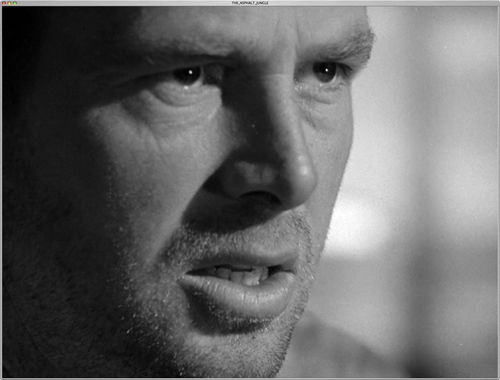
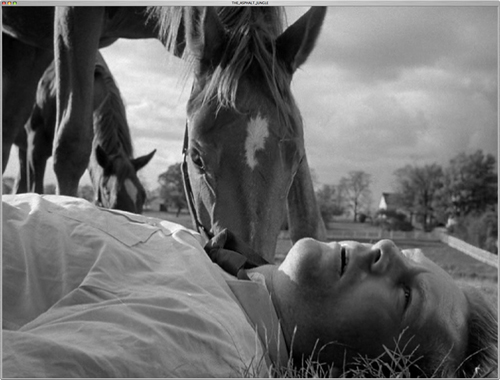
The music is by Carlo Rustichelli, an old school Italian composer, he scored many peplums (Muscle man films, Machiste, Hercules, Samson). But according to Lucas he only wrote one piece expressly for this film. A beautiful piece that works perfectly. The instruments are Celeste, Vibraphone, Harp, and Fender Bass, and usually there’s a child’s laughter playing over it. Great! There is also some pipe organ pedal music used. My friend Danieli Luppi ( a great Italian composer) told me that many of these film scores were done at a studio in Rome called Forum. It’s in the basement of a church and when the church was empty they would use it’s pipe organ! It gives an even more chilling aspect to horror movie music to know it was recorded in an old church. The rest of the score is cobbled together from other Bava films and other uncredited composers. Tim Lucas says the producers ran out of money halfway through the shoot. People had to work for free and Bava was never paid! So when it came time to score the movie there was no dough! Bava had to call in some favors and get whatever music his friends could give him. I’d like to talk about the Italian method of film scoring vs. the american way. The Italian composer would read the script and write themes, sometimes he’d record the music before the film was shot! The american on the other hand has a stopwatch and some idiot director yelling at him” OK on this frame I want a sting! When her eyes move I want a change in the music!” It’s so micro managed you lose the musical flow! When you edit a movie you are creating a visual music out of the shots, there’s a rhythm, a pace, a heartbeat, it’s musical. So when you put a piece of music against a scene magic happens, things coincide, sync up, play as one. I personally like the Italian way better.
nite-villa.jpg

The Haunted Villa
inn.jpg

The Inn
loc-2.jpgloc-3.jpg

Visions Of Hell

The locations chosen for this film are so great, they convey the atmosphere perfectly, also this is a period piece set in 1907, today that means $100 million dollars! The budget for this film was about $50,000! Fog machines and fake cobwebs add a lot of creepiness, but they have to be lit right or else they look bad.
window.jpg

The Kill Baby at the Window

dali.jpg

A Daliesque composition

There is an amazing sequence in the film where the hero Dr. Eswai is confronted by the ghost of a little girl in her mother’s haunted villa. The female lead Monica Schuftan disappears, he hears her cry from another room and rushes to save her, he enters a Moebius strip of time and space rushing from room to room, trying to reach Monica but always entering the room he just left. He sees someone exiting just as he enters, he runs faster finally catching up to the fleeing phantom, he grabs the guys shoulder and turns him around only to discover, himself! Super Cool!
chase1.jpgchase2.jpgchase3.jpgchase4.jpgchase5.jpg

Moebius Chase Scene

Also a dream sequence made of distorted shots that works really well.
dream-1.jpgdream-2.jpg

In Dreams

After this Bava was picked by Dino DeLaurentis to direct Diabolik. Dino wanted to give him a large budget but Bava refused. He knew if he accepted a lot of money he’d have to accept the control that went with it and that was not for him. He enjoyed making films his way, he evolved a technique of special effects so he could create anything his imagination came up with and for very little money. Lamberto Bava, Mario’s son said all the Italian intellectuals and big time filmmakers would go to see Bava’s films. Luchino Viscounti gave Operatzione Paura a standing ovation when he saw it.
hall-ball.jpg

Have a Ball, Baby

And Federico Fellini lifted the figure of the little girl and her ball symbolizing evil and dropped it into his film Toby Dammit a year later. Bava a super talented creator worked in genres looked down upon by the critics of his day, he worked with miniscule budgets and a lot of unknown actors, that’s why he was able to accomplish so much. Like another of my favorite artists, Chester Himes, who wrote genre detective stories brought out in cheap paperback editions but enabling him to give free reign to his creative spirit. If you like horror, if you’re interested in seeing pure creativity splashed across the silver screen, if you love film, see Kill, Baby… Kill!
painting.jpg